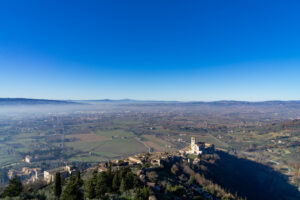
Region: Tasman, West Coast, Auckland
Travel Dates: December 25 – December 31
Christmas morning in Christchurch was a study in scarcity. We wanted to head north to Nelson, to escape the city and find the sun, but the holiday season had stripped the rental agencies bare. There were cars available, but the prices were insulting—tiny hatchbacks going for $900 NZD for four days. The city felt shuttered, quiet, and expensive.
But there was a loophole.
We found a rental listing for a “delivery vehicle.” It was a white cargo van, designed for hauling boxes, not people. It cost us $555.20 NZD for four days—still a fortune for a metal box with no seats in the back, but significantly cheaper than a car. We took it. We threw our sleeping mats and sleeping bags onto the ribbed floor, tossed in our backpacks, and drove out of the city.
We didn’t have a Christmas tree, lights, or a roast dinner. We drove north, watching the landscape shift from the dry, golden Canterbury plains to the lush, green coast of the Tasman region. We didn’t book a campground. That night, we simply pulled into a gravel lot near the sea, north of Nelson.
We slept in the back of the van. It had windows all around, so even with the doors closed against the night air, we could see out. The sky was cloudy, heavy with the threat of rain, and eventually, the drops began to drum against the roof. It wasn’t a classic Christmas card scene. We didn’t even have a stove to cook a hot meal, so we ate a cold dinner of supermarket snacks—bread, cheese, and fruit—sitting cross-legged on the floor. Lying there on our sleeping mats in a delivery van, eating cold food while the rain started to fall, felt raw and simple. It was certainly one of the freest Christmas of my life.

The Edge of the World: Wharariki Beach
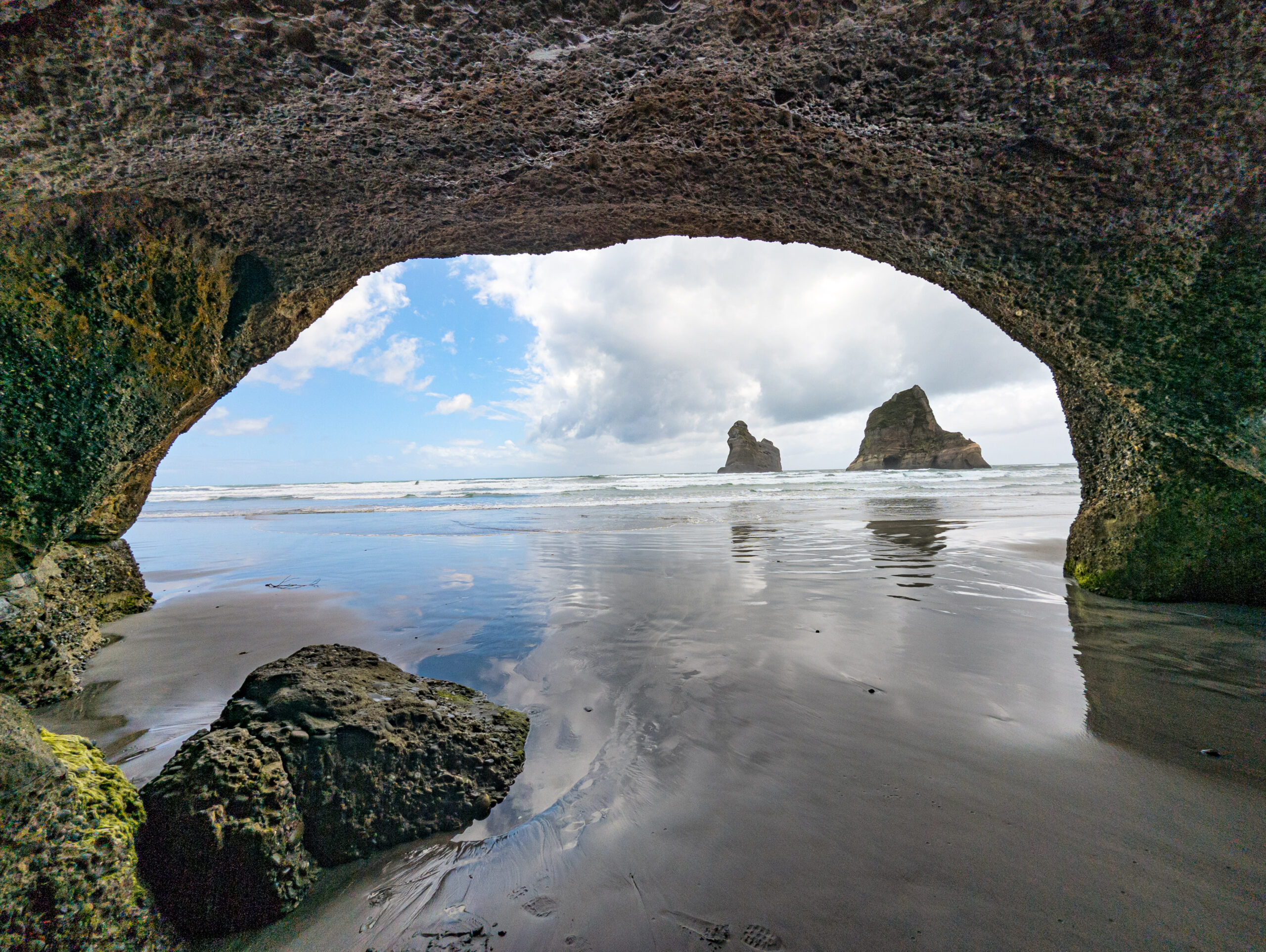
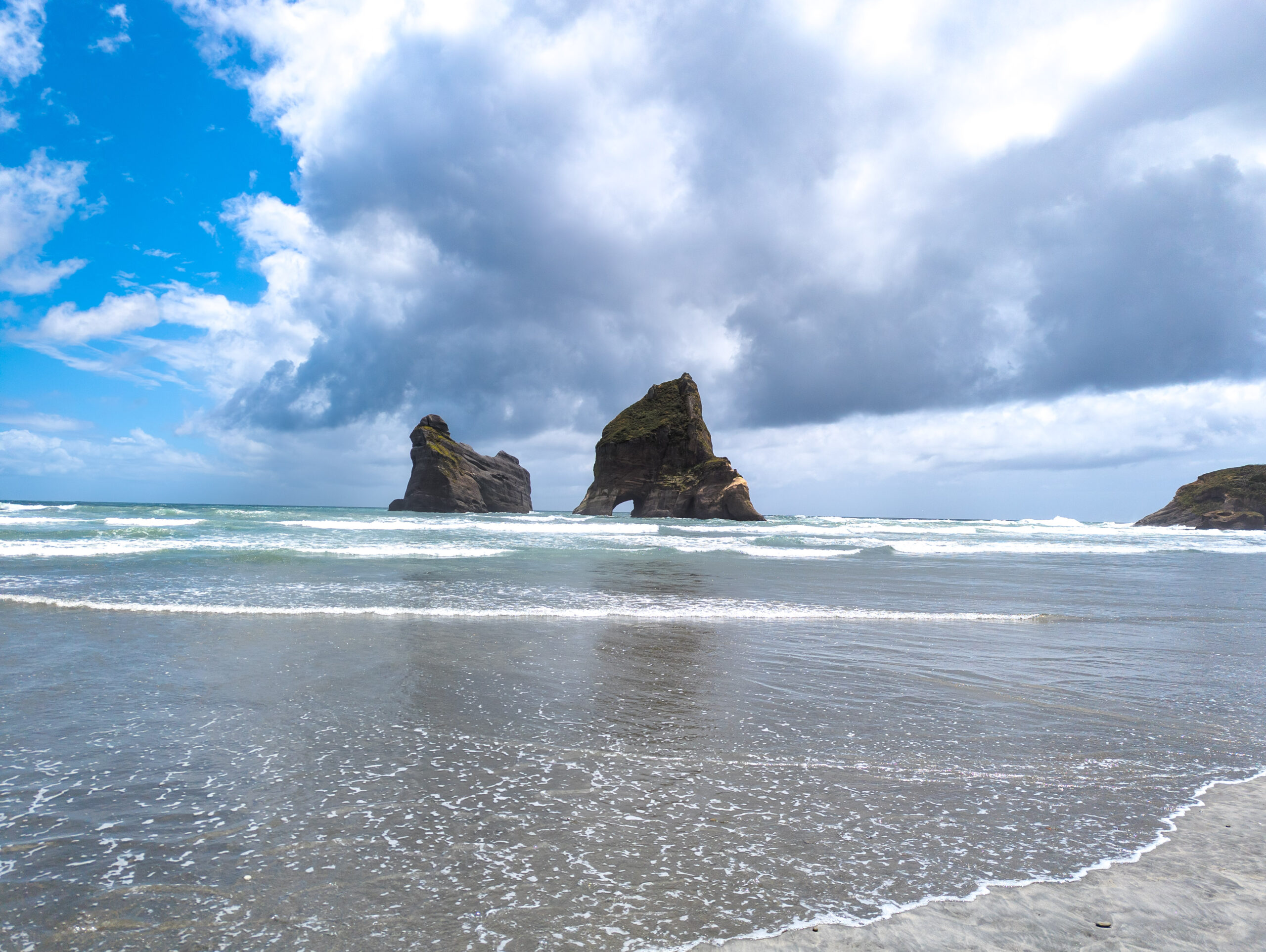
On Boxing Day, December 26th, we pushed all the way to the northern tip of the South Island. Our destination was Wharariki Beach, a place famous not just for its rugged beauty, but for its status as a digital icon. It is the location of the default background image for Windows 10—that stunning shot of the Archway Islands rising from the surf.
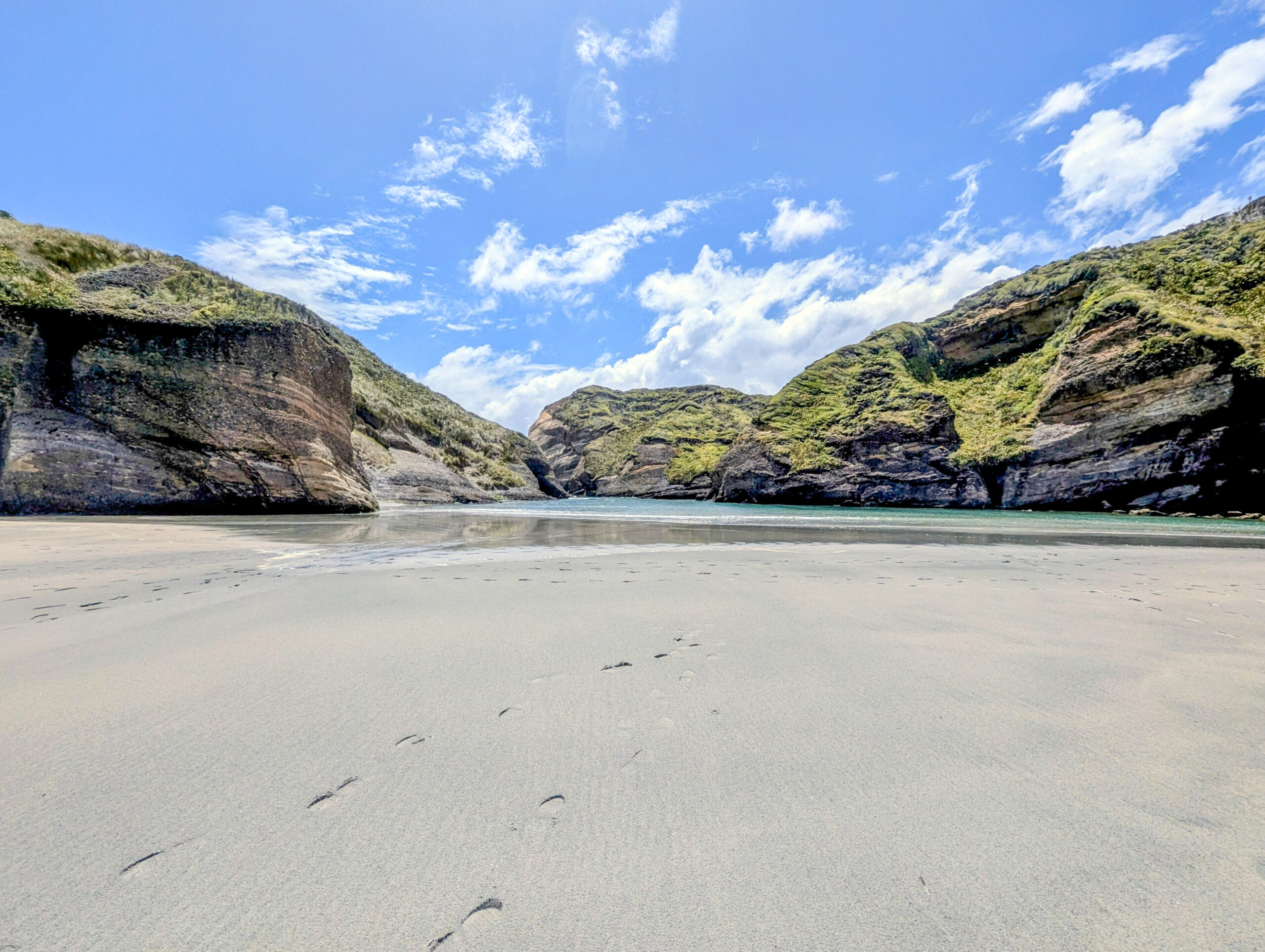
We first parked at the Wharariki Beach parking lot and hiked out to the shore. The path leads you through rolling green hills and sandy dunes before the coastline suddenly explodes into view. It is a place of violent geology. Huge rock arches rise out of the ocean like crumbling cathedrals.
However, I wasn’t aware at the time that there is a specific version of the Windows 10 wallpaper that features a person running in the background. Because of this, we didn’t think to take a photo like that. It was only once we were back in the car, relocating to the Cape Farewell carpark, that the realization hit.
The Windows Debate
As we were in the parking lot again, Marta and I got into a heated argument about whether there is actually a person in that iconic image. I was certain there wasn’t; I only had the Windows 10 lock screen in my mind. Marta was convinced otherwise. It turned out we were both right and wrong at the same time. I was picturing the lock screen, while she was thinking of the home screen background. It’s funny how you can stand in the middle of one of the most photographed places on earth and still argue about how it looks on a computer monitor!
Cape Farewell to Pillar Point
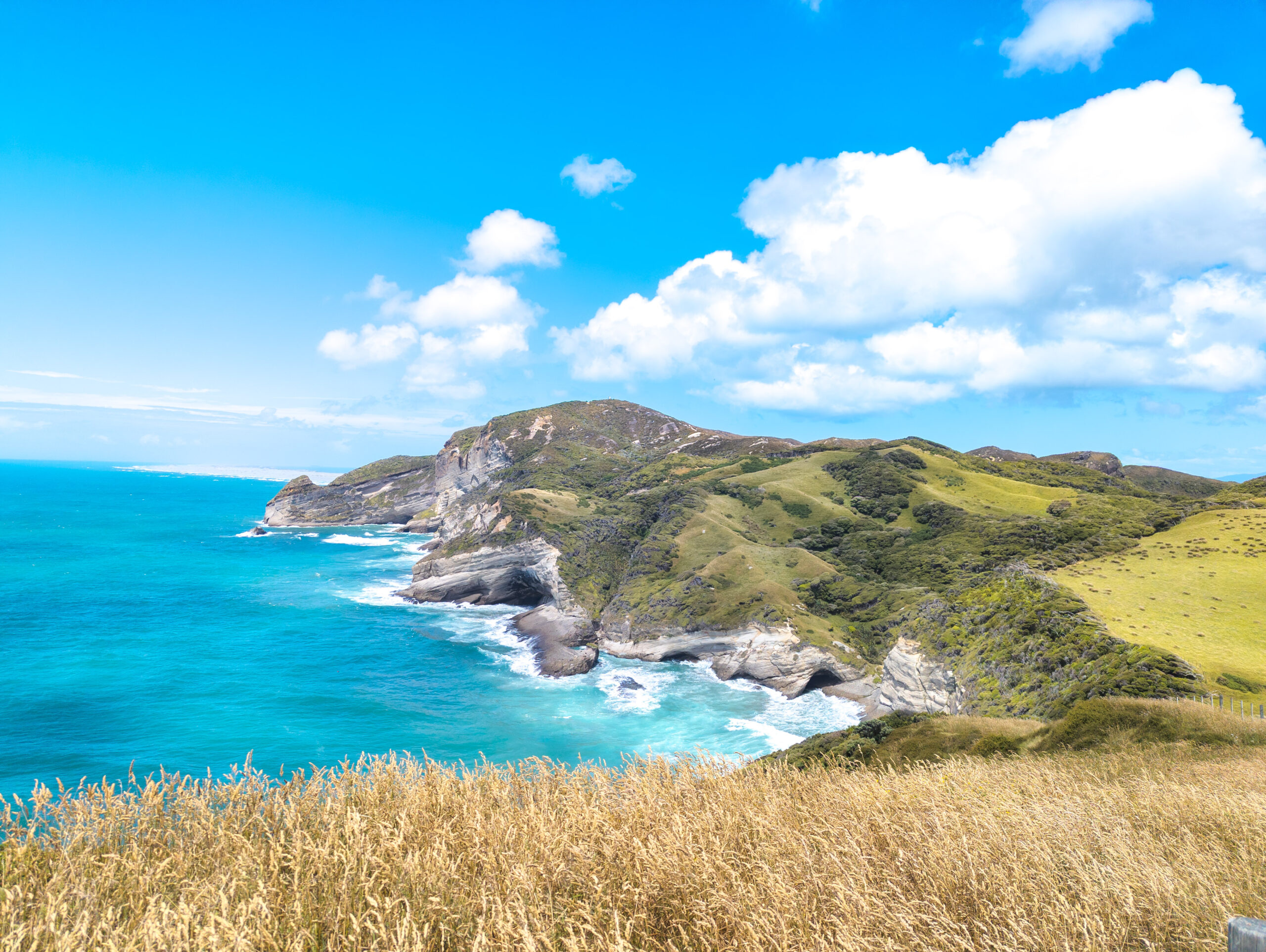
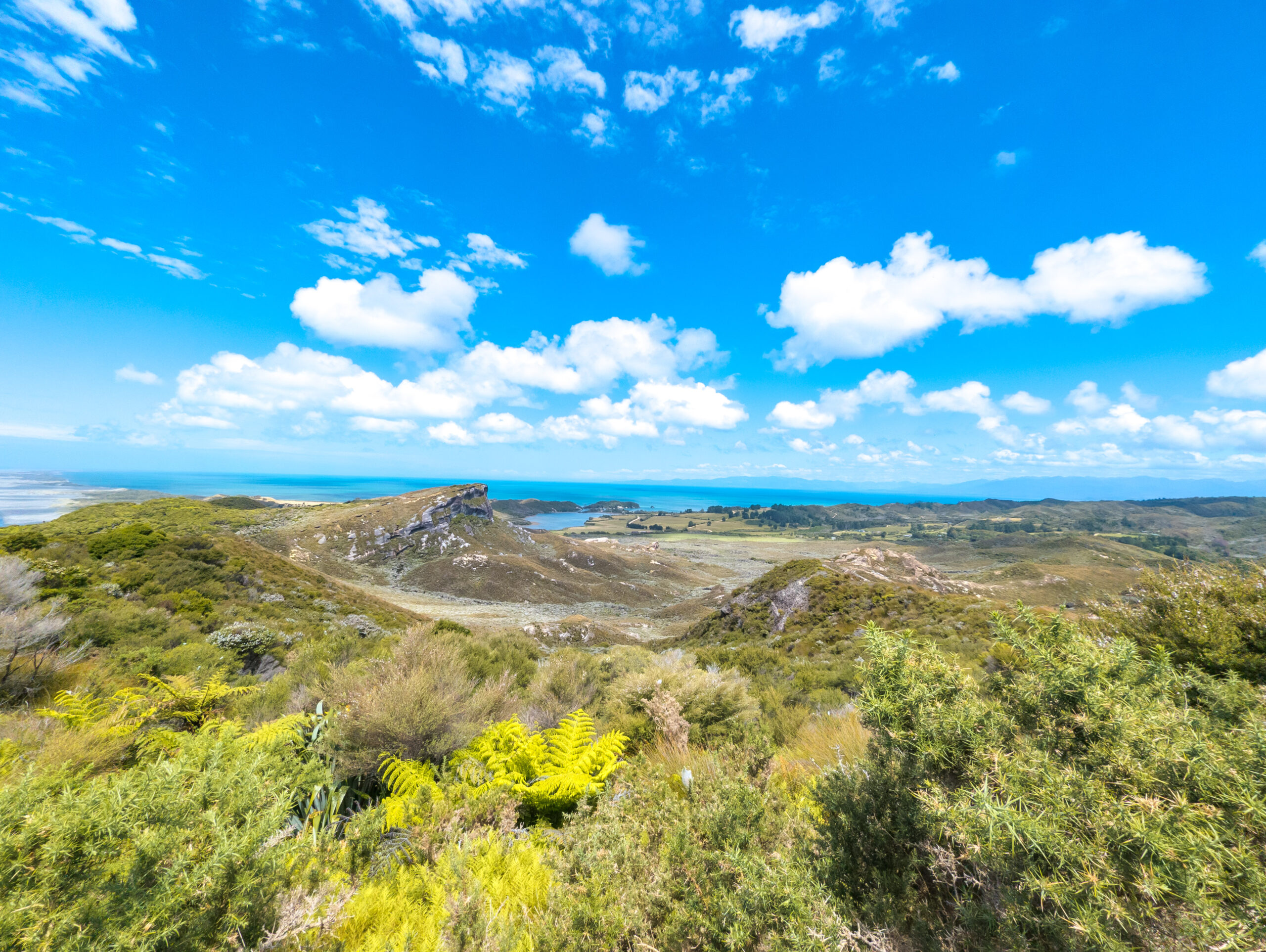
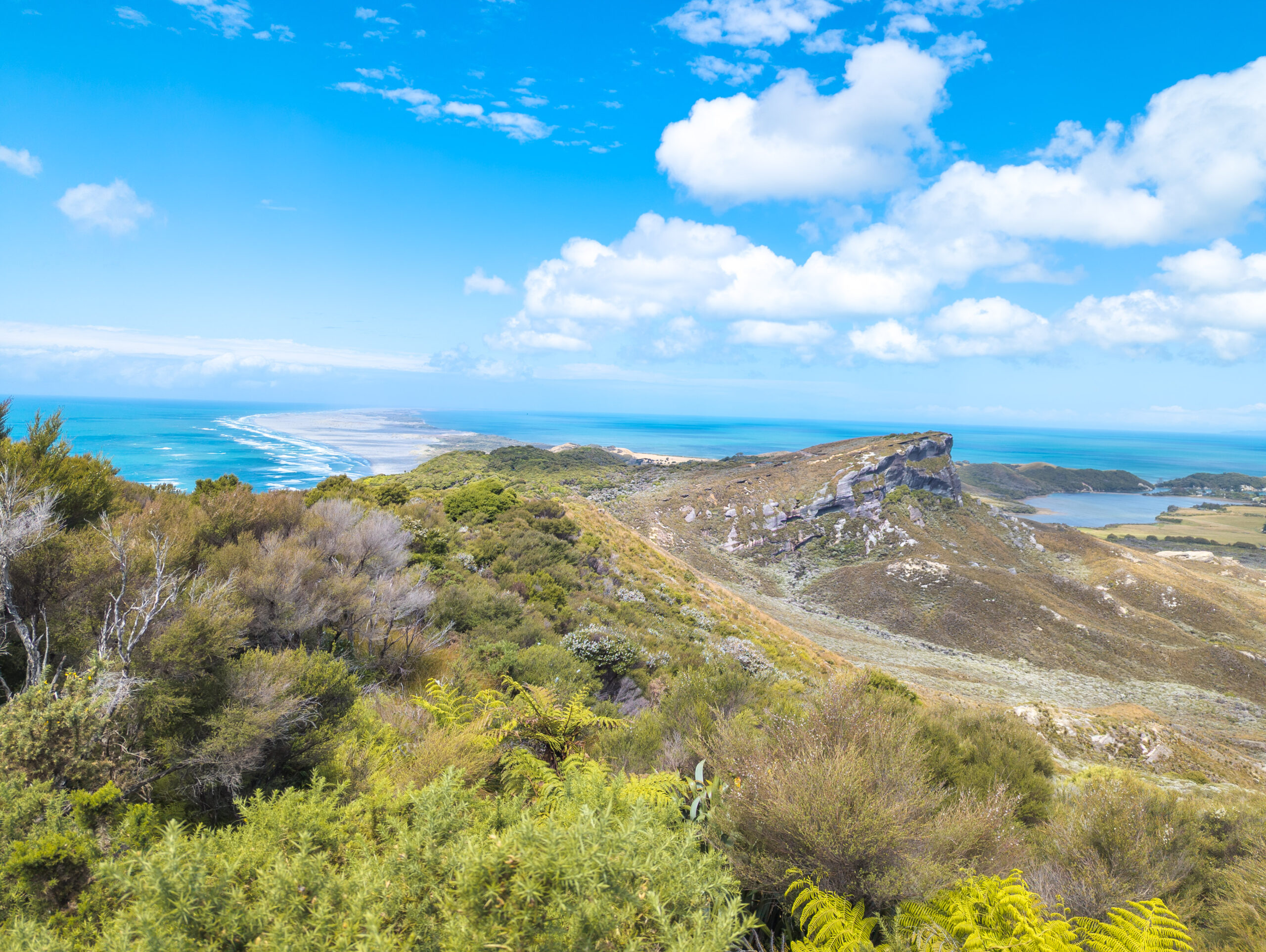
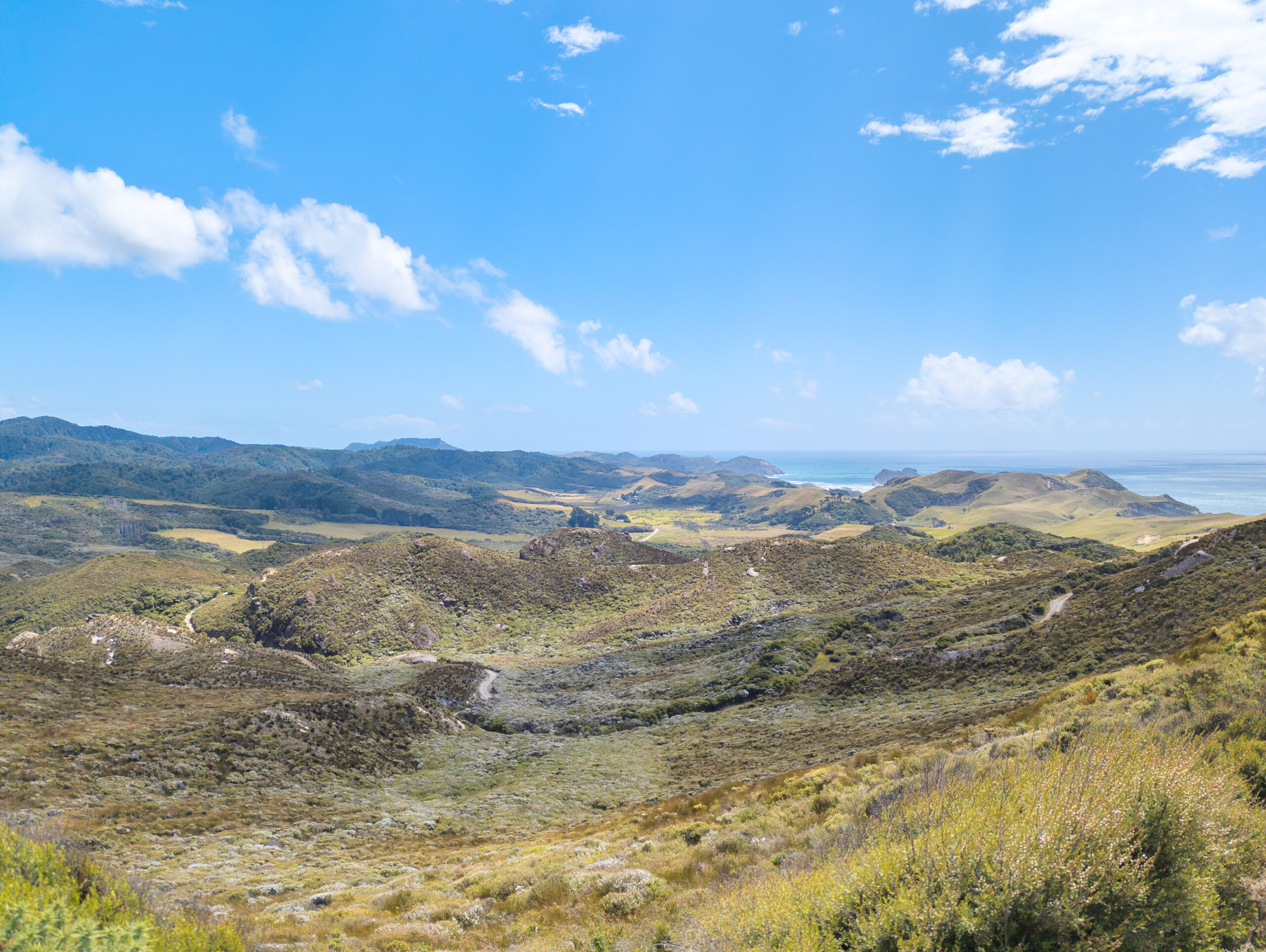
After parking the car again at Cape Farewell, we began the second leg of our journey, hiking toward the Pillar Point Light Beacon. I expected the ferocious winds that usually batter this cape—it is one of the windiest spots in New Zealand—but the air was dead calm.
The ocean below was a sheet of hammered tin, silent and vast. We walked along the cliffs, looking down at the seals playing in the kelp, feeling like we had finally reached the very edge of the world.
We slept that night at the Wainui Bay car park, positioning ourselves for the next morning’s mission.



The Hunger and the Gull
The alarm went off at 6:30 AM. I drove the van while Marta slept in the back, wrapped in her sleeping bag like a caterpillar, bouncing slightly with every bump in the road. We arrived at the kayak rental base at 8:15 AM.
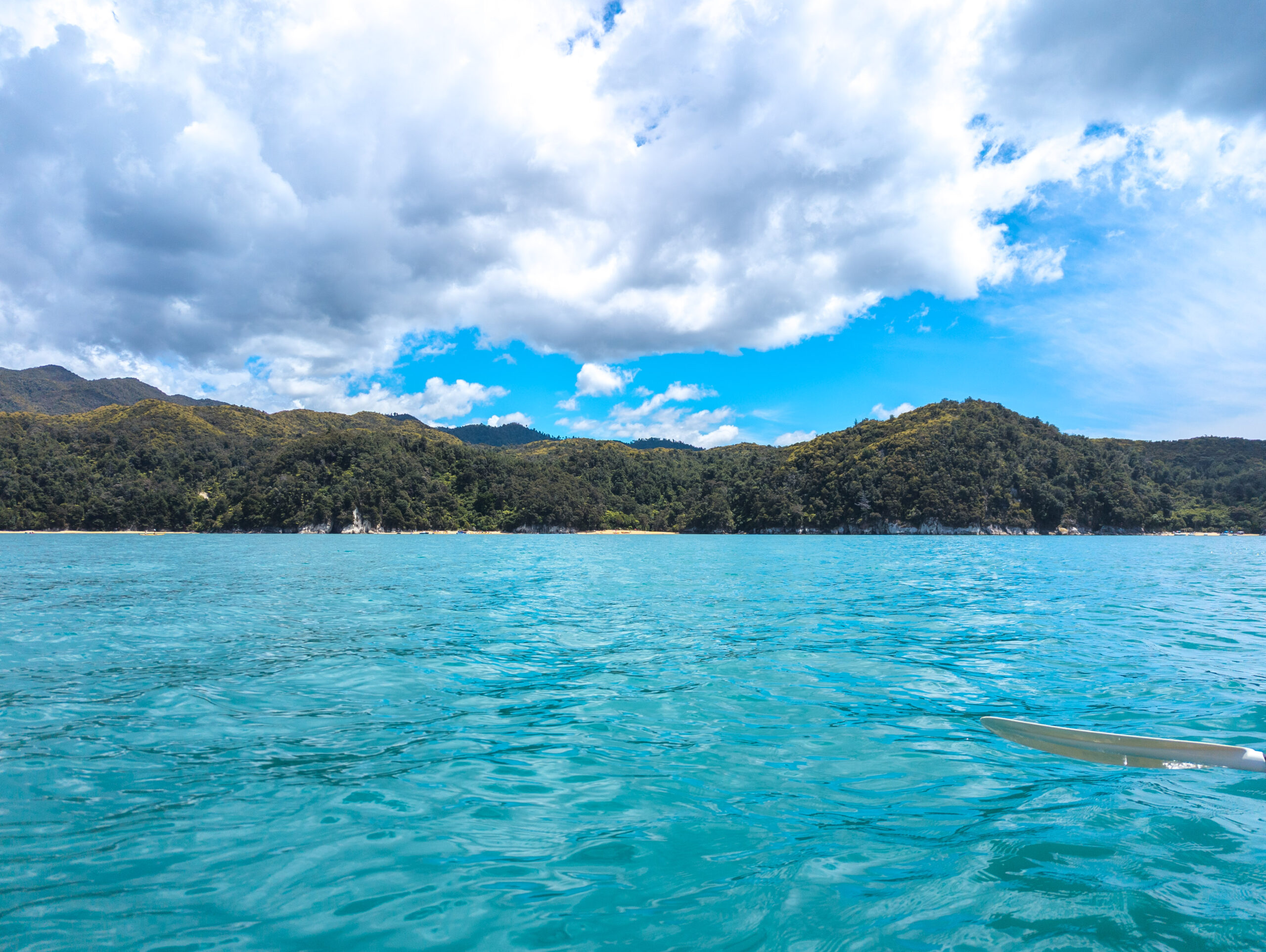
In New Zealand, they take maritime safety seriously. The briefing lasted an hour and a half—longer than some flights I’ve taken. They drilled us on survival. How to exit the kayak underwater if it flips, how to scramble back in without tipping it again, and how to navigate the ocean swells. By the time we finally launched our double kayak into the Tasman Bay, the sun was high and the water was sparkling.
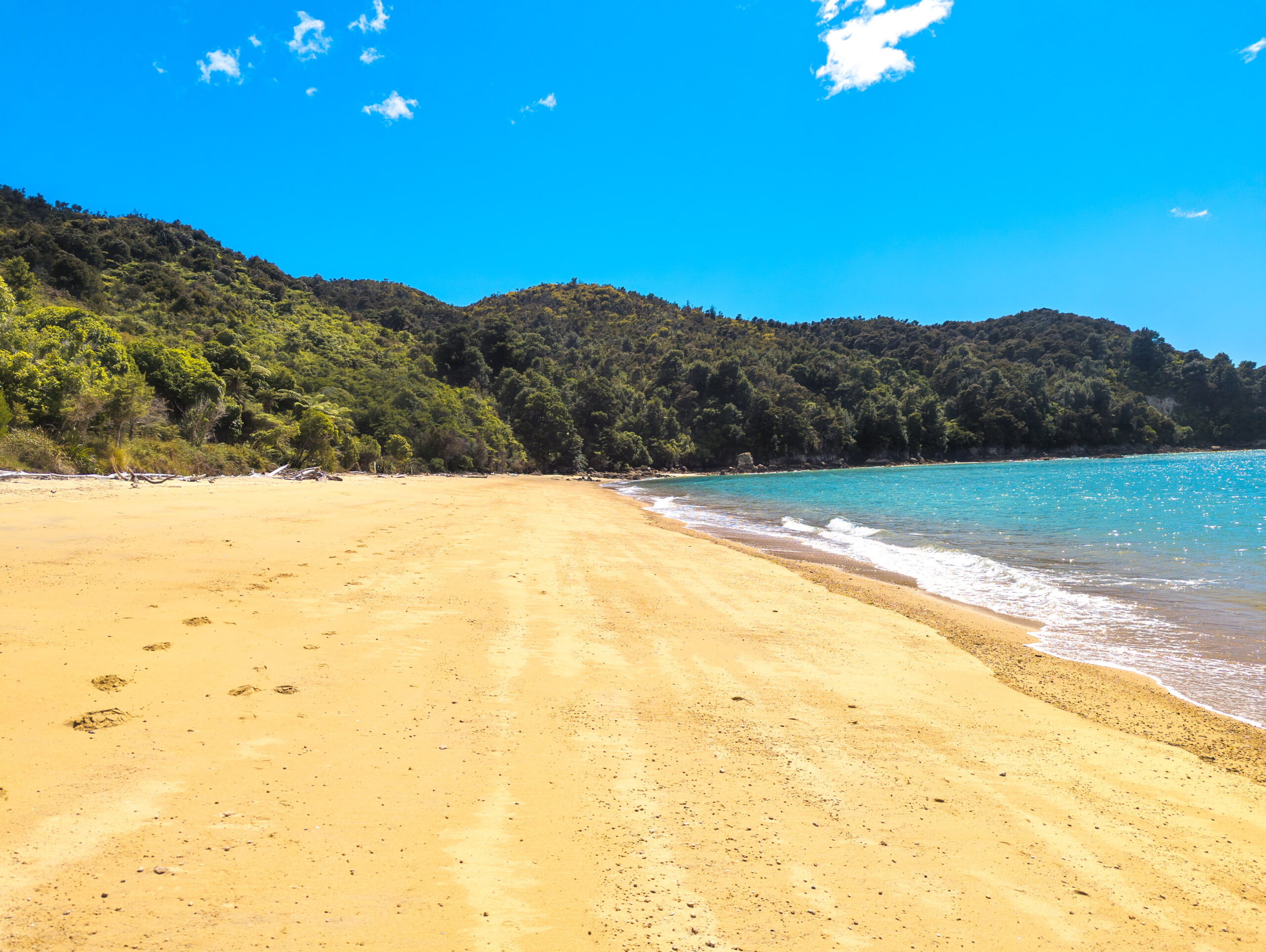
We paddled for an hour to Coquille Bay. The water was clear and the sand golden, so we pulled the kayak up and went for a swim. The water was refreshing, stripping away the fatigue of the short sleep in the van. But the break highlighted the fundamental difference in our metabolic engines: Marta was starving. Her energy was crashing, and she was desperate for food. I, on the other hand, can go 12 hours without eating and feel perfectly fine. While she attacked her snacks, I looked around.
We weren’t eating alone. A Weka—the brazen, flightless thief of the bush—circled our picnic, looking for crumbs with its sharp beak. Then, a seagull landed nearby, watching us with intense, calculating eyes, waiting for a moment of weakness to snatch a piece of bread.
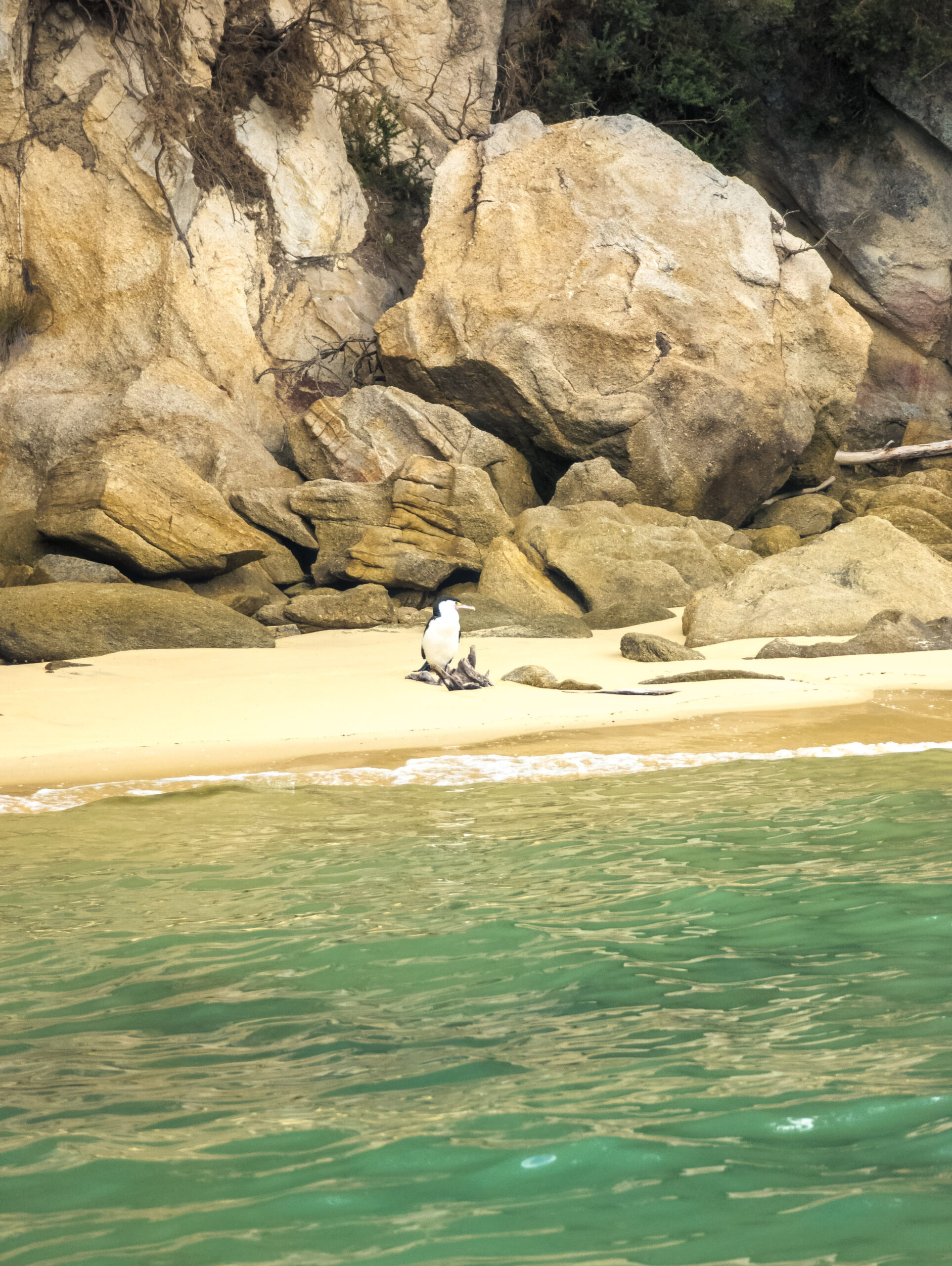
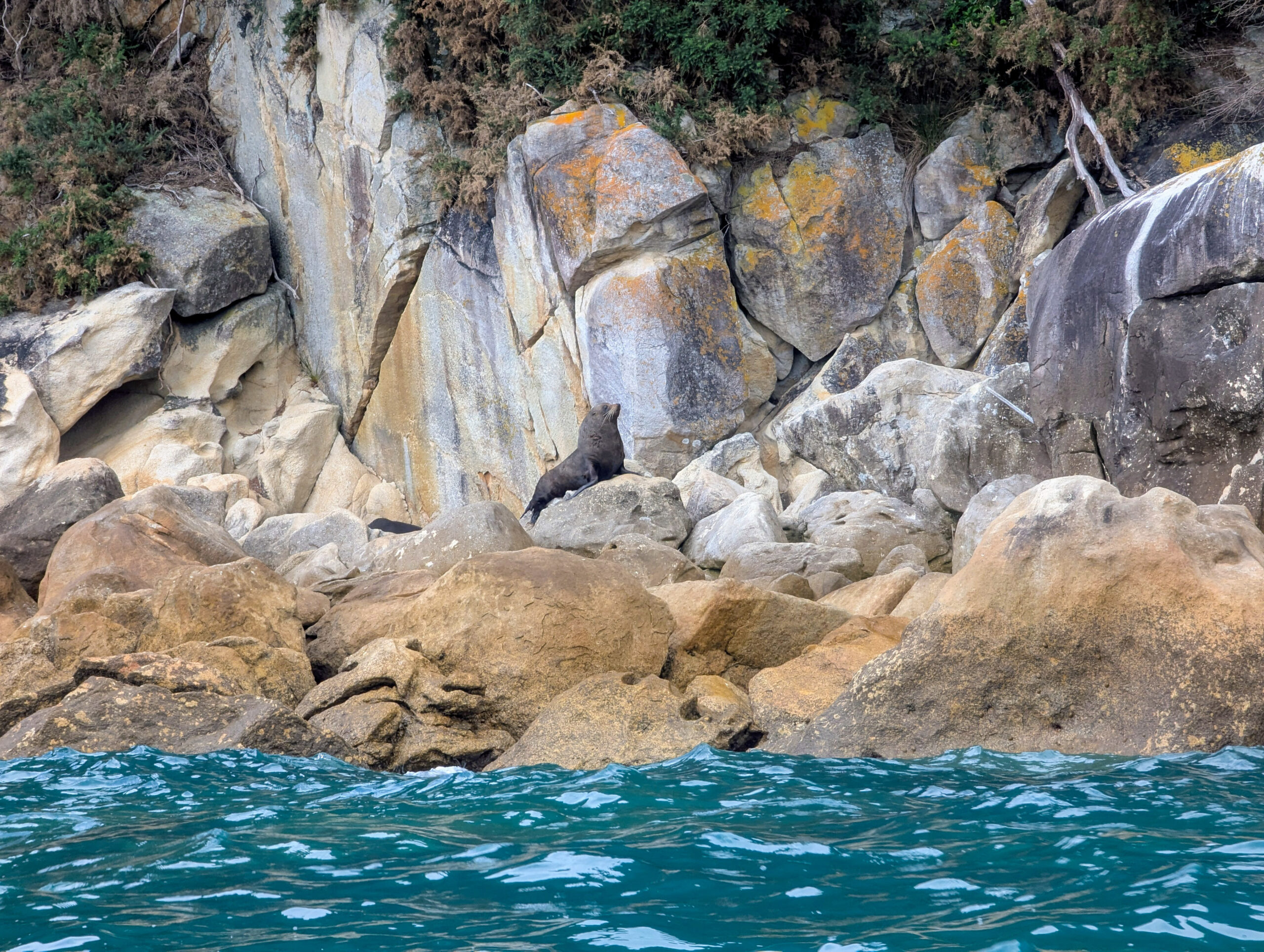
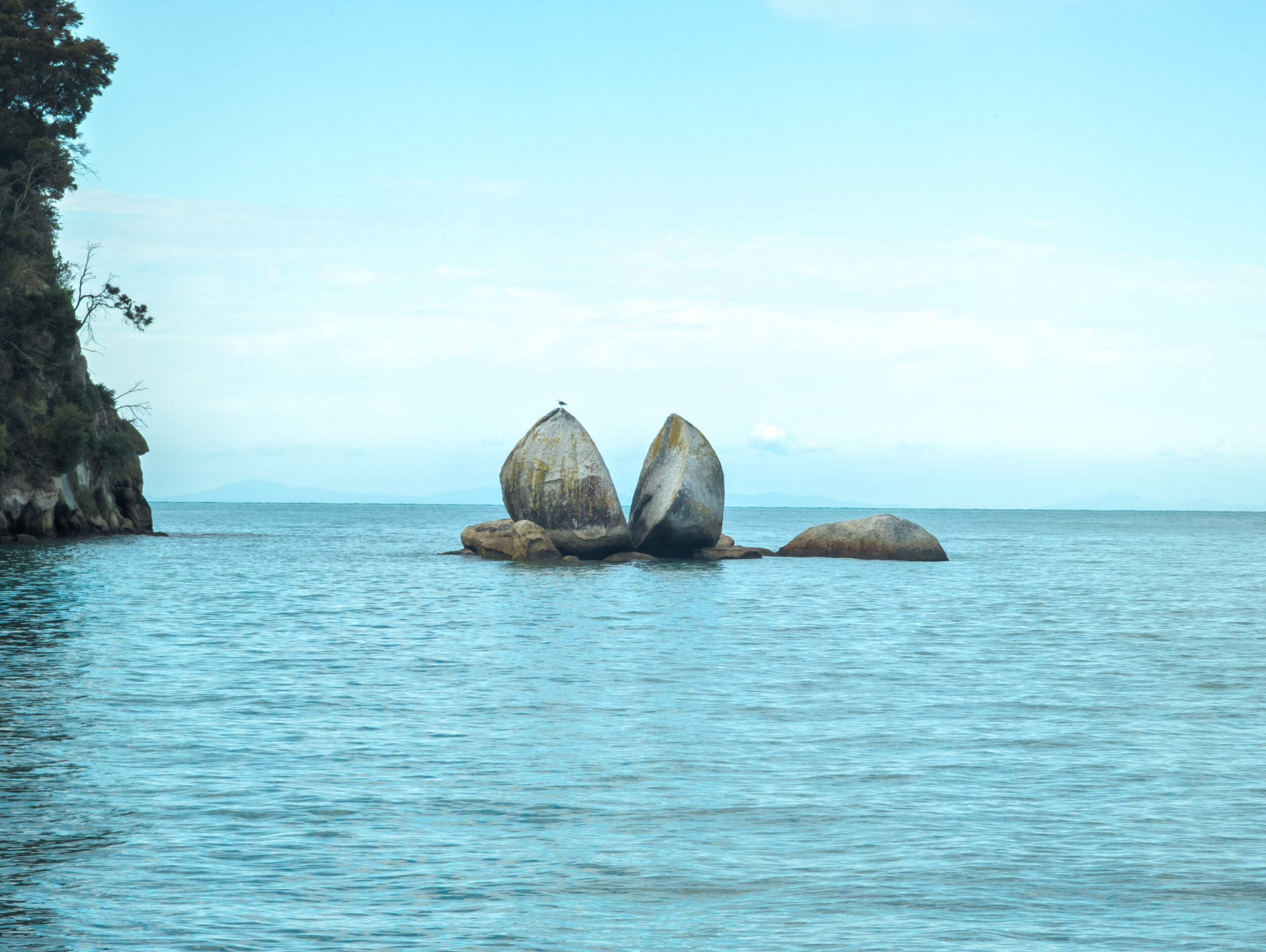
We got back in the boat and decided to get adventurous. We paddled out to Motuara Island, a predator-free sanctuary, and found a cave to explore there. On the rocks outside, we saw a colony of New Zealand Fur Seals (Kekeno), the massive animals lounging in the sun. For a brief, heart-stopping moment, we thought we saw a penguin staying on the beach, the elusive Blue Penguin we had missed in the Catlins. We paddled closer, holding our breath, only to realize it was a cormorant. The ocean plays tricks on you when you want to see something bad enough.
We continued down to Watering Cove before turning back. By the time we reached the rental base, my arms were heavy. The repetitive motion of the paddle had settled into a dull ache in my shoulders, but the satisfaction of moving under our own power was worth it.
The Last Great Walk
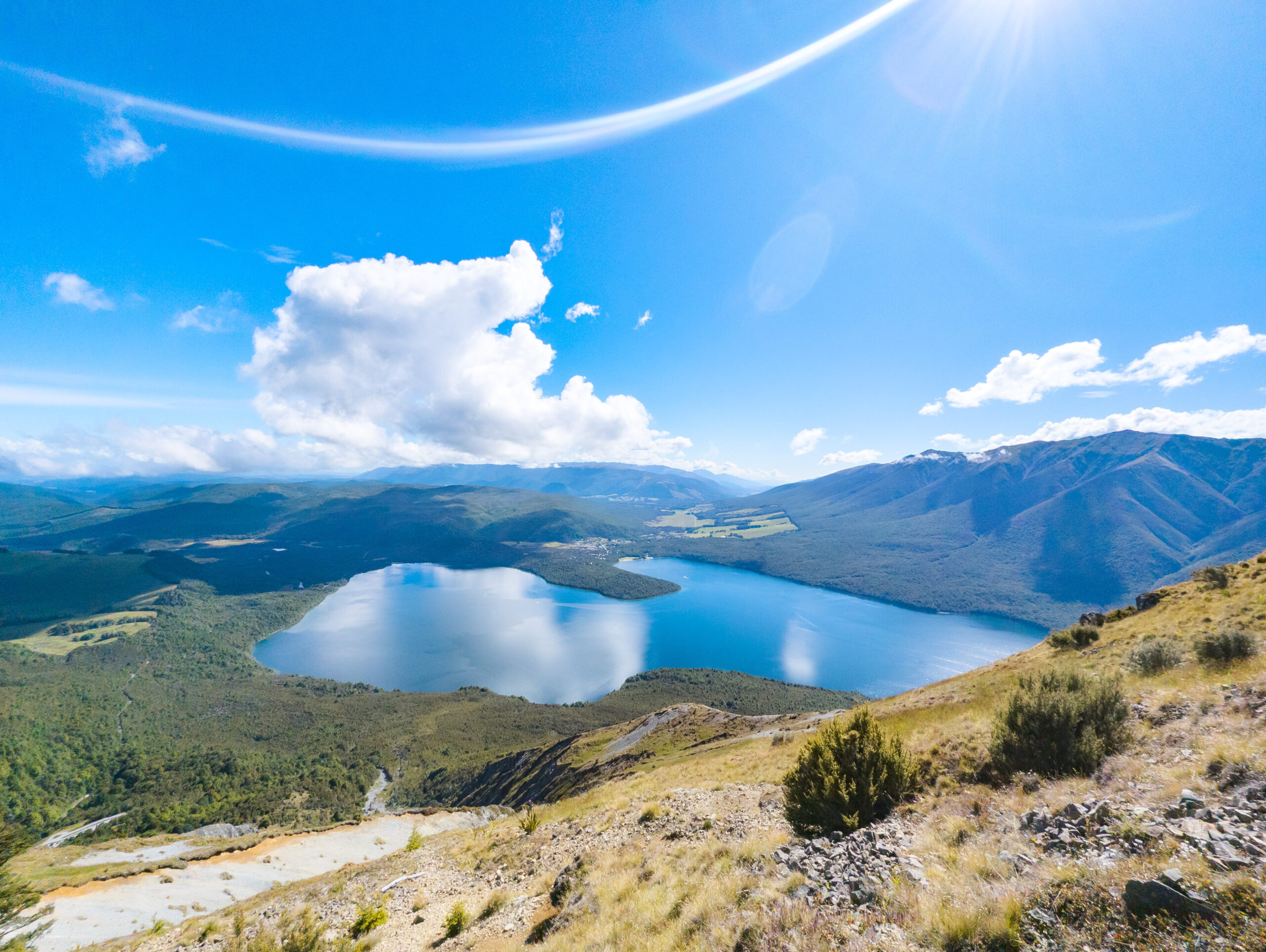
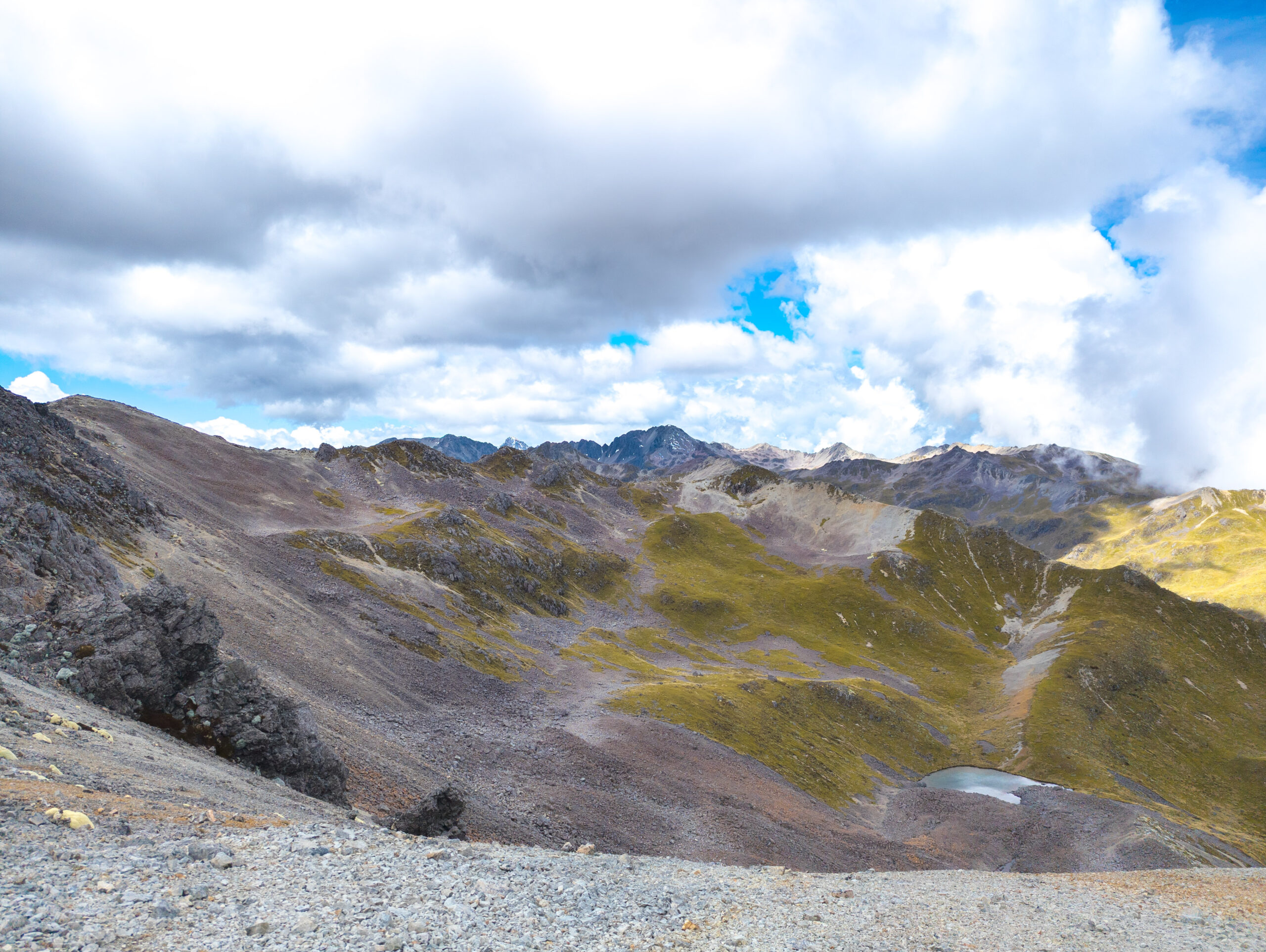
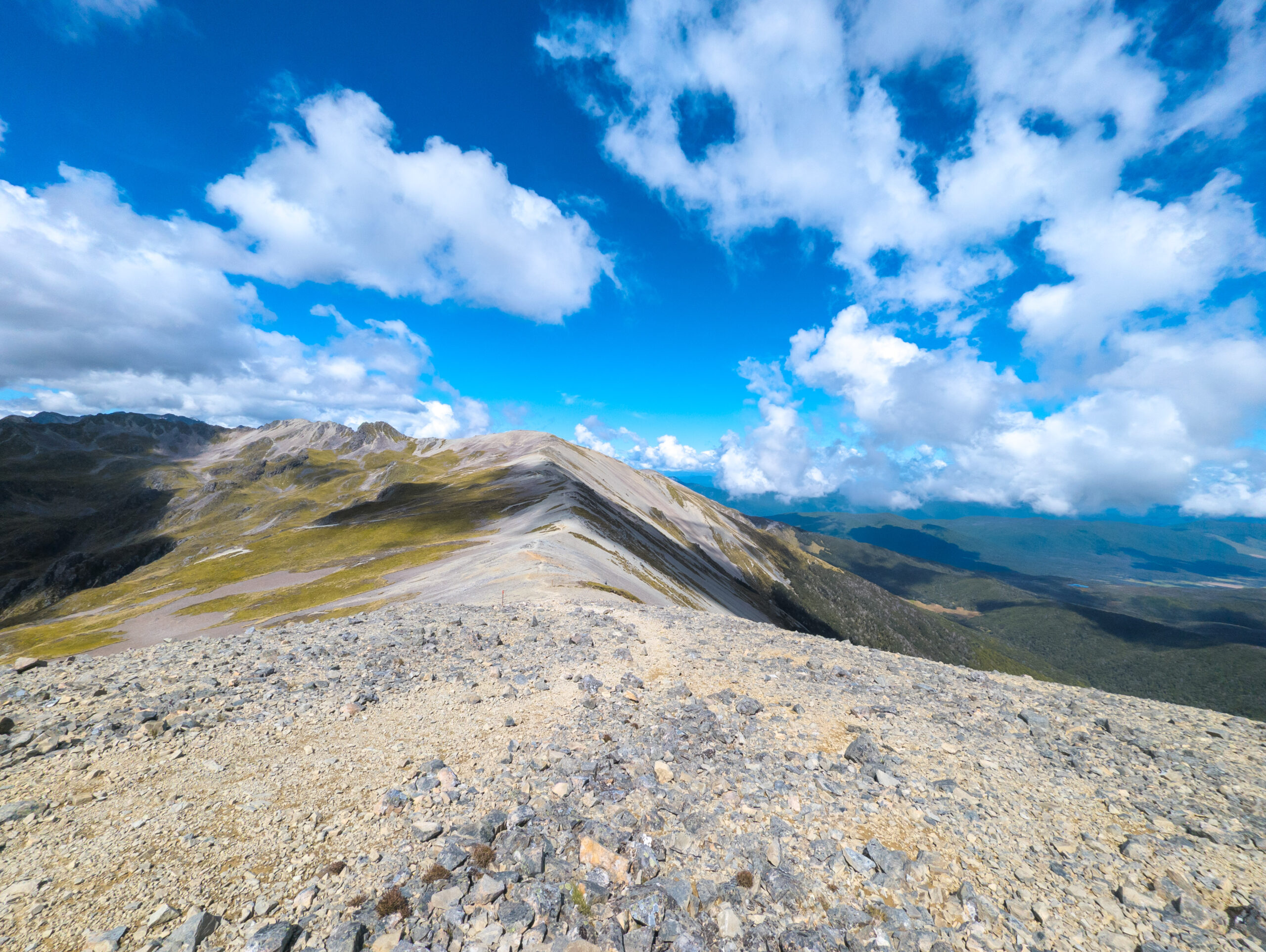
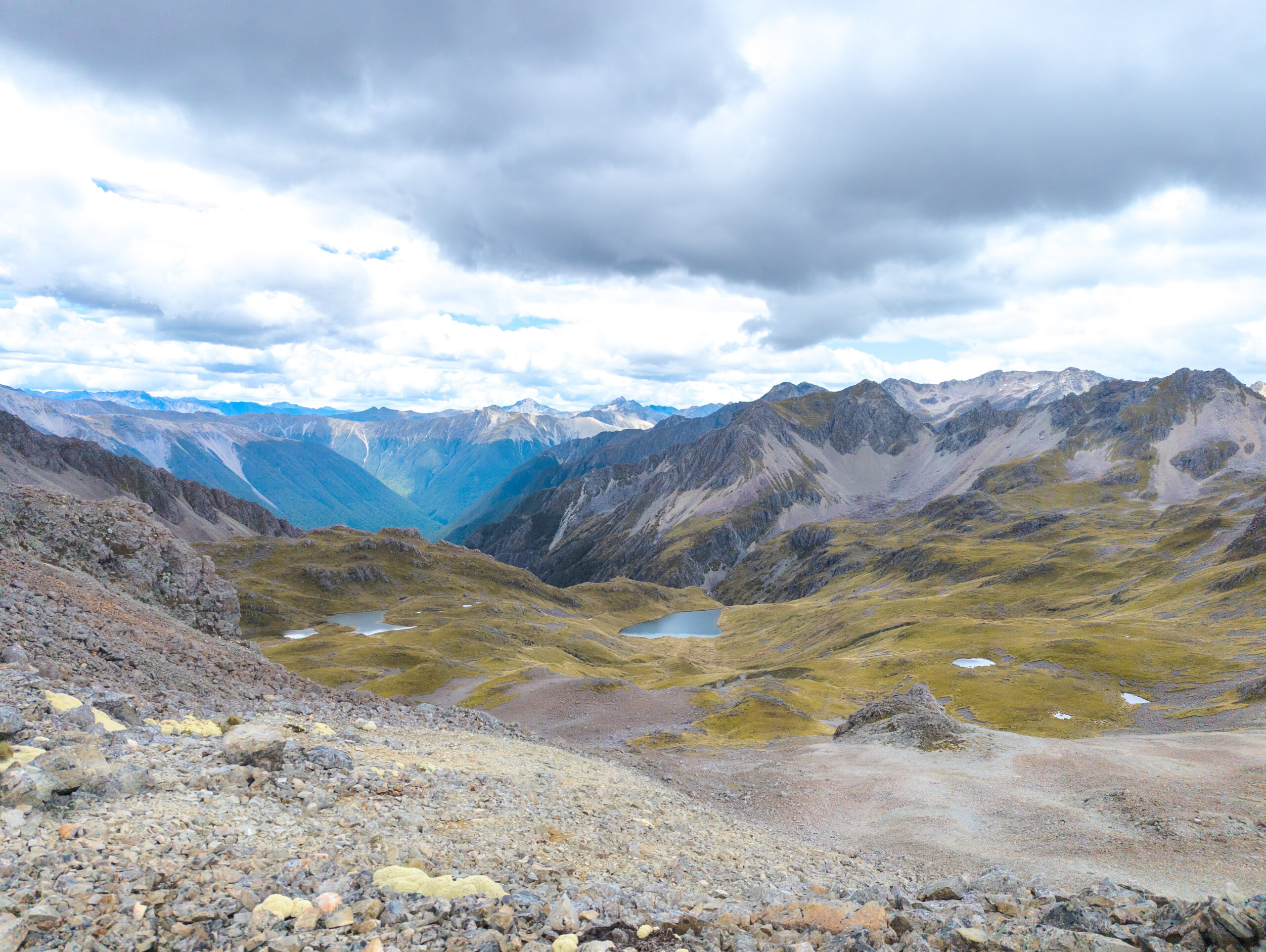
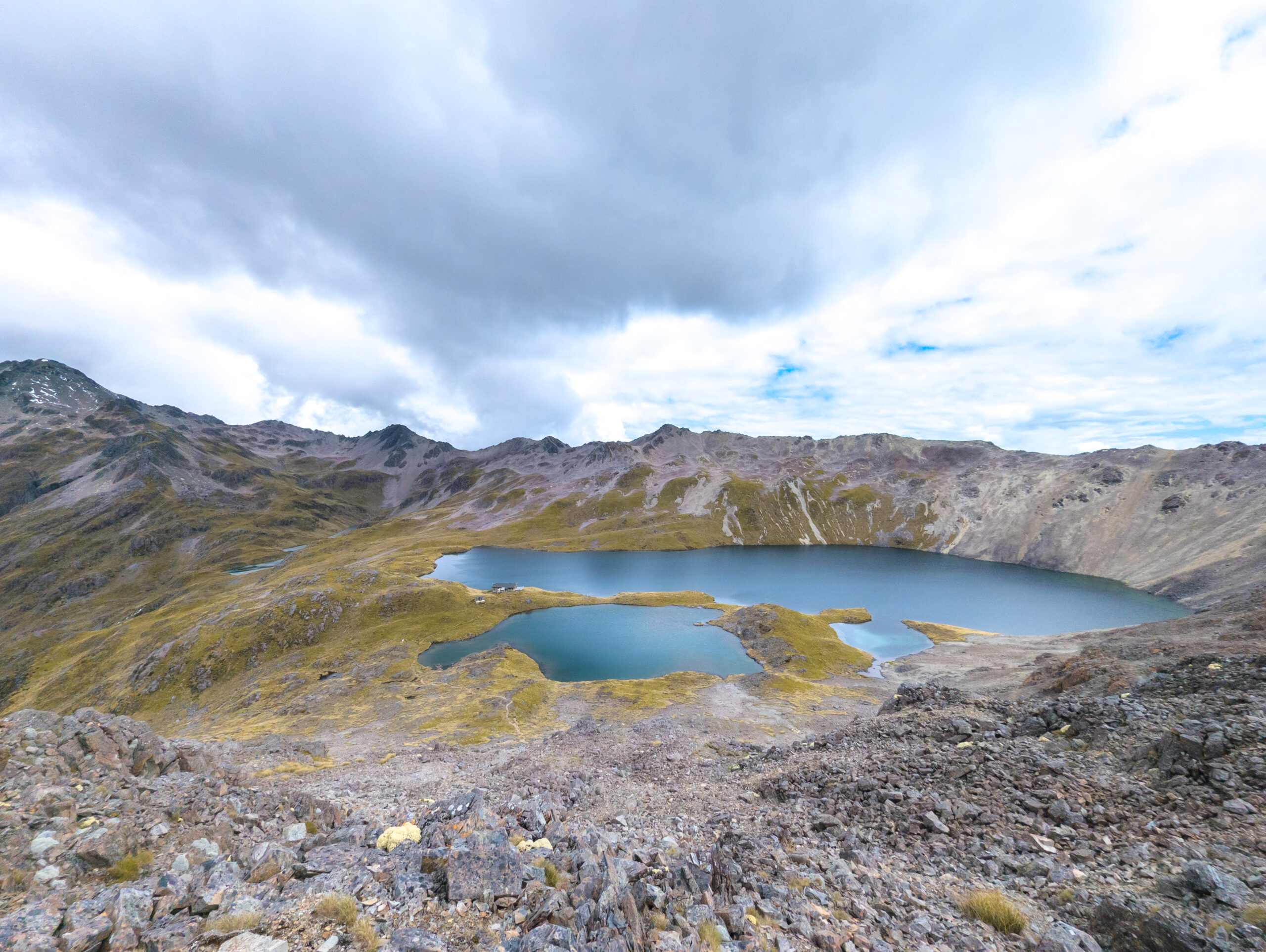
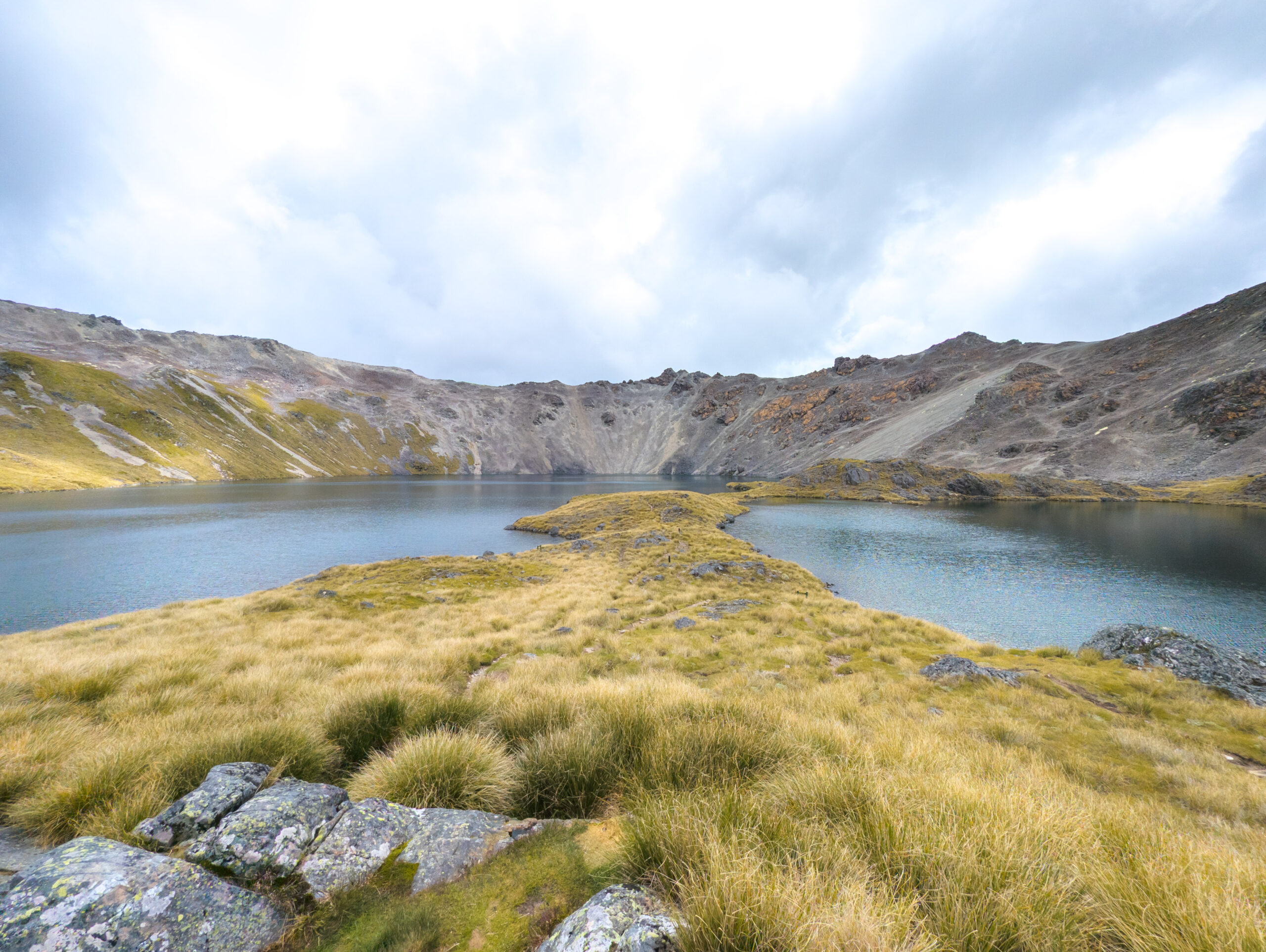
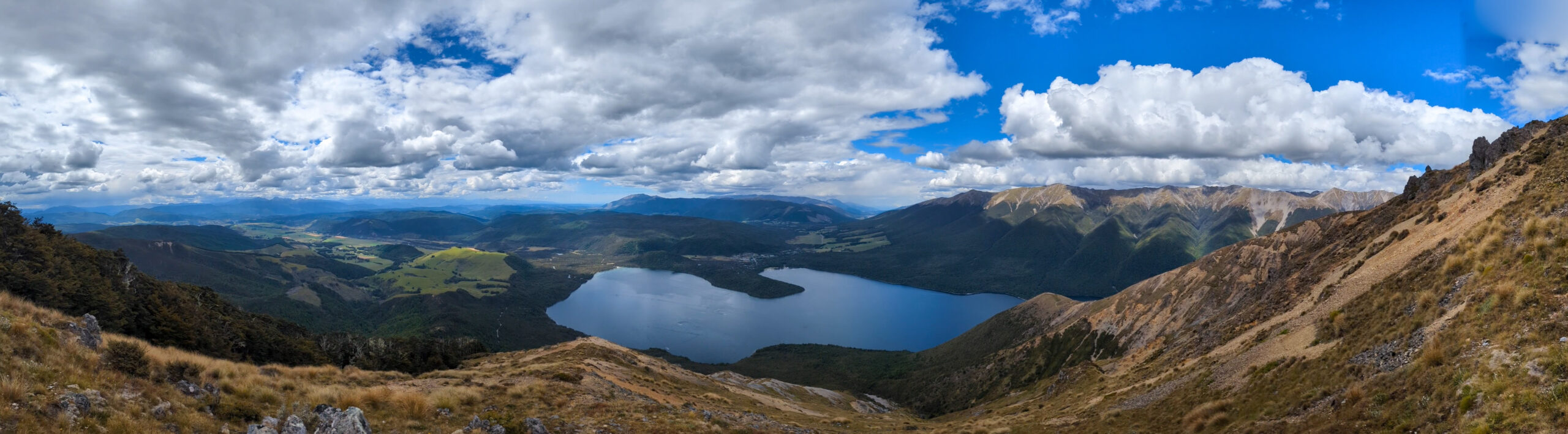
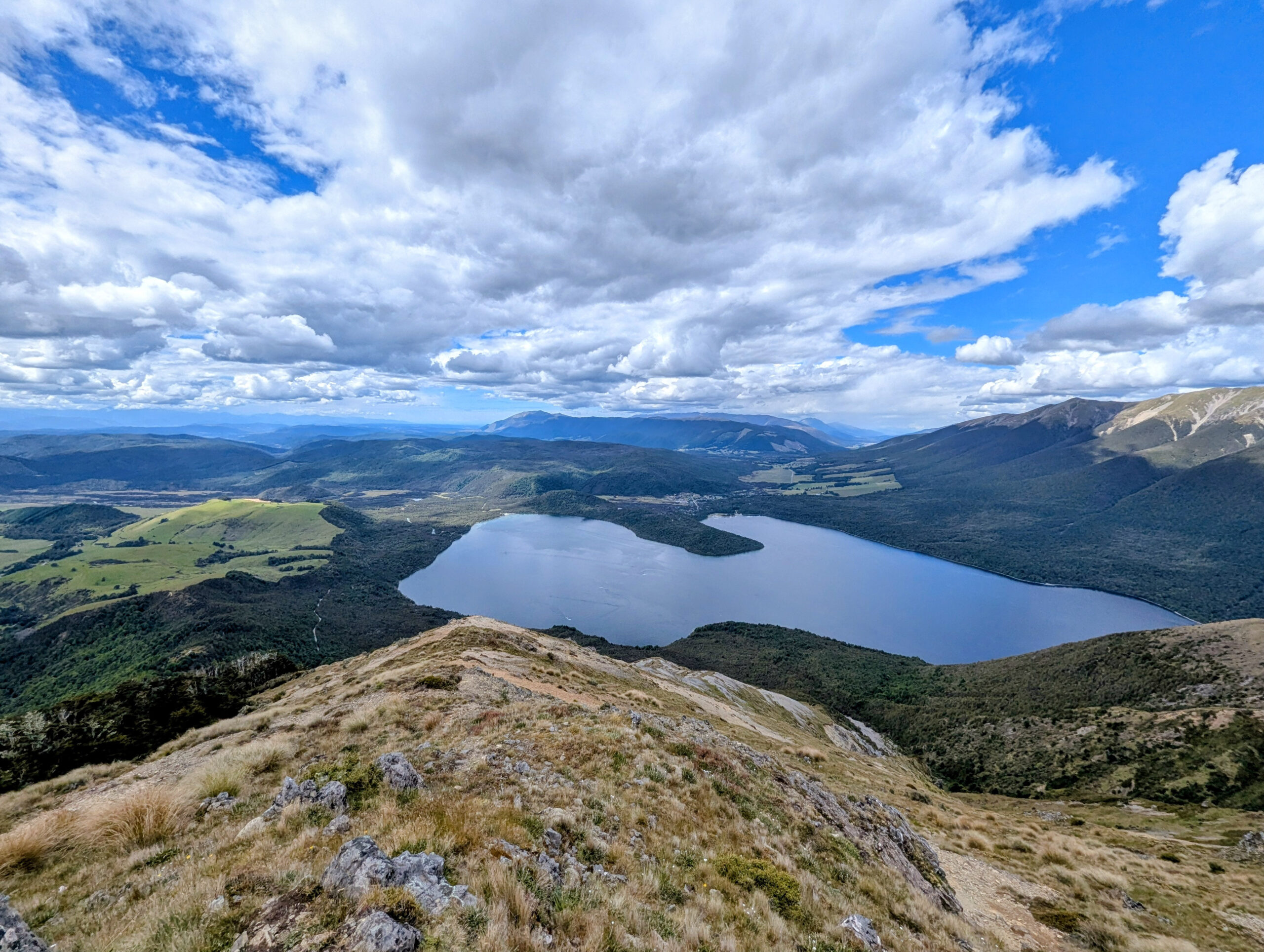
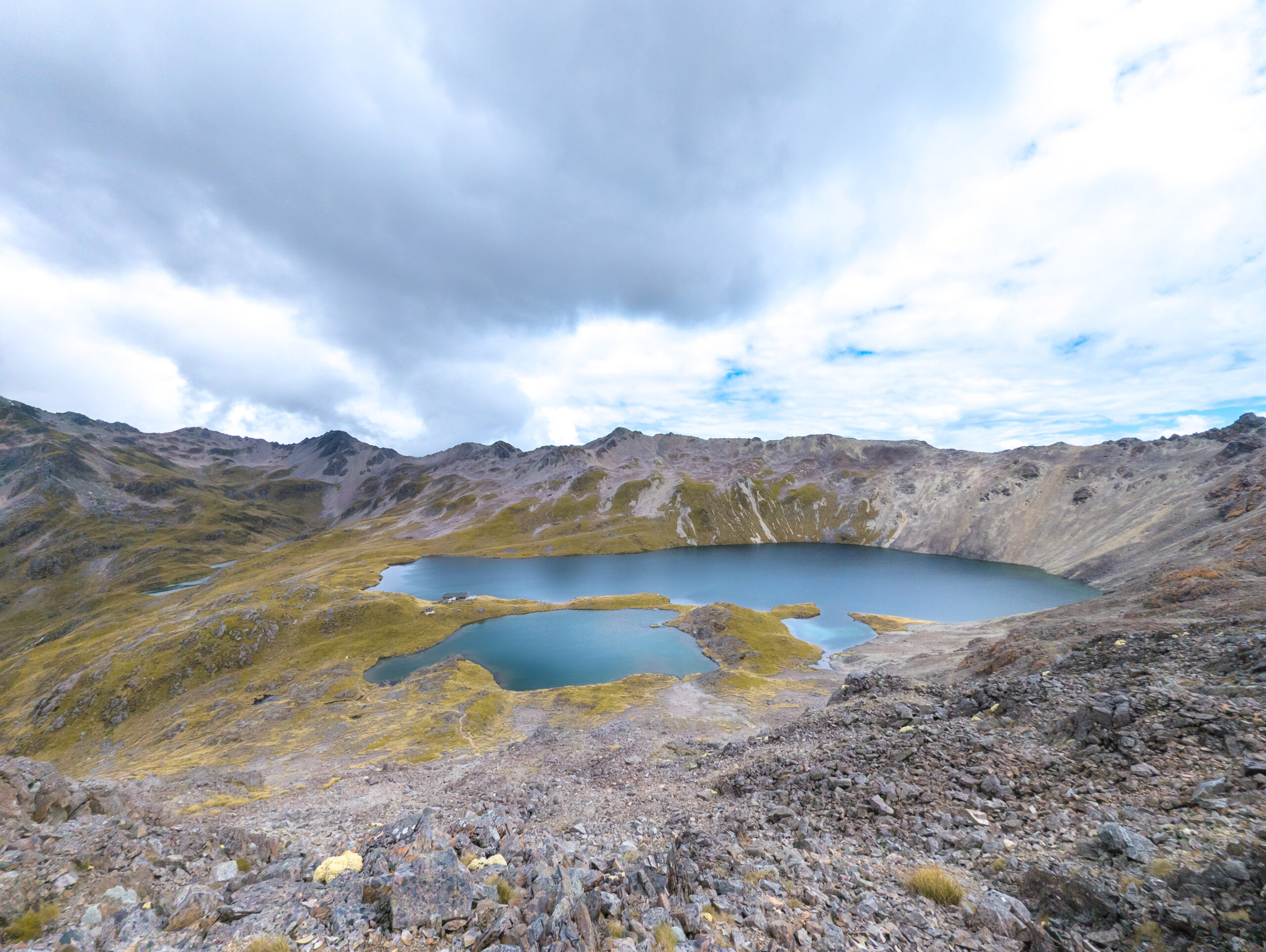
The next day, December 28th, we aimed for the Angelus Hut. It is a spectacular location, perched on a ridge high in the Nelson Lakes National Park at 1,650 meters.
The hike was a sharp contrast to the mud of the Rees-Dart. The track climbs steadily onto an exposed ridge, surrounded by scree and sky. It felt like being back in the Alps—sharp peaks, grey rock, and expansive views. We covered 25 kilometers, moving fast over the dry rock. For the first time in a week, my shoes were completely dry.
We didn’t sleep in the hut. We hiked out the same day and drove south to Lewis Pass. We pulled the van into a roadside stop for one last night in our cargo hold. The rain returned, drumming on the metal roof, a familiar lullaby by now. We slept fitfully, knowing the trip was winding down.

The Birthday Song in the Wind
December 29th was Marta’s birthday. We didn’t want to celebrate in the grey dampness of the pass, so we drove for a while in the morning, chasing the breaking clouds until we found a sunny spot by the side of the road that had a picnic bench. We pulled the van over to set up a proper party.
We had prepared for this. Days earlier, we had bought a box of candles and a pack of gluten-free muffins to mark the occasion. But lighting them up wasn’t a smooth operation. The wind was whipping around the van, blowing out the flame of my lighter as fast as I could flick it. I huddled over the muffins on the picnic table, cupping my hands to create a shield, clicking the lighter again and again until I finally got the candles to hold a flame against the gusts. Then, I sang for her in Italian:
“Tanti auguri a te, tanti auguri a te, tanti auguri a Marta, tanti auguri a te!”
It wasn’t a Michelin-star breakfast, but sitting at that wooden table in the sun, watching the candles flicker in the wind, felt like a perfect summary of our improvised week. We drove the final leg to drop Marta off. She had a house-sitting gig lined up—she would be looking after four sheep, some cats, and a flock of chickens. It was a strange goodbye; dropping her off at a farm was a sharp shift from the nomadic life we had shared.
The Volcanoes of Christchurch
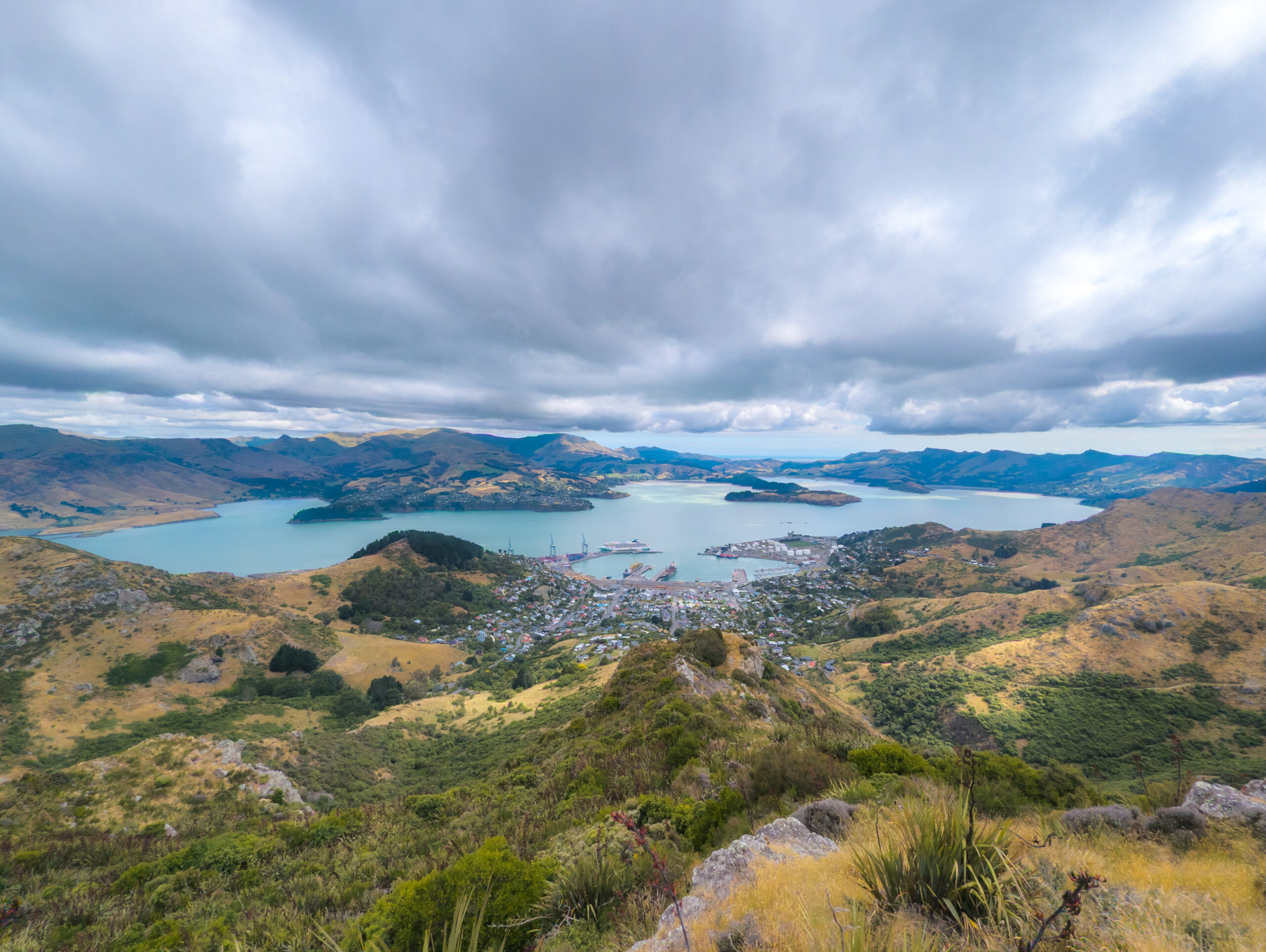
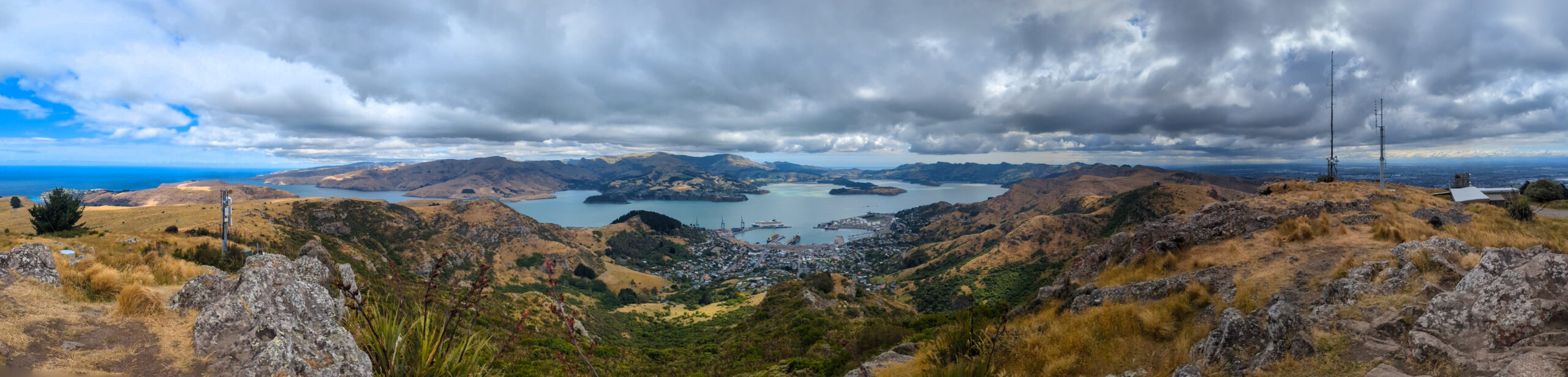
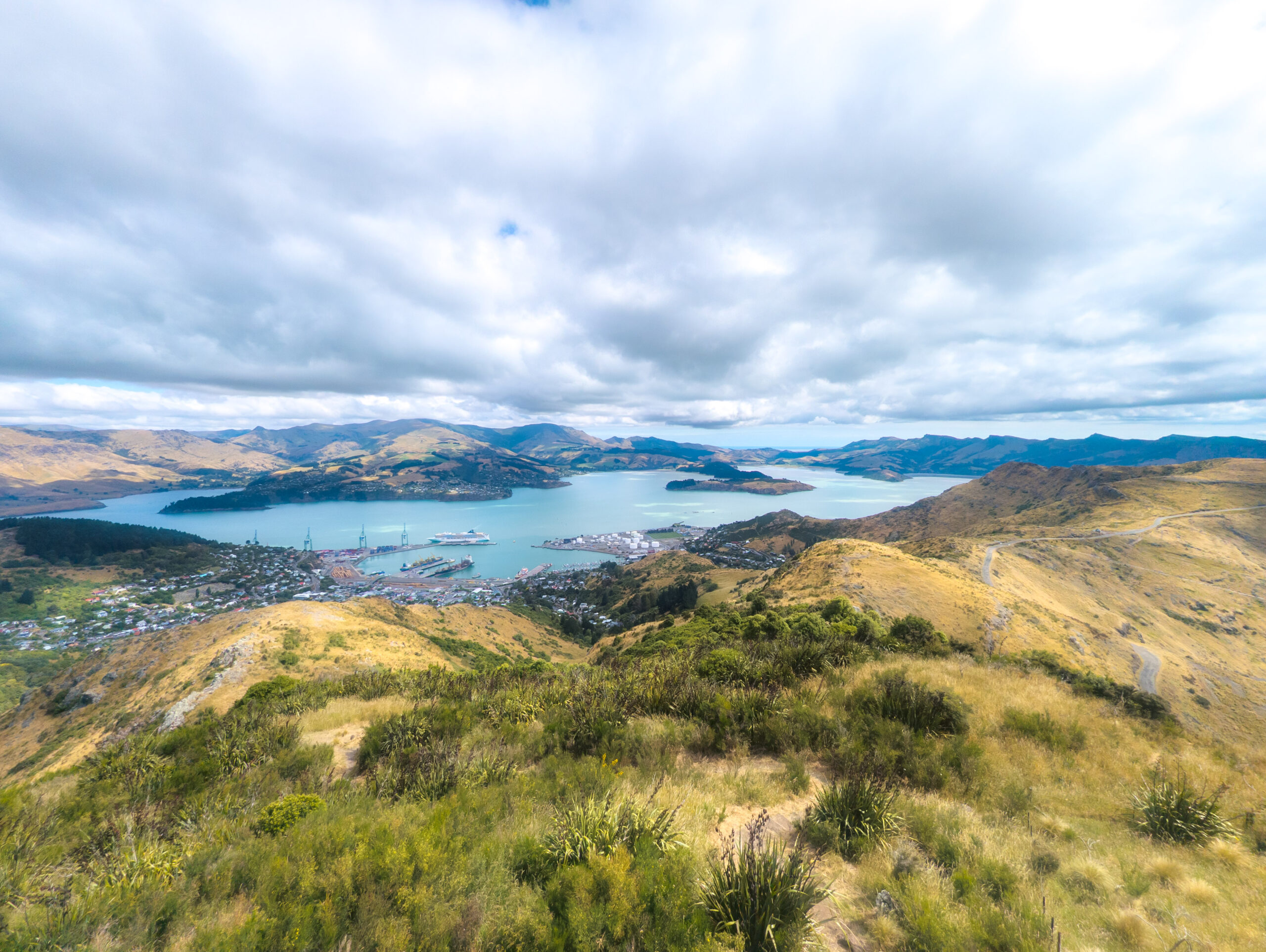
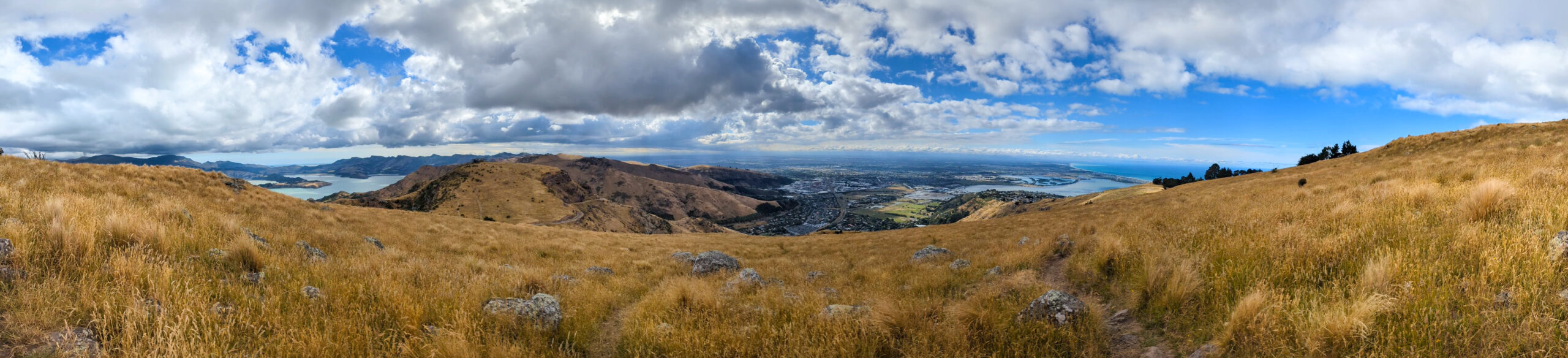
I returned the cargo van at the airport, but my flight wasn’t until the next morning at 9:00 AM. I had time to kill, so I headed to the Christchurch Gondola. The machinery felt old and slow, grinding its way up the Port Hills, but the view from the top was worth it. I did a hike along the crater rim, walking out to some of the antennas on the ridge, looking down at the harbor of Lyttelton on one side and the city on the other.
There is a small museum at the top of the gondola station, and I was surprisingly impressed. It explained the volcanic history of the area—how the harbor is actually the flooded crater of an ancient shield volcano, and the Banks Peninsula is formed by two massive, extinct volcanic cones. It was a quiet, educational end to the South Island chapter, grounding the landscape I had just driven through in deep geological time.
I spent the night at the UrbanZ Hostel in Christchurch, washing the dust of the South Island out of my clothes in the laundry room.

The Concrete Canyon
The next morning, I caught my flight to Auckland. I took the SkyDrive bus from the airport to the city center—efficient, cheap, and far better than the chaotic public transport I’d dealt with earlier. I checked into the Attic Backpackers around 12:00 PM.
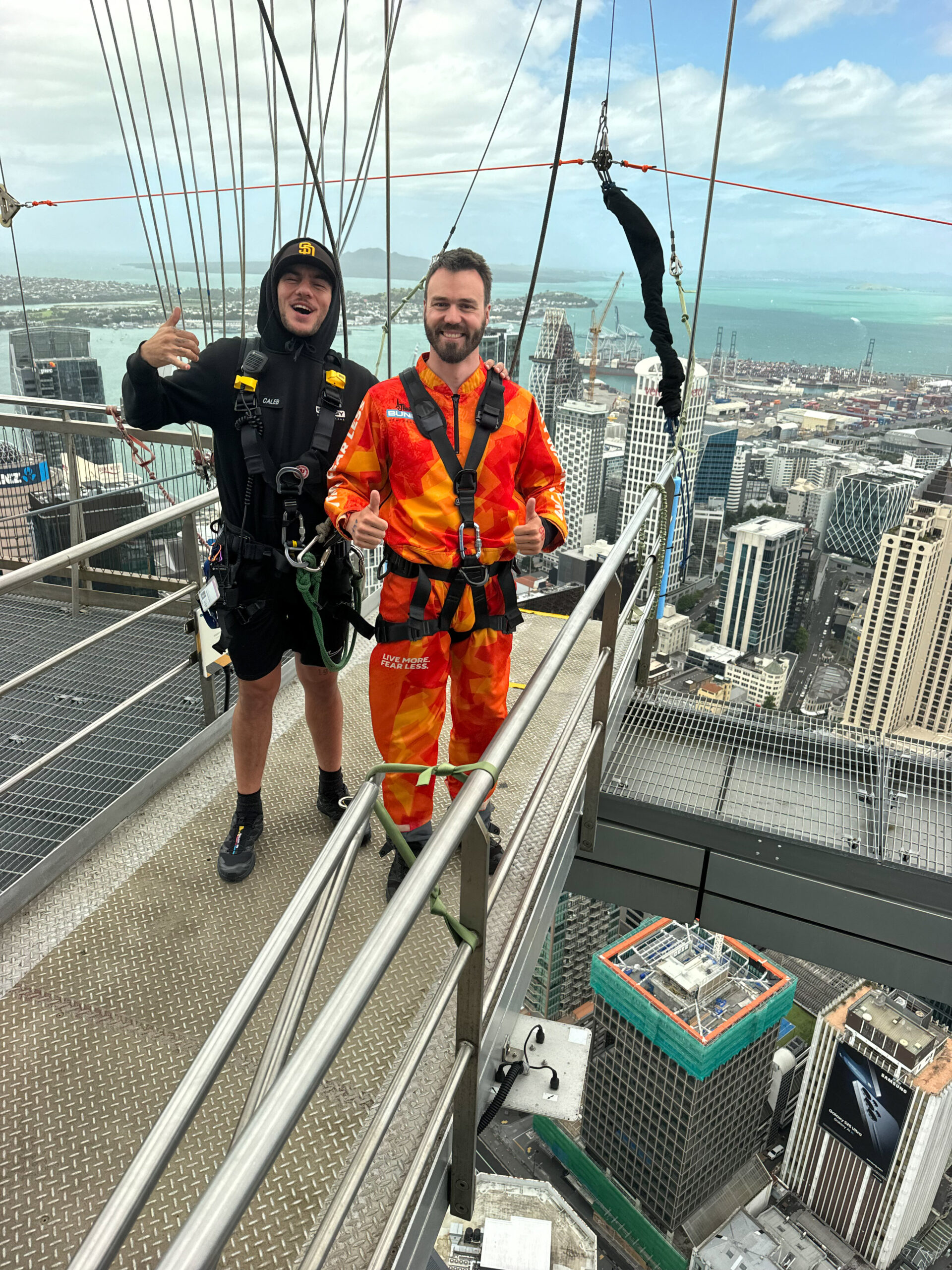
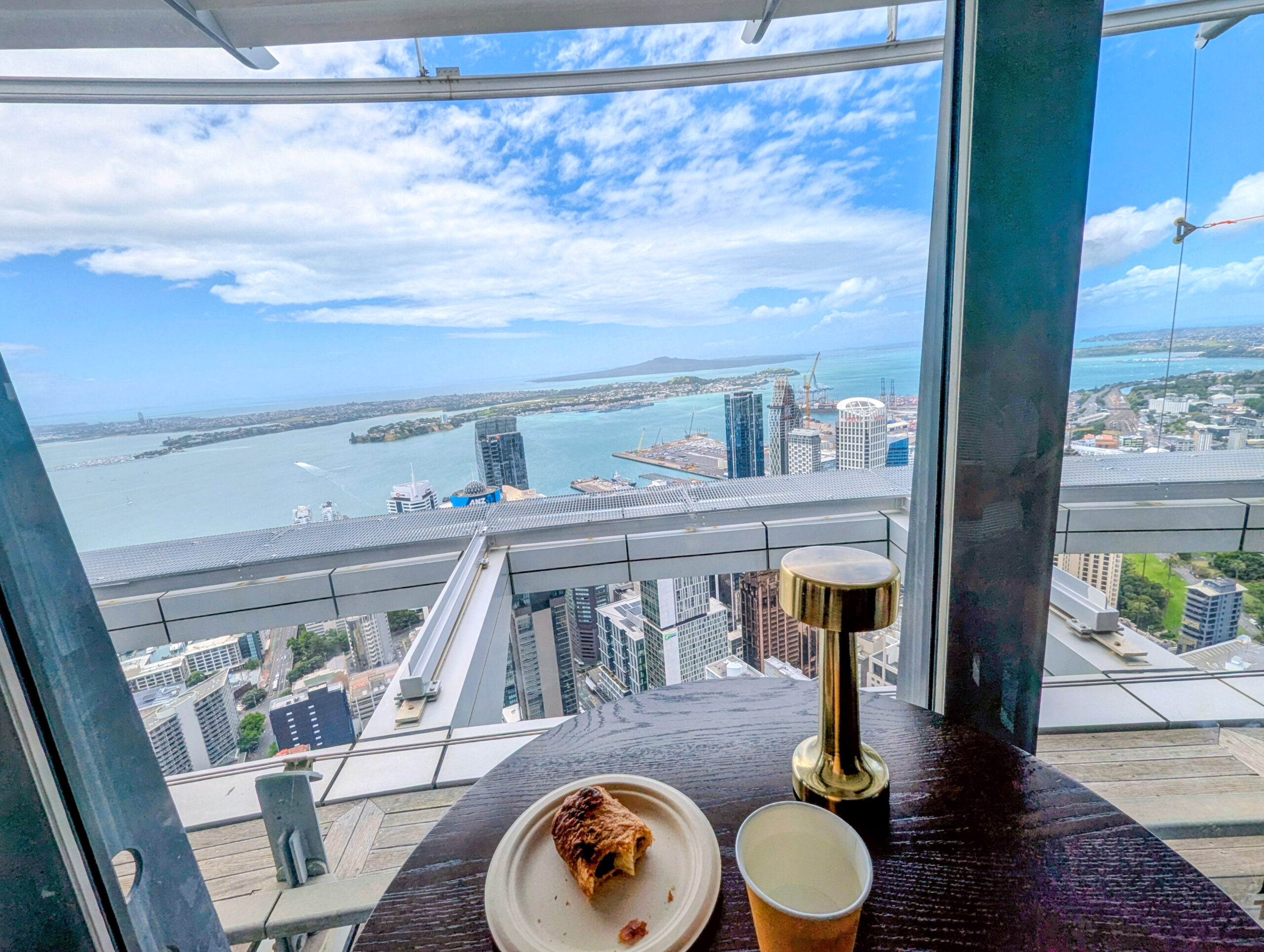
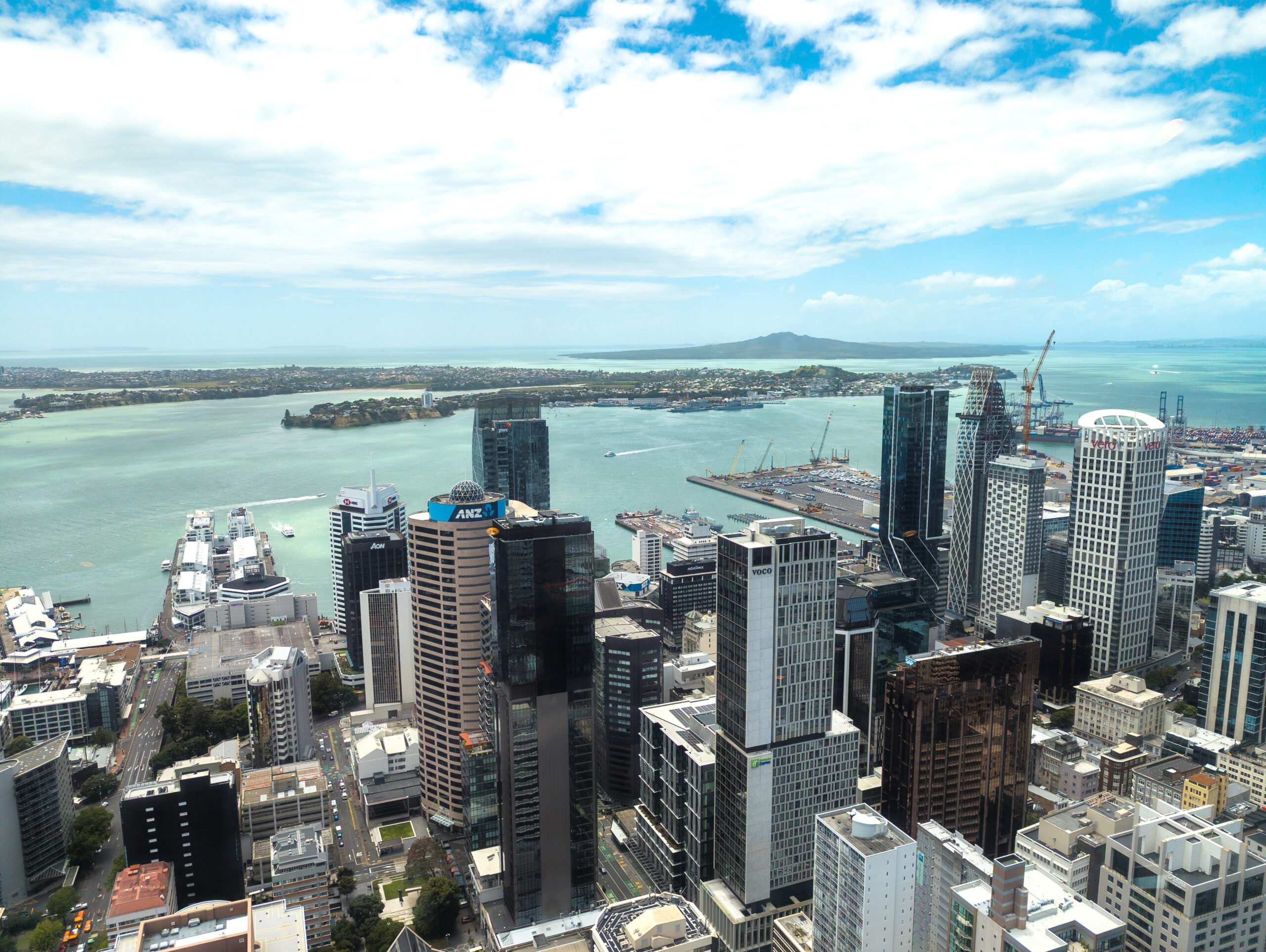
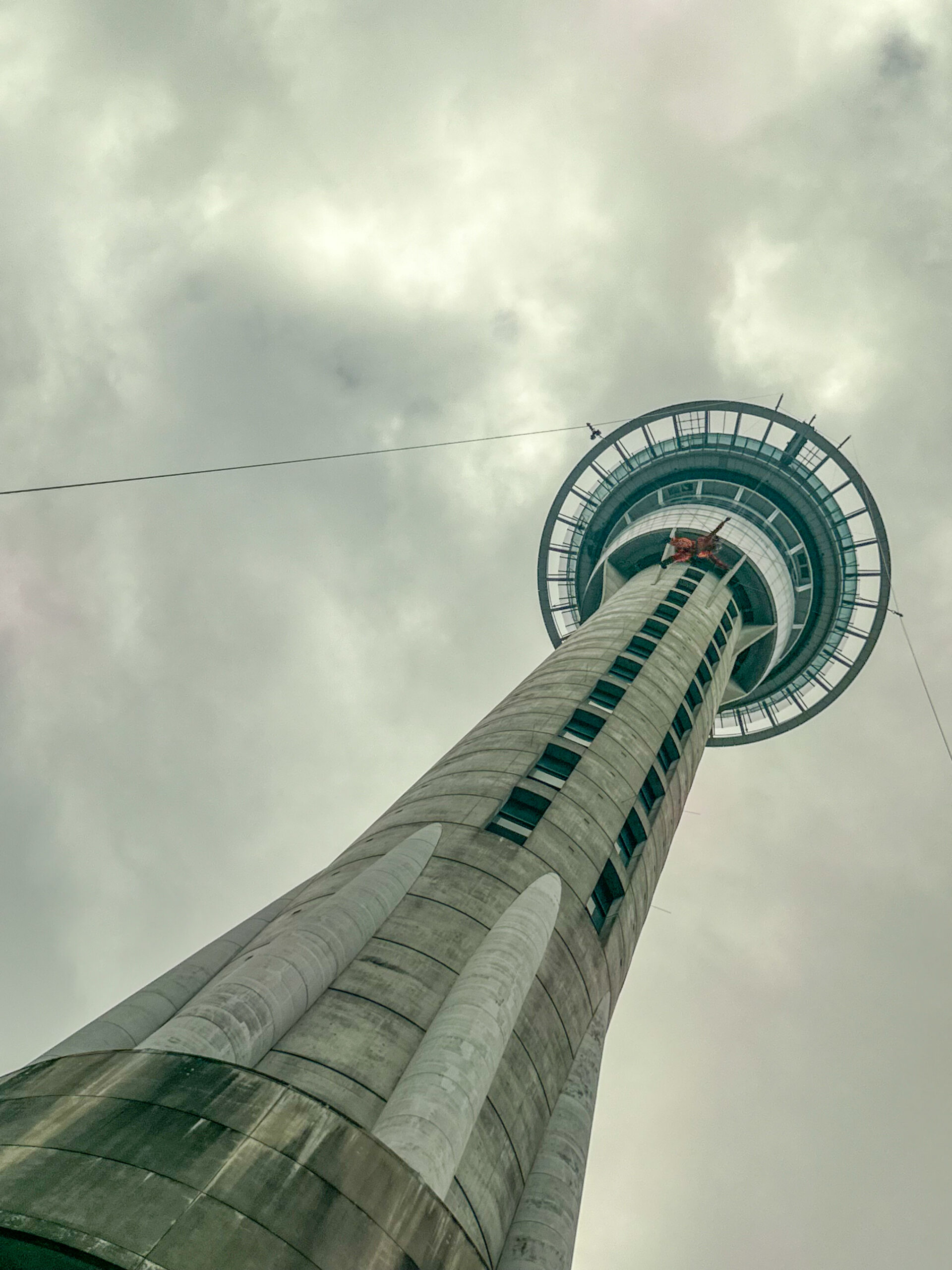
My day in Auckland was dedicated to gravity. I headed to the SkyTower, the tallest structure in the Southern Hemisphere. Before the jump, I went up to the observation deck. I bought a chocolate croissant, found a seat by the window, and just watched the city for an hour. It was calm up there, detached from the hustle below.
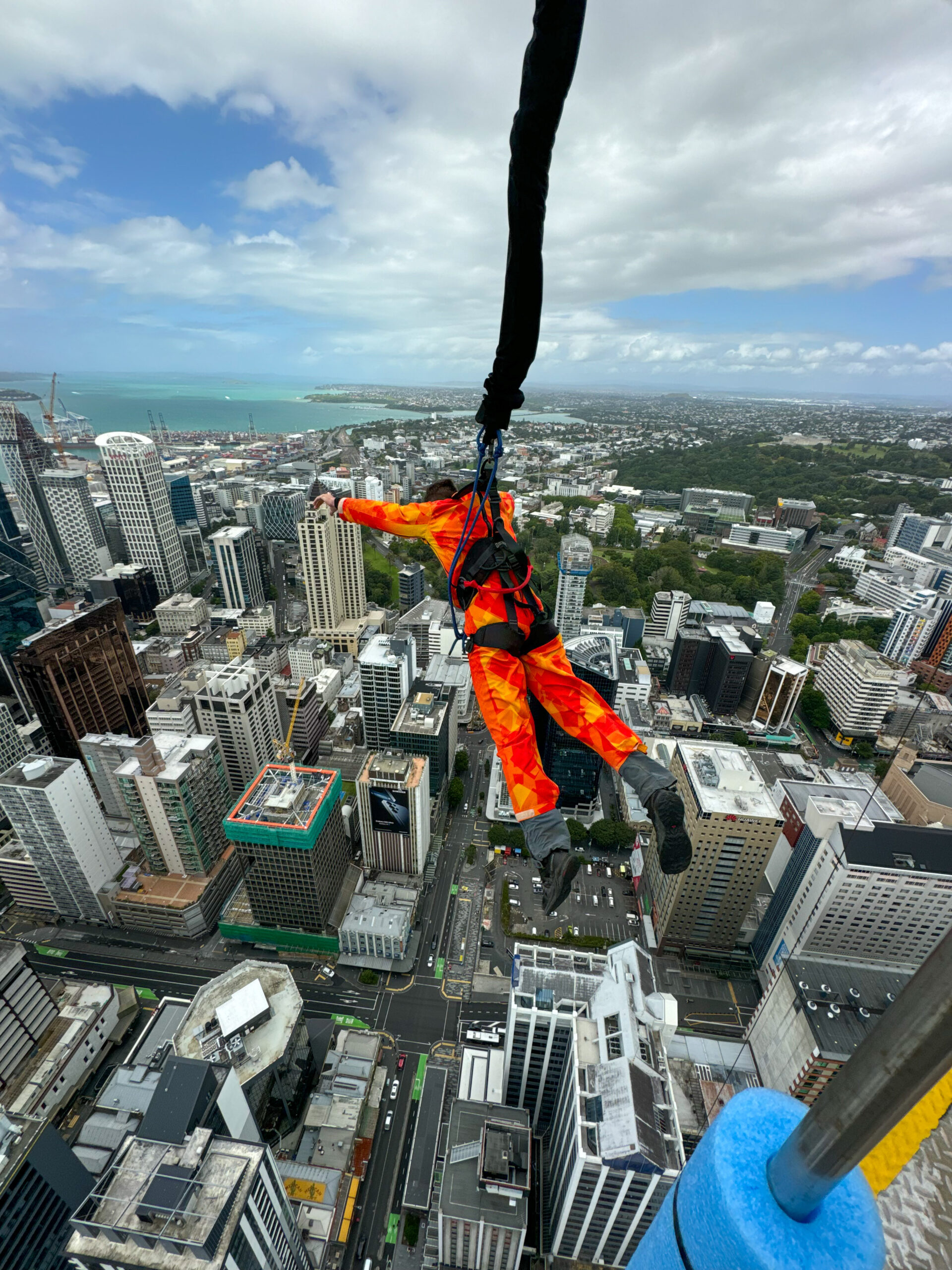
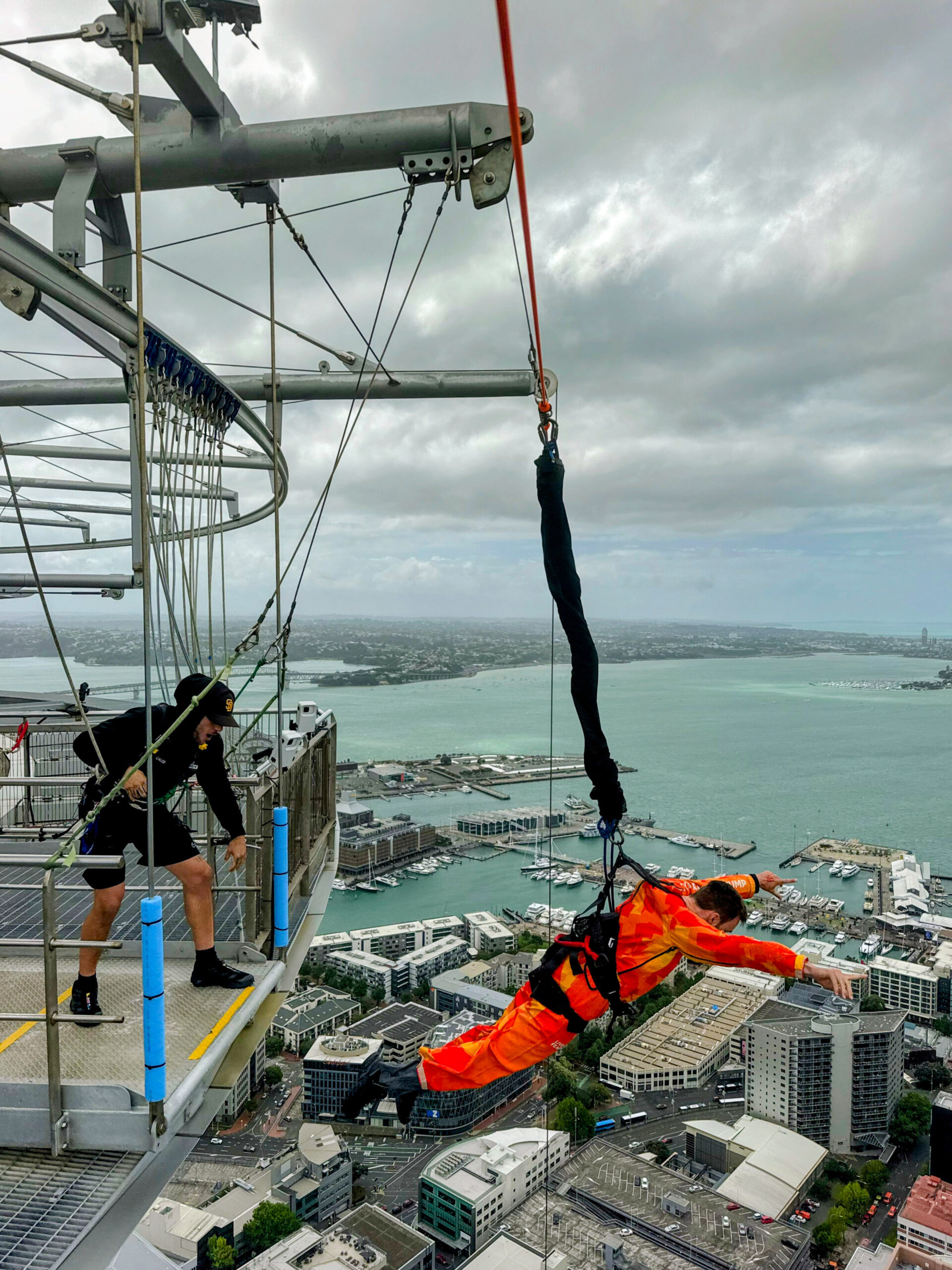
Then, it was time for the SkyJump—a controlled wire descent from 192 meters. Unlike a bungee, where you are free, here they dress you in a bright orange jumpsuit that makes you look like a prisoner or a lost astronaut. They made me remove everything, even my necklace. It felt sanitized.
Because of the high winds (60 km/h), the tower was swaying notably. The staff told me that if the wind hit 70 km/h, they would cancel the jumps. My friends who had done it before told me they just stepped off and fell, but I wanted to jump. I asked the instructor if I could run off the platform.
“No running,” he said. “You have to step.”
I didn’t listen. When he gave the signal, I launched myself in a massive leap forward, pushing off hard. The instructor looked genuinely surprised as I flew out. Because of my momentum and the high wind, the wire didn’t just lower me down—it swung me wild and wide, oscillating violently above the city grid. It was chaotic, fast, and fun, but it lacked the raw terror of a true freefall.



The Last Morning
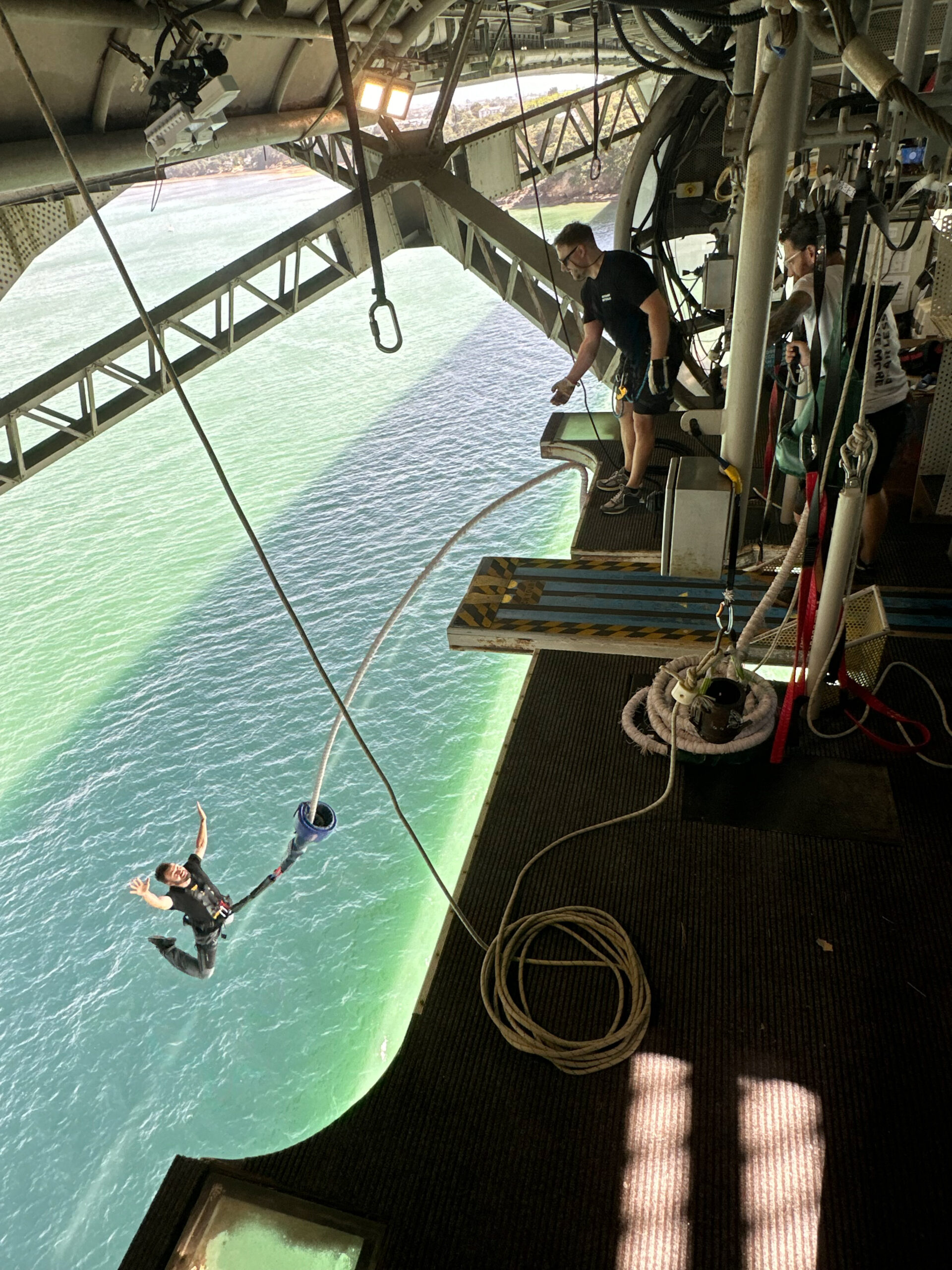
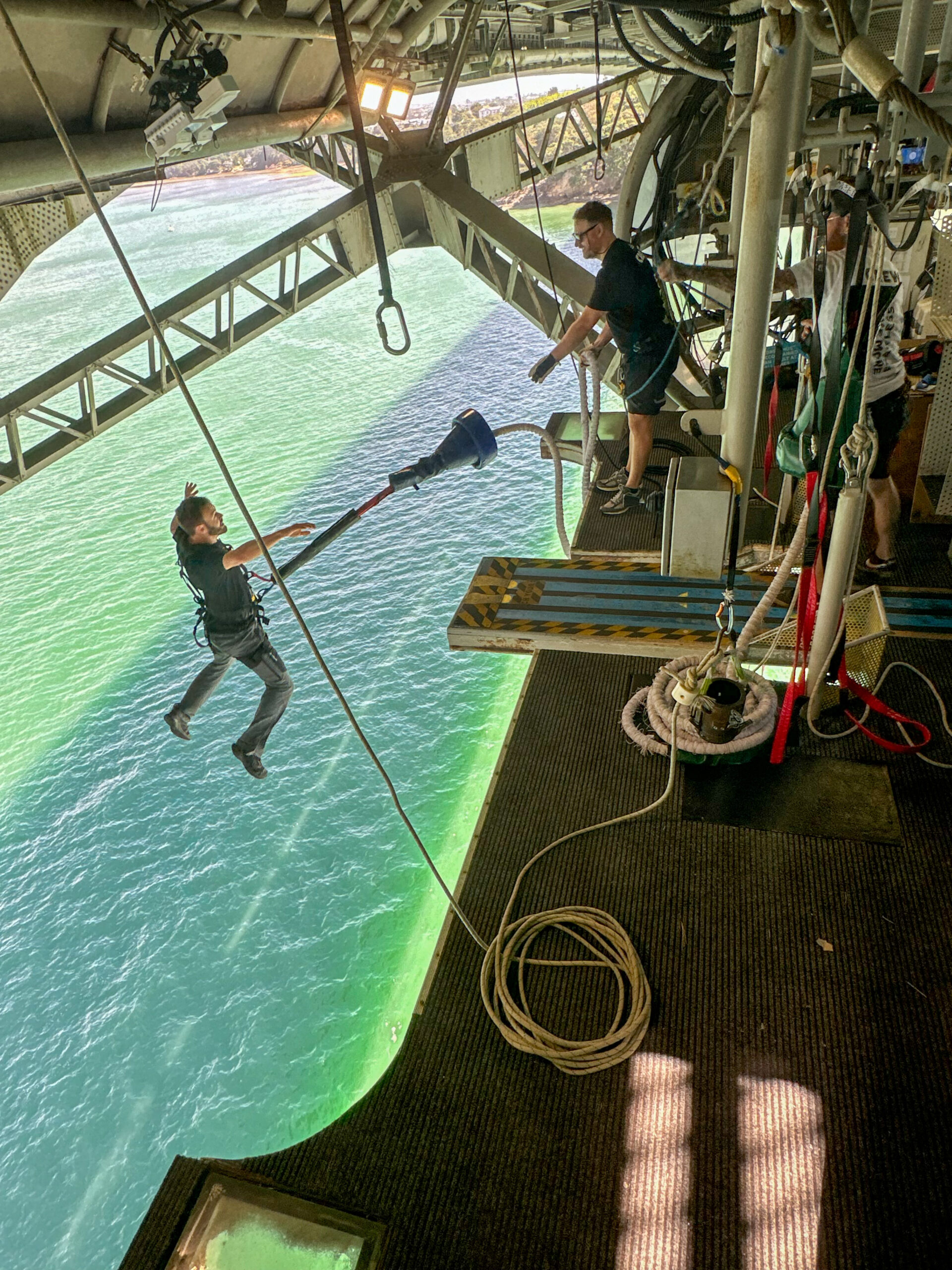
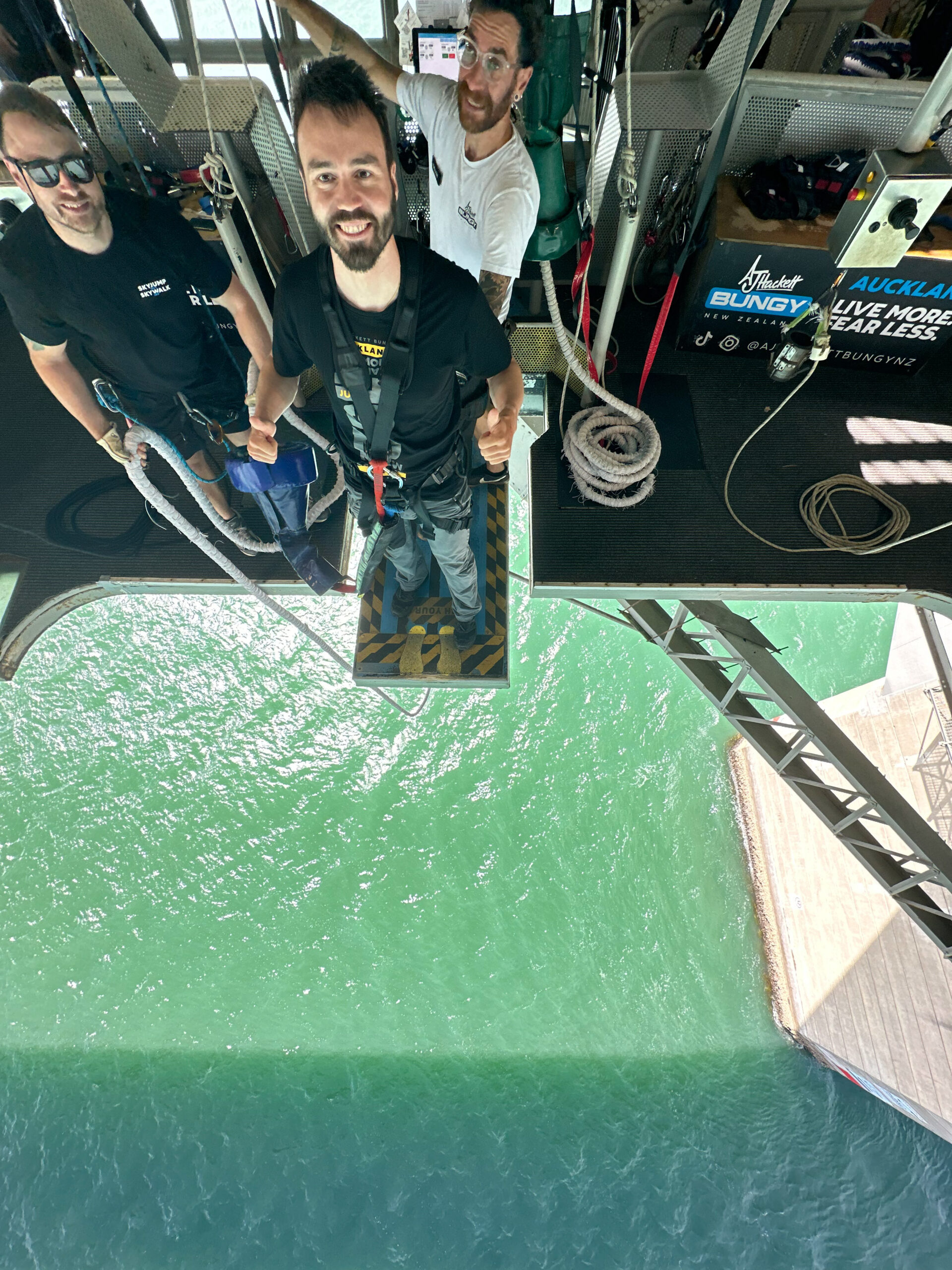
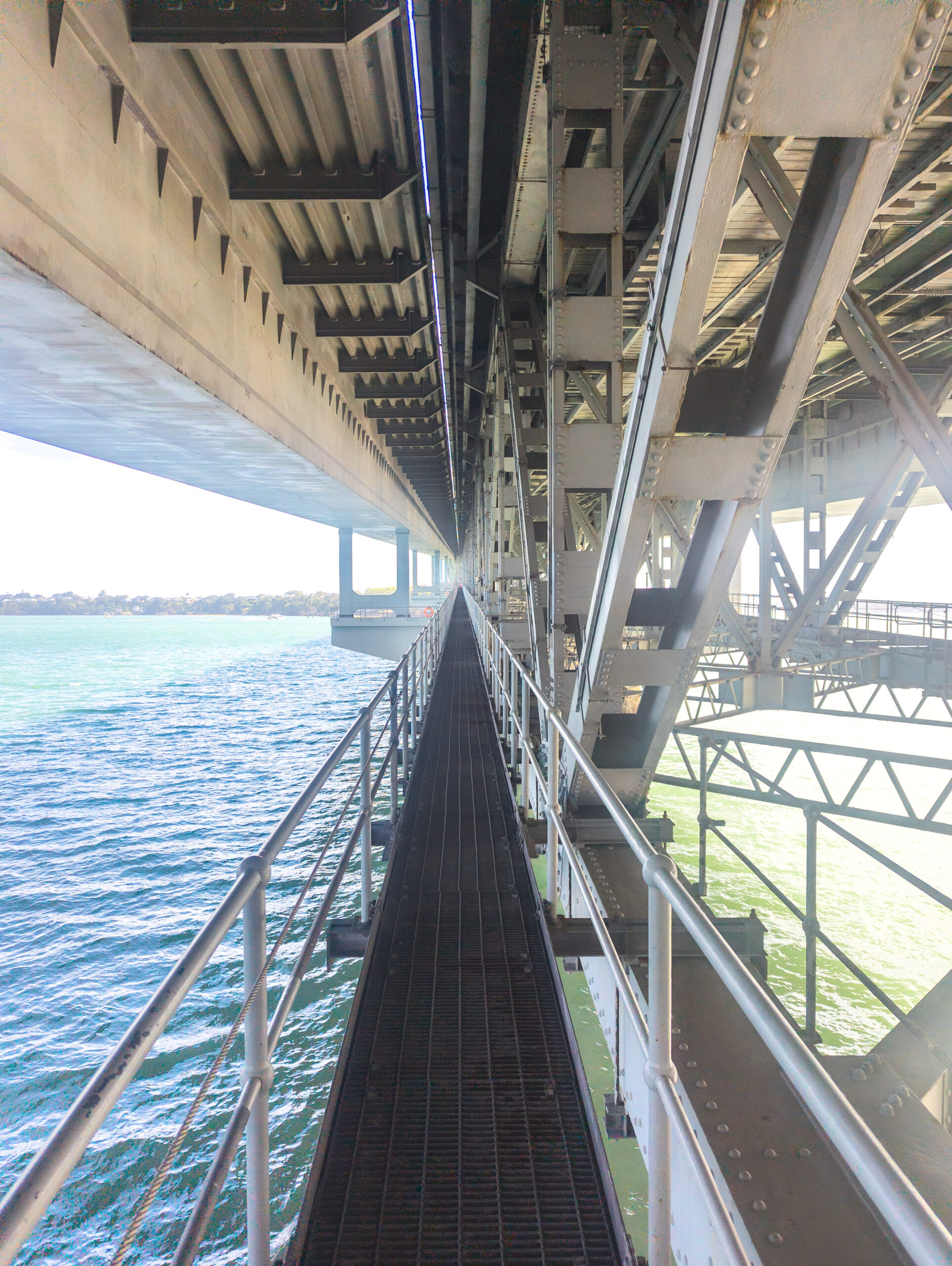
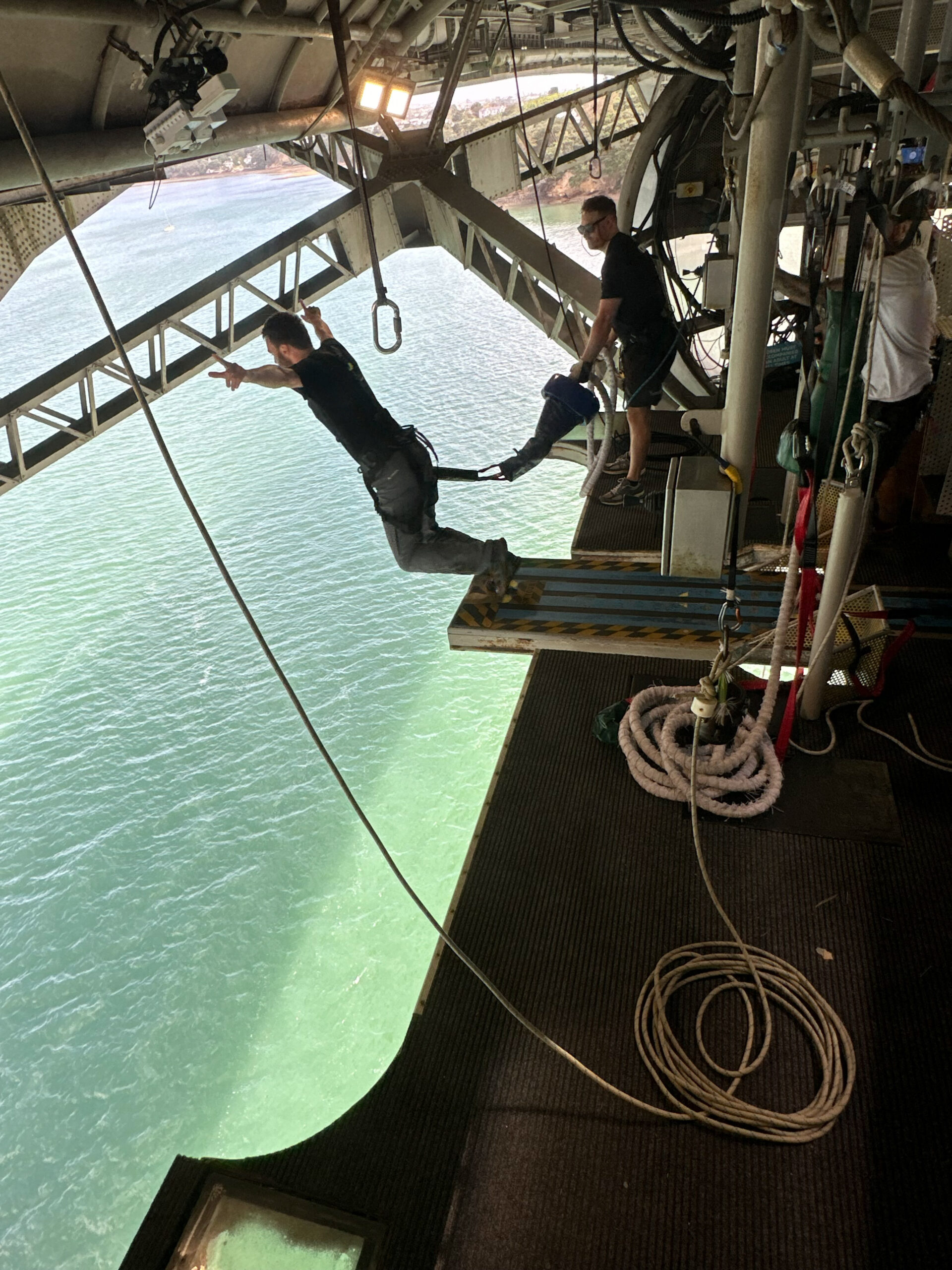
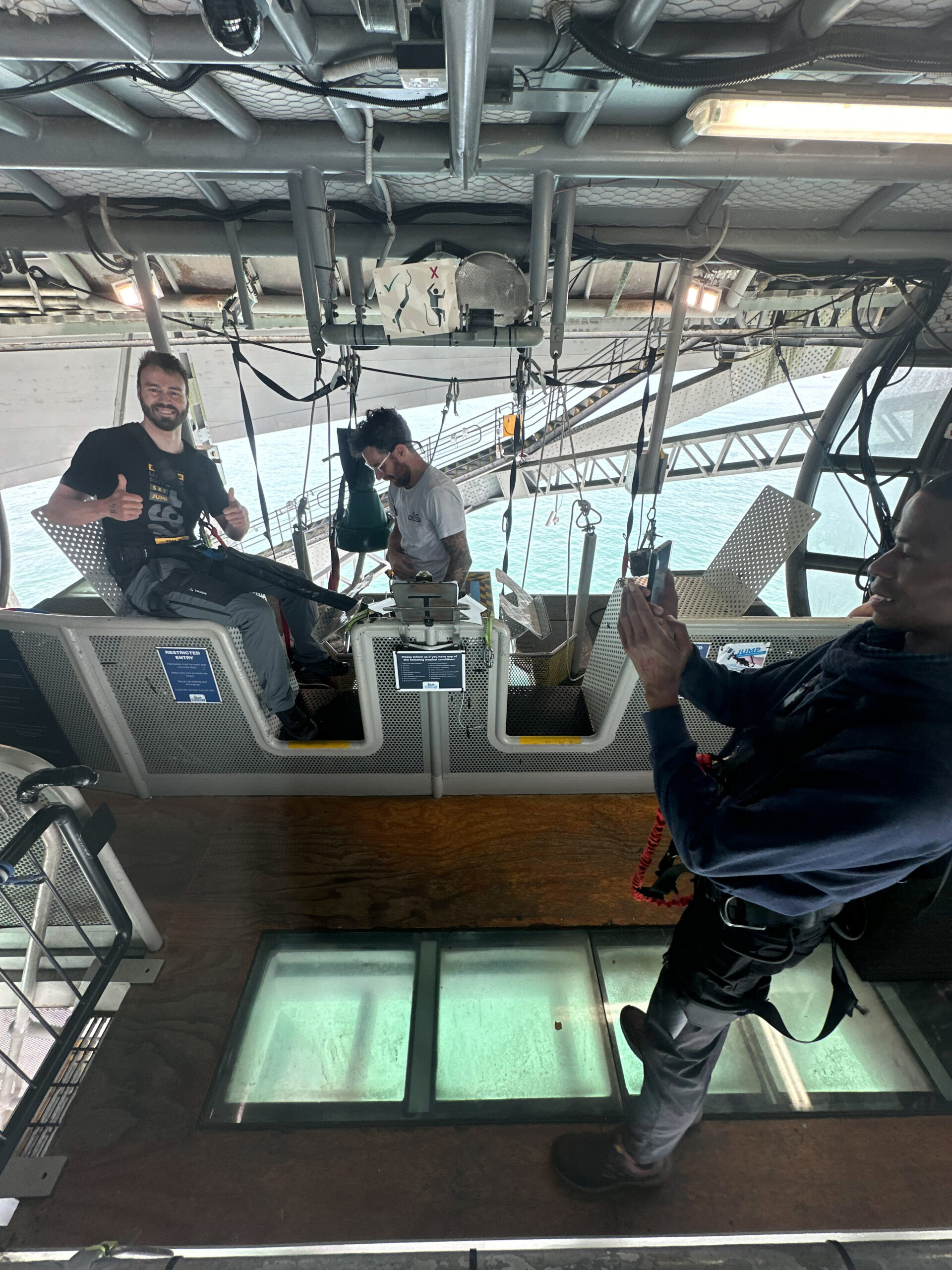
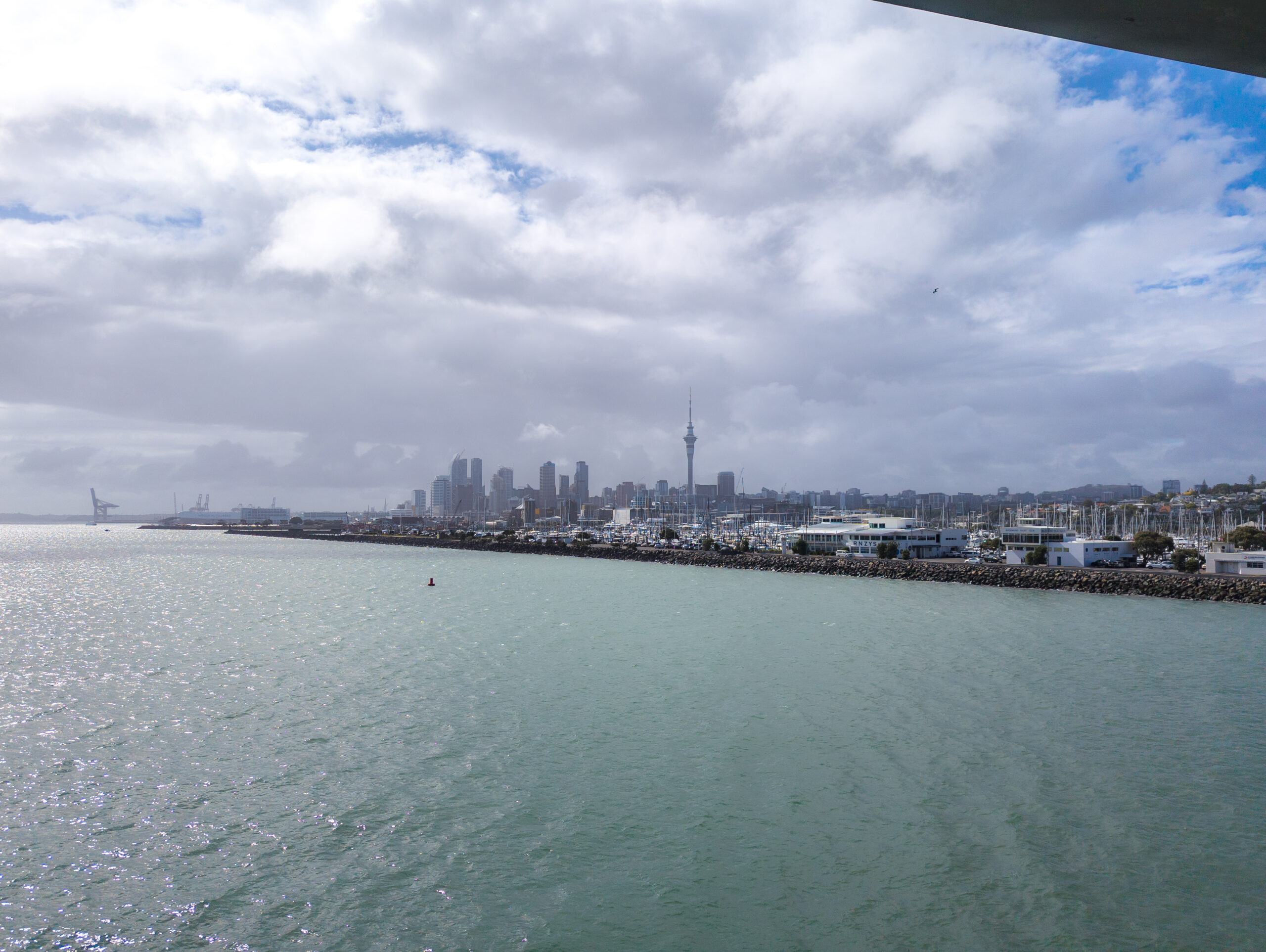
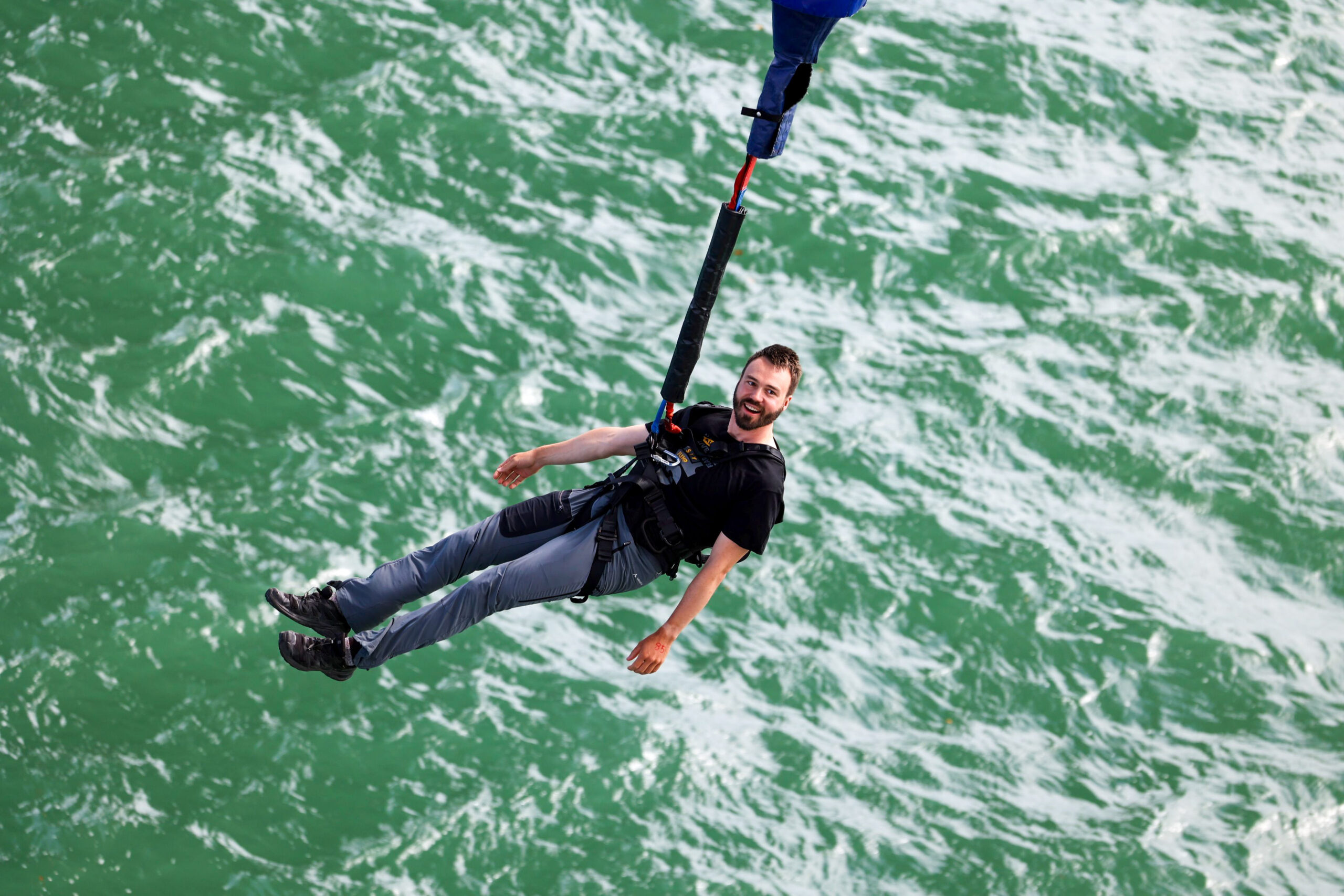
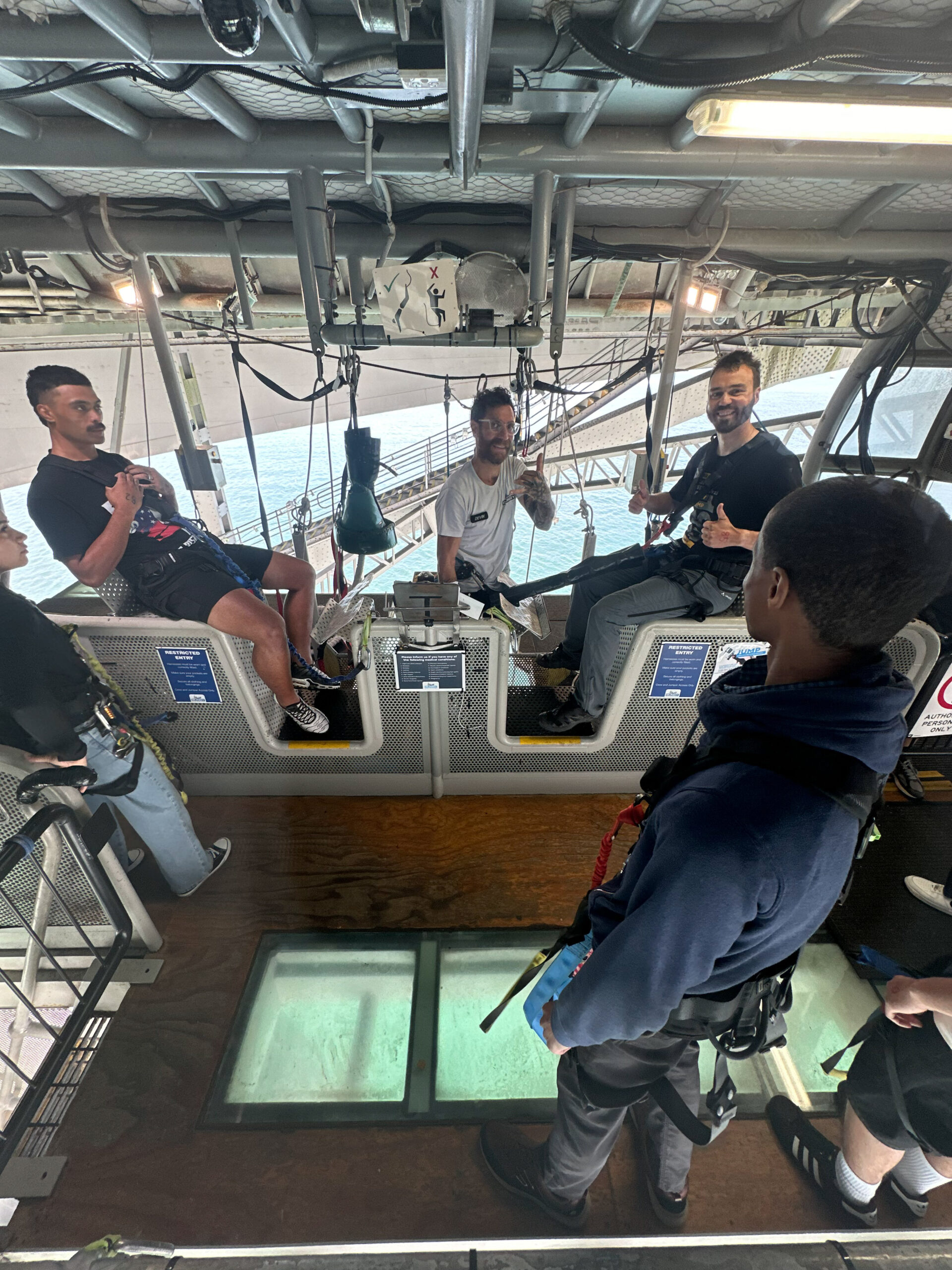
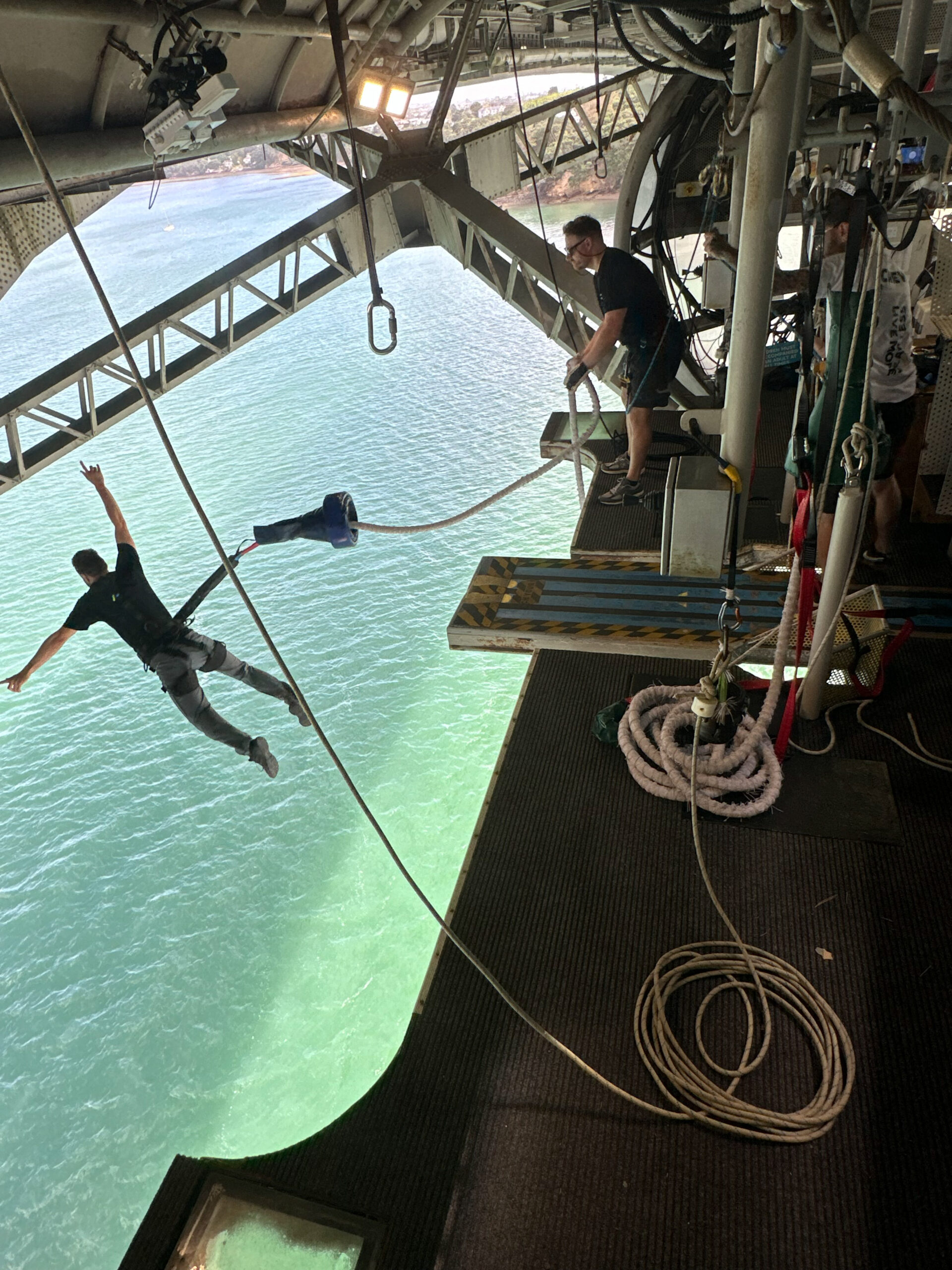
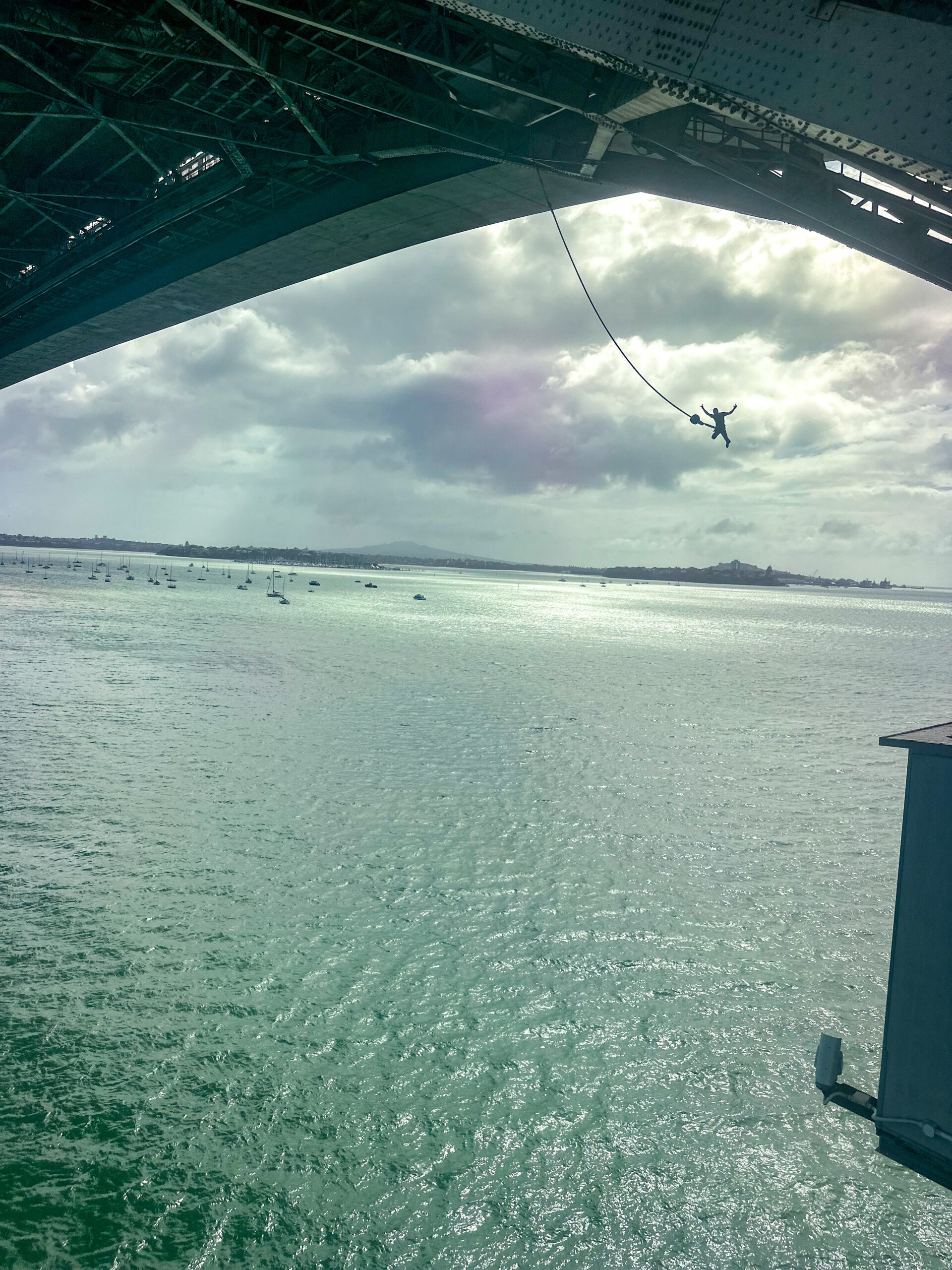
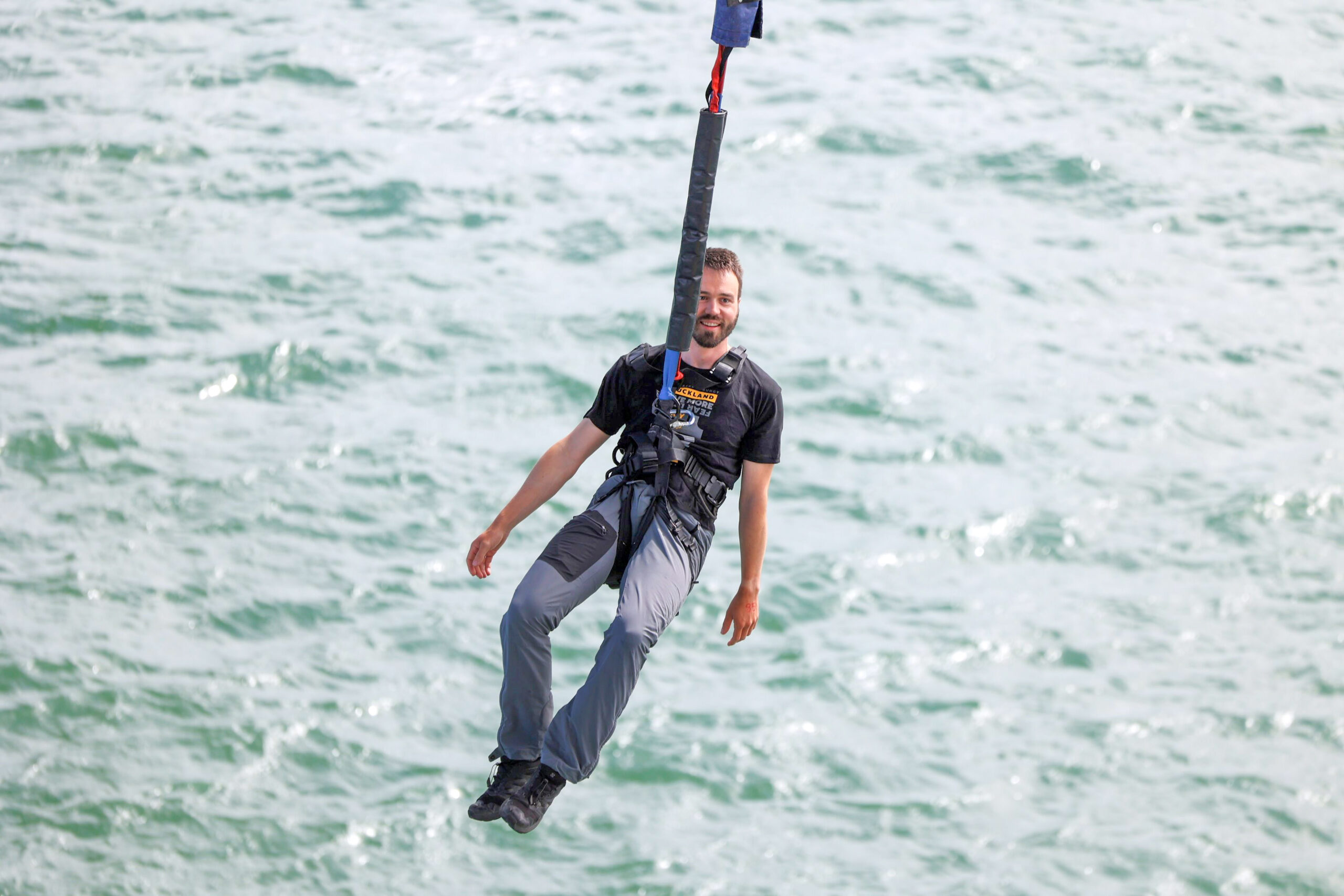
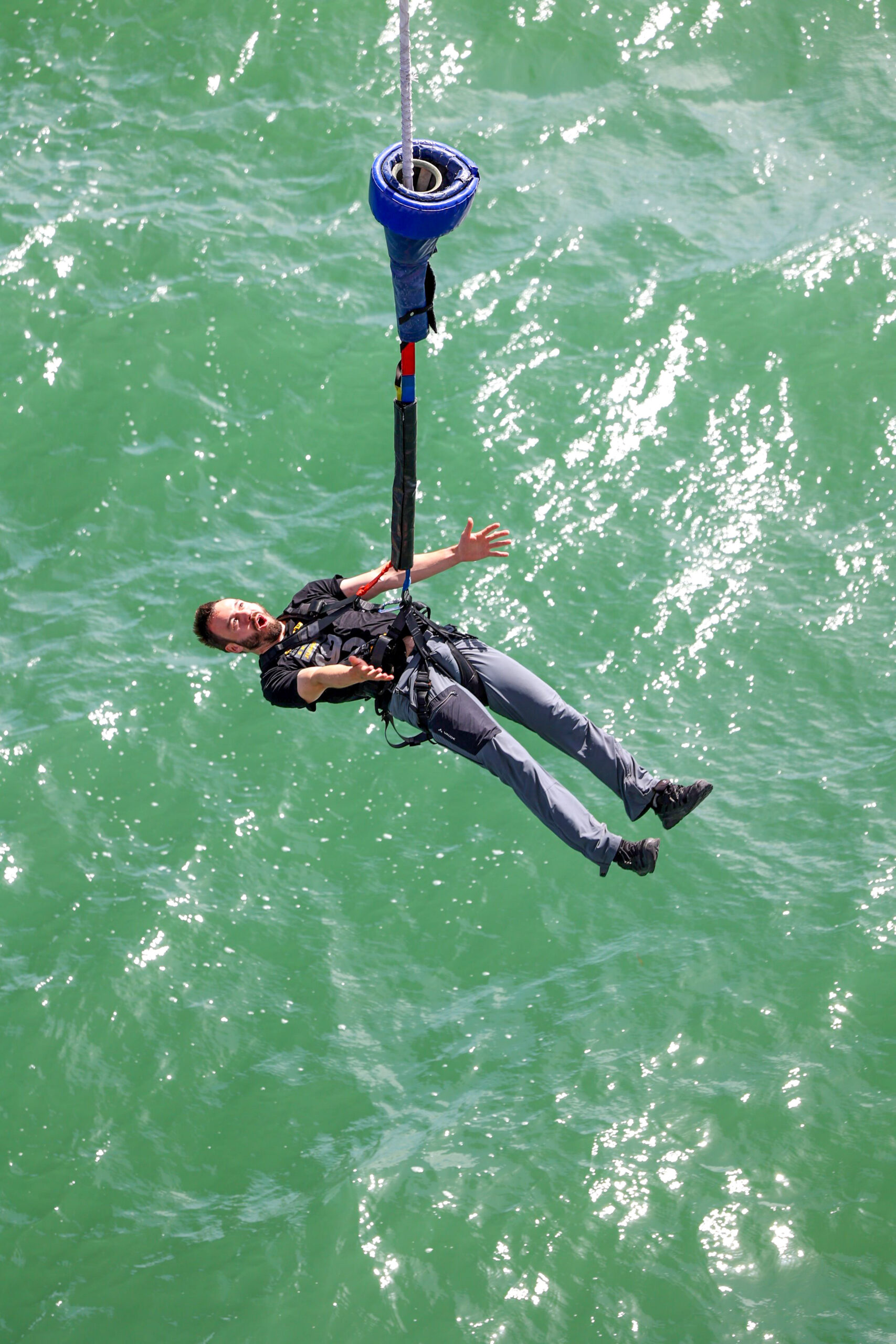
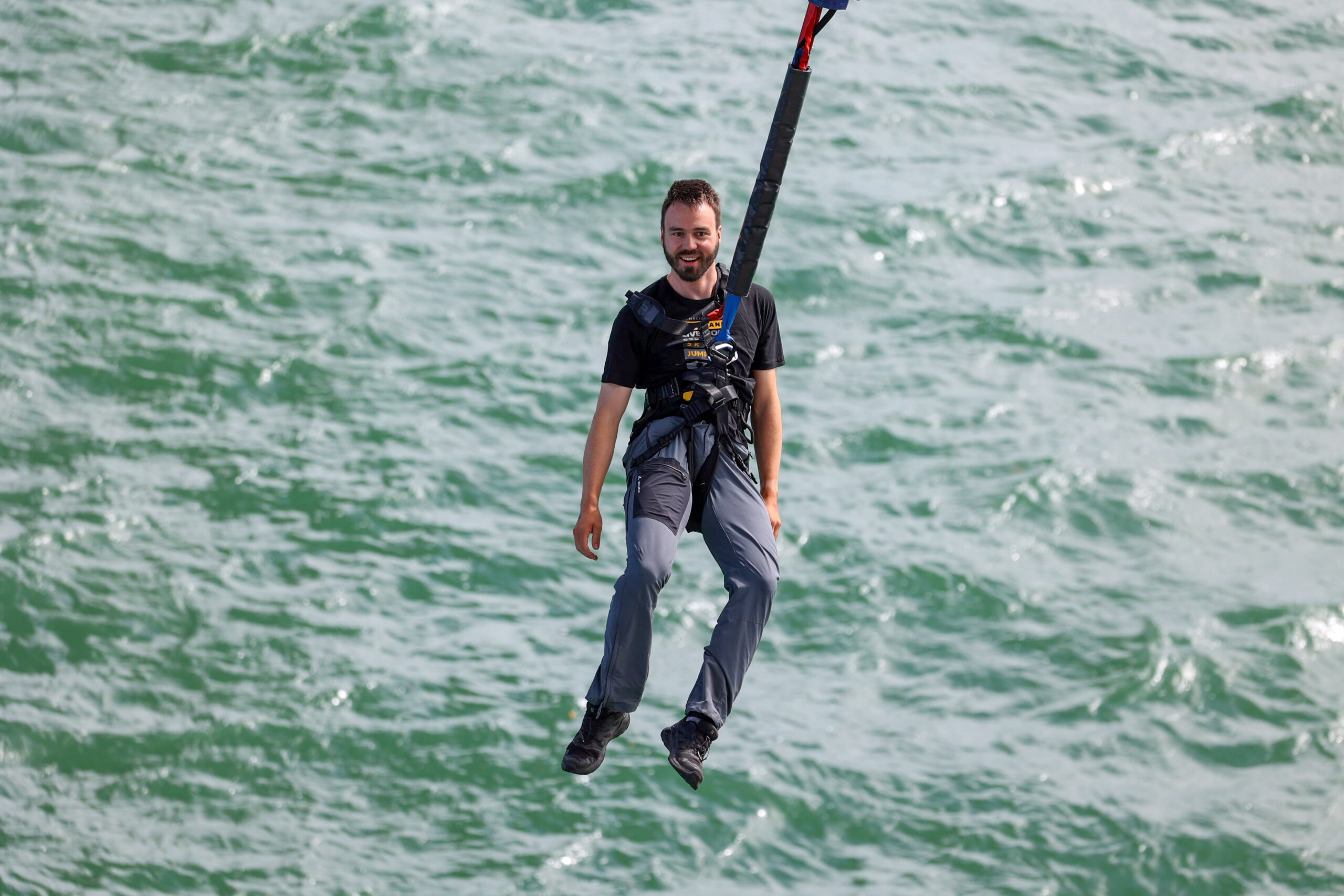
My flight home was at 5:00 PM on December 31st, which gave me one final window for adrenaline. I had booked the Auckland Harbour Bridge Bungee for 9:30 AM.
Since I had already done the Taupo and Nevis bungees, the crew let me get creative. I saw that a second jump cost only $80 NZD, so I signed up for two.
For the first jump, I went forward. For the second, I stood on the edge with my back to the water. Jumping backwards is a different psychological game. When you face forward, you can calculate the distance. When you fall backward, you surrender control completely. I tipped back, watching the bridge recede rapidly, the sky rushing away from me as the water rushed up. It was the scarier, and better, jump.
I took the bus back to the city, grabbed a final sandwich, and headed to the airport.

The Long Way Home
On New Year’s Eve, I bought chocolate for my family—Whitaker’s, of course—and boarded a flight to Sydney, then onto Kuala Lumpur.
Somewhere over the ocean, between Australia and Malaysia, the pilot’s voice crackled over the intercom. “Happy New Year,” he said.
The cabin was dark. Most passengers were asleep. I sat there in the silence, listening to the hum of the engines. There were no fireworks, no countdowns. Just the quiet transition of time as I crossed the equator, heading back to the Swiss winter, leaving the land of the long white cloud behind. I realized then that I hadn’t just visited New Zealand; I had run through it, swam through it, fallen through it, and driven through it. And now, finally, I could stop.
NEW ZEALAND SOUTHERN ALPS (PART 8) FINANCIAL SUMMARY AND TRIP EXPENSES
Protected Financial Summary
Enter password to unlock the comprehensive cost breakdown and itemized receipts.
Did you like this post? Then have a look at my whole trip: Gravity, Mud, and the Green Tunnel: 46 Days Sprinting Through New Zealand – Matthias Meyer