My journey to the heart of the Albanian Alps began not with a grand epiphany, but with a quiet departure on a late June morning, trading the familiar predictability of home for the rugged edges of the Balkans.
Above the Clouds and Down to Earth
The drive to the airport in Basel was a breeze, a gentle hour-and-twenty-minute prelude to the adventure ahead. After securing my car in Pratteln, I navigated the terminal, setting up my Albanian eSIM while waiting out a predictable flight delay. The airlines, it seems, have mastered the art of padding their schedules to mask their tardiness.
Inside the cabin, the atmosphere was a chaotic game of musical chairs, and I happily swapped seats to accommodate a polite stranger. But as we ascended, the cabin’s restless energy faded away, replaced by the sheer, silent majesty outside my window. We soared over the snow-dusted peaks of Saint Moritz, traced the winding canals of Venice, and glided along the azure, island-freckled coastline of Croatia.
Touching down in Albania mid-afternoon, reality hit fast. Navigating the rental car pickup was an exercise in patience. After wrestling my vehicle out of an impossibly overcrowded lot, I was immediately swallowed by a sprawling traffic jam. It took a solid thirty minutes just to break free of the airport’s gravitational pull.
I headed north toward Shkoder, where a strategic pitstop at a local Spar armed me for the wild: four liters of water, an abundance of fruit juice, and bags of nuts. From there, the compass pointed to Theth, deep in the mountains.
The Night Drive to Theth
When my navigation app promised an hour and a half for a mere sixty kilometers and later, nearly an hour for the final twenty I assumed it was a glitch. It wasn’t.
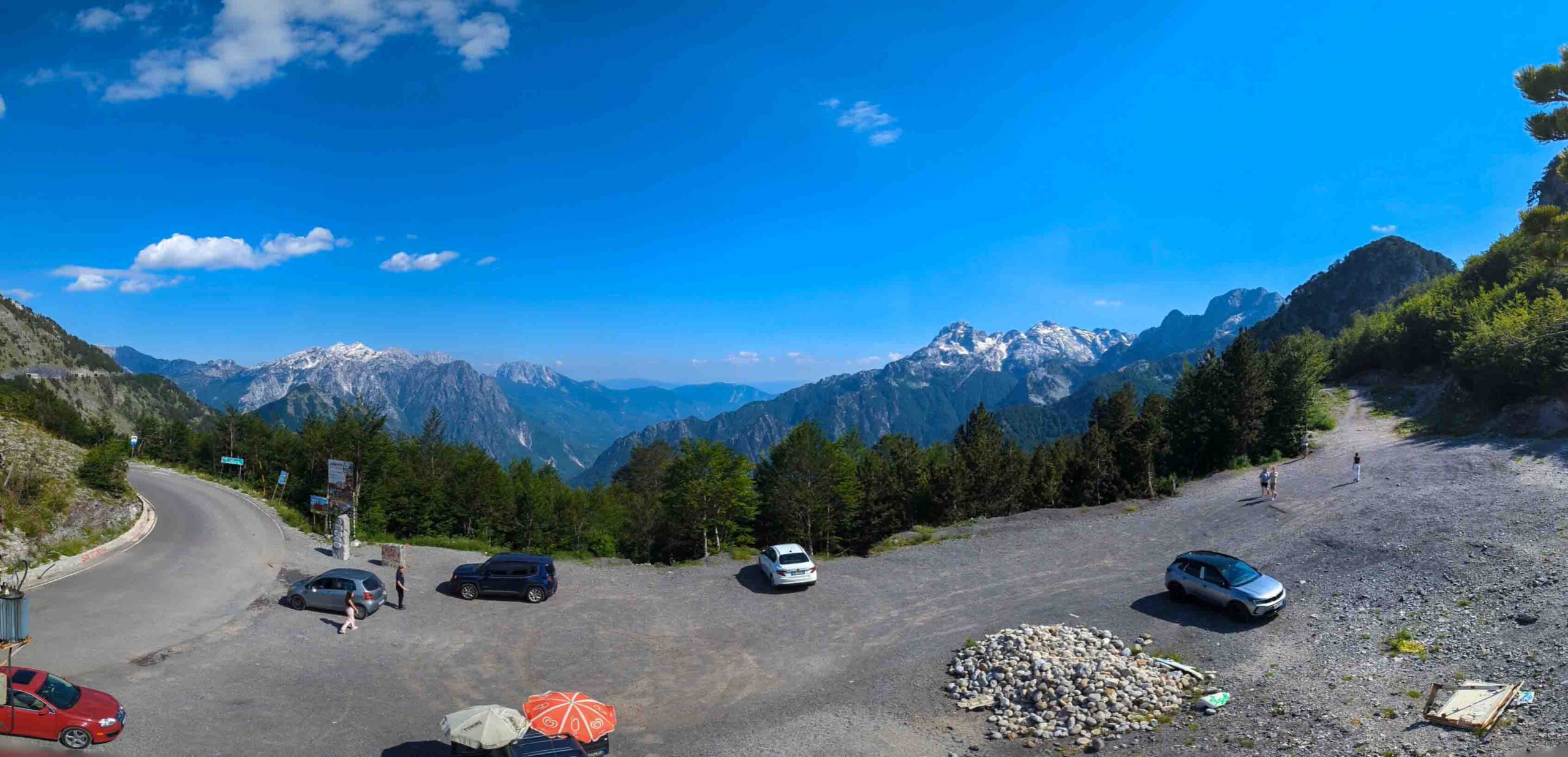
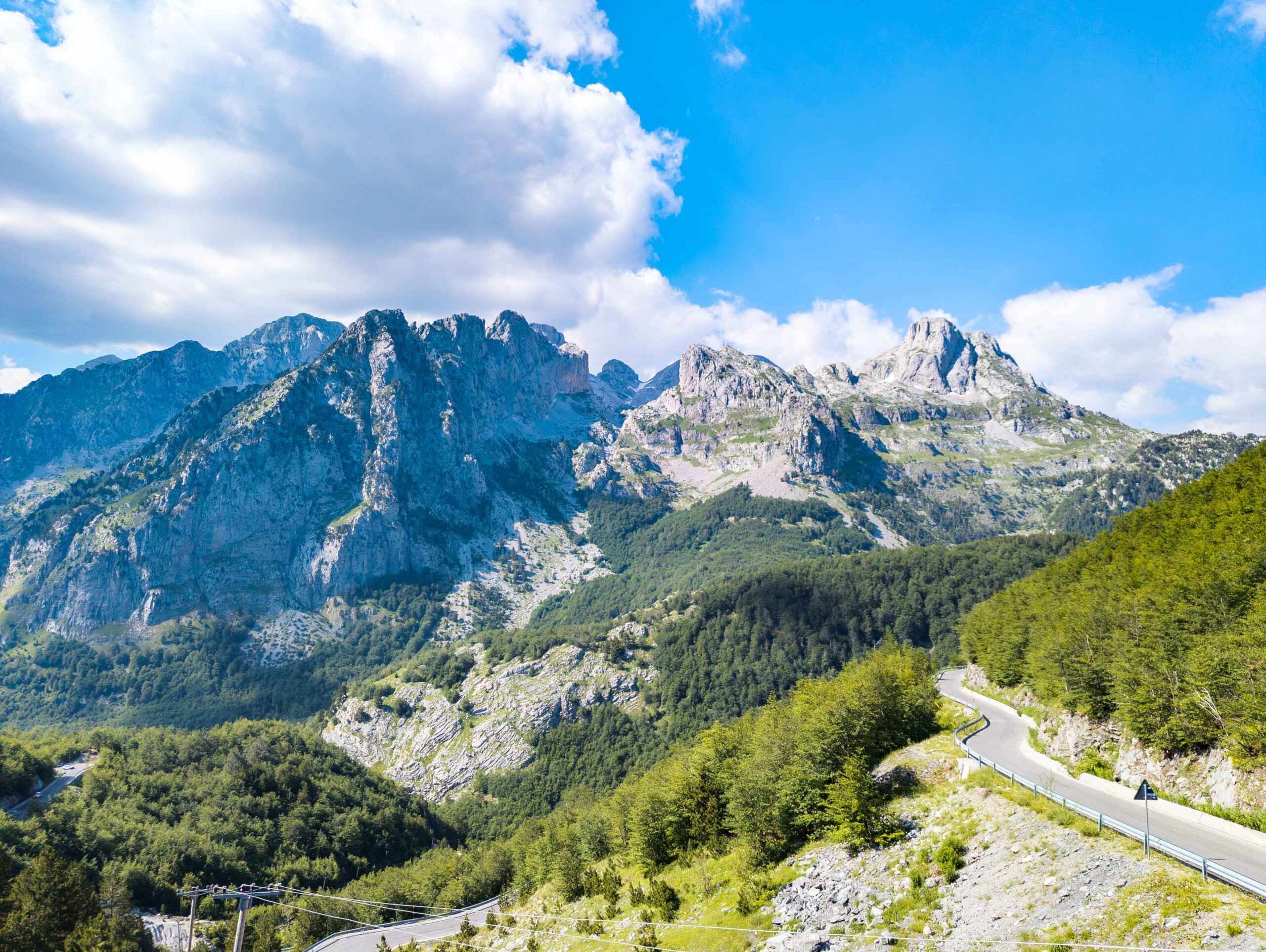
The mountain pass into the Accursed Mountains is a ribbon of asphalt so narrow and serpentine it demands total reverence. Countless sharp, blind turns hug the sheer cliffs. Curiously, I found myself grateful to be tackling this beast in the pitch black of night. The darkness was my ally, allowing the headlights of oncoming cars to announce their presence long before they rounded the tight corners. By day, the sheer drops and narrow margins would have required an agonizingly slow crawl.
I rolled into my hostel in Theth just after ten at night, tires crunching over a notoriously rough gravel driveway. The heavy gate was closed for the night, but a kind womn emerged from the shadows to let me in.
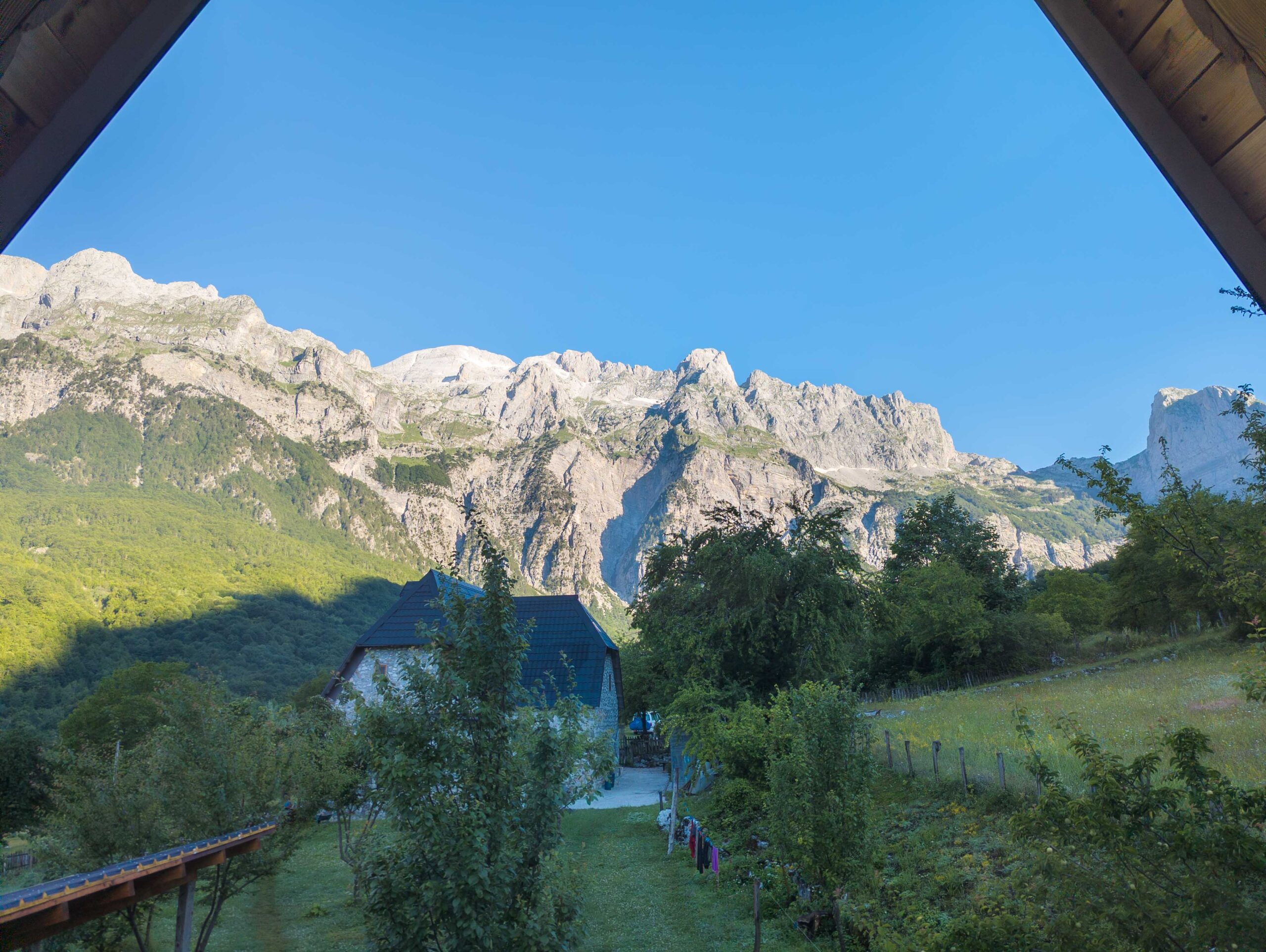
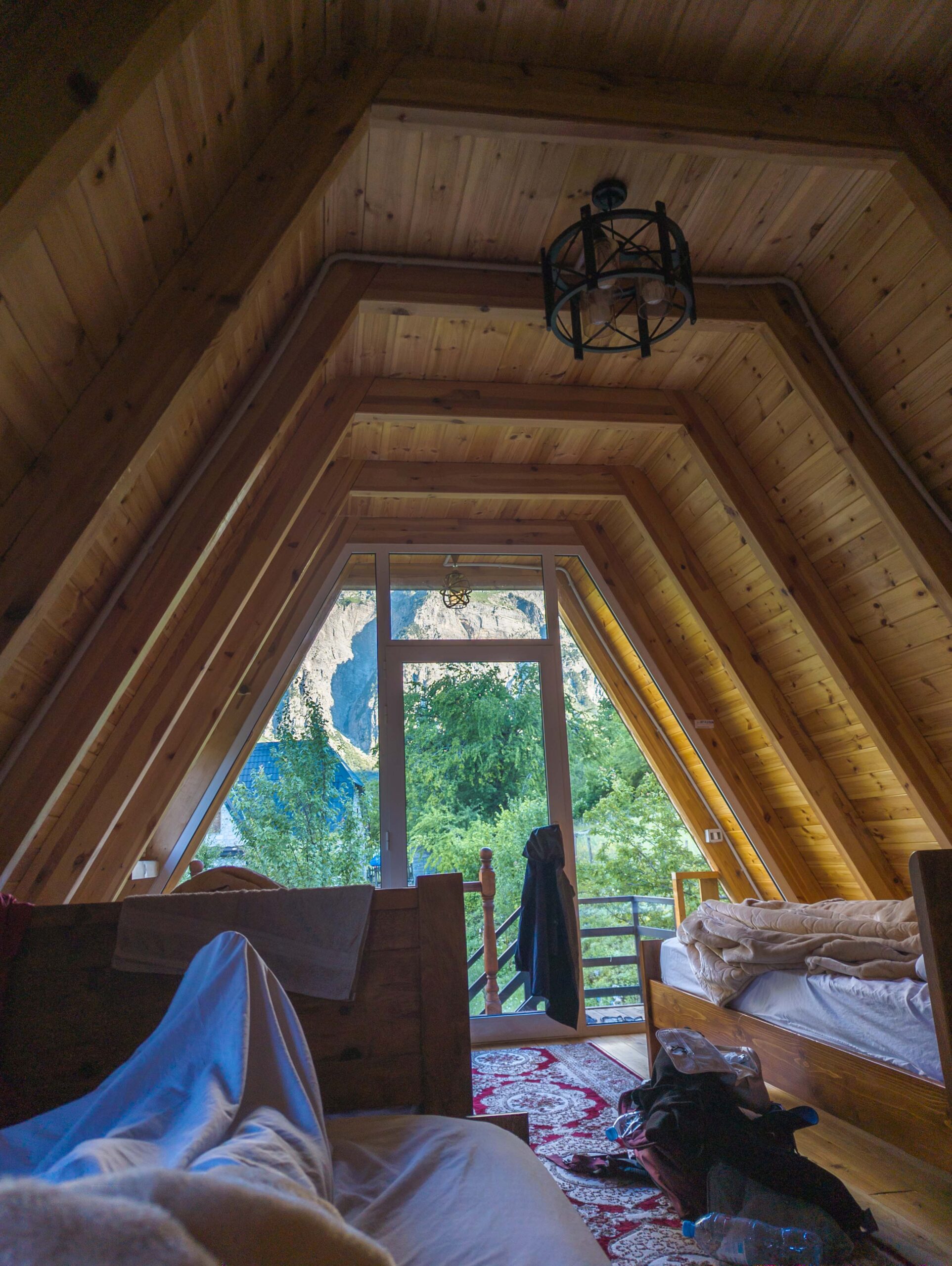
My accommodation for the night at Guest House Rrashokadoli was nothing short of architectural magic. It was a traditional Alpine structure capped with a steeply pitched roof, but the entire front facade was made of glass. I shared the room with two Belgian travelers who were still awake. We traded quick introductions, and they invited me to join them the next morning for a hike to the famed Blue Eye spring. I gladly accepted, brushed my teeth, and let the mountain silence pull me to sleep.
An Alpine Awakening and a Serendipitous Fellowship
I had set my alarm for seven, but the Belgian girls were still fast asleep. I didn’t mind in the slightest, because the moment I opened my eyes, I was paralyzed by the view.
Having arrived in total darkness, the landscape had been a mystery. Now, framed perfectly by the floor-to-ceiling glass, towering, jagged limestone peaks pierced the morning sky right at the foot of my bed. I didn’t even have to throw off the blankets to take in the sheer scale of the valley. It was, without a doubt, the most breathtaking wake-up I have ever experienced.
Breakfast, a hearty, traditional Albanian spread of fresh bread, butter, gat cheese, was included in my incredibly modest twenty-five-euro rate. As the other guests trickled into the dining room, a deeply amusing pattern began to emerge. By total coincidence, our group consisted of an English doctor, two doctors from New Zealand, the two Belgian girls (also doctors), two Italian doctors, an English artist who modeled on the side, and me, the solitary engineer. If a medical emergency were to happen in the Albanian wilderness, this was the room to be in.
Plunging into the Blue Eye
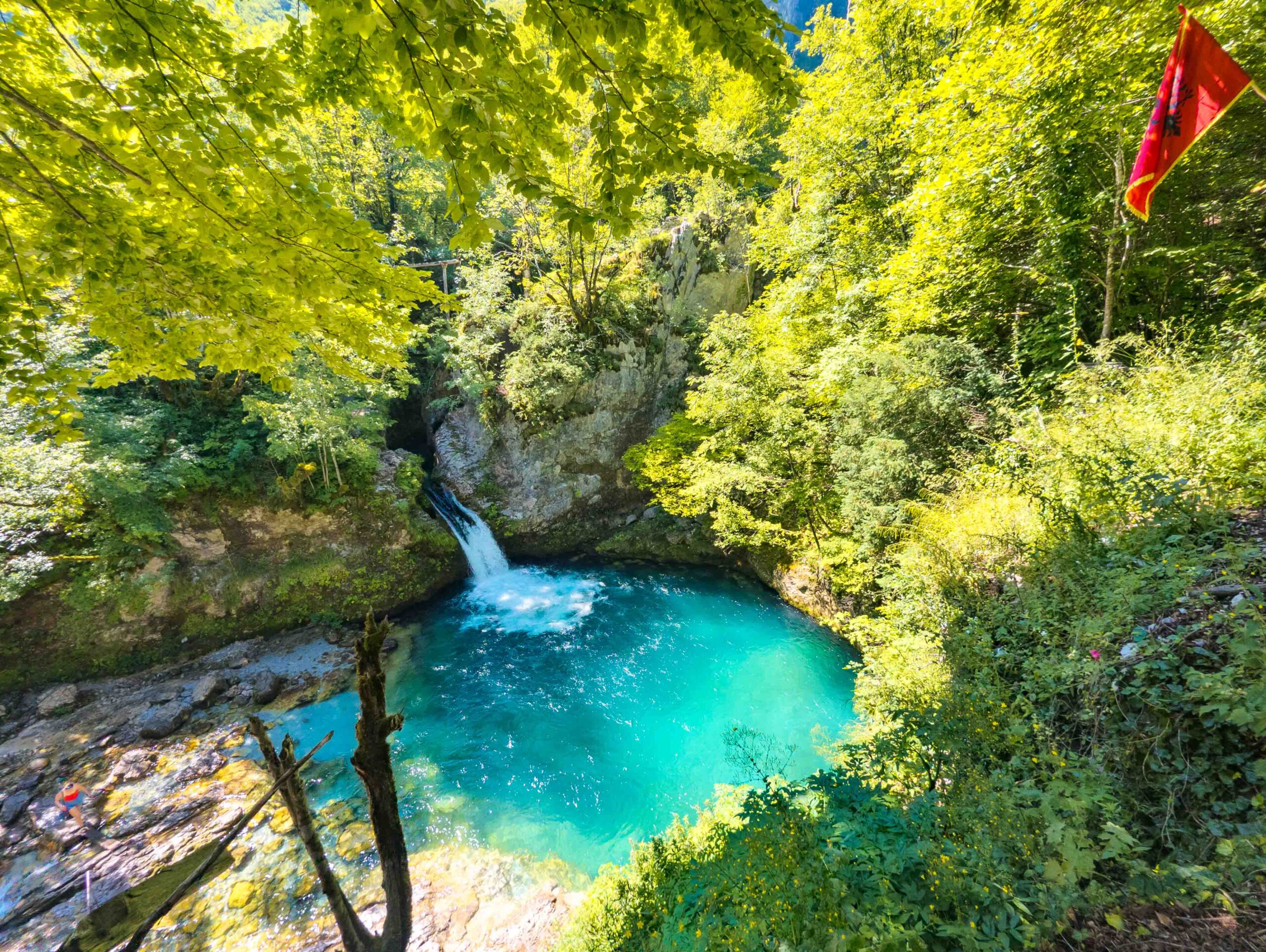
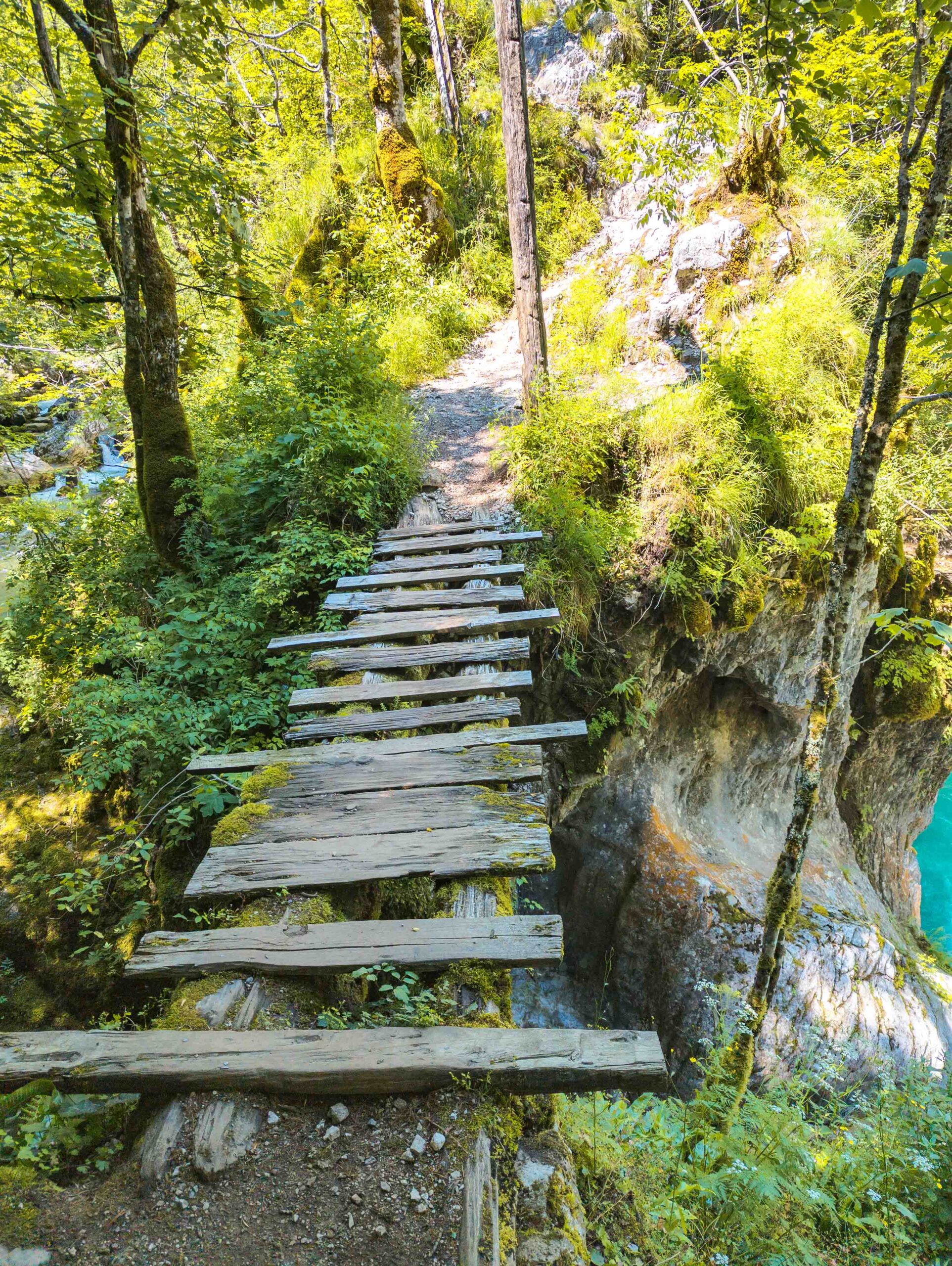
Eight of us banded together for the excursion to the Blue Eye (Syri i Kaltër). We secured a local taxi for a fifteen-euro round trip. While I had braced myself for a bone-rattling ride, the road turned out to be smooth asphalt. I could have easily driven my rental, but surrendering to the group’s rhythm was liberating.
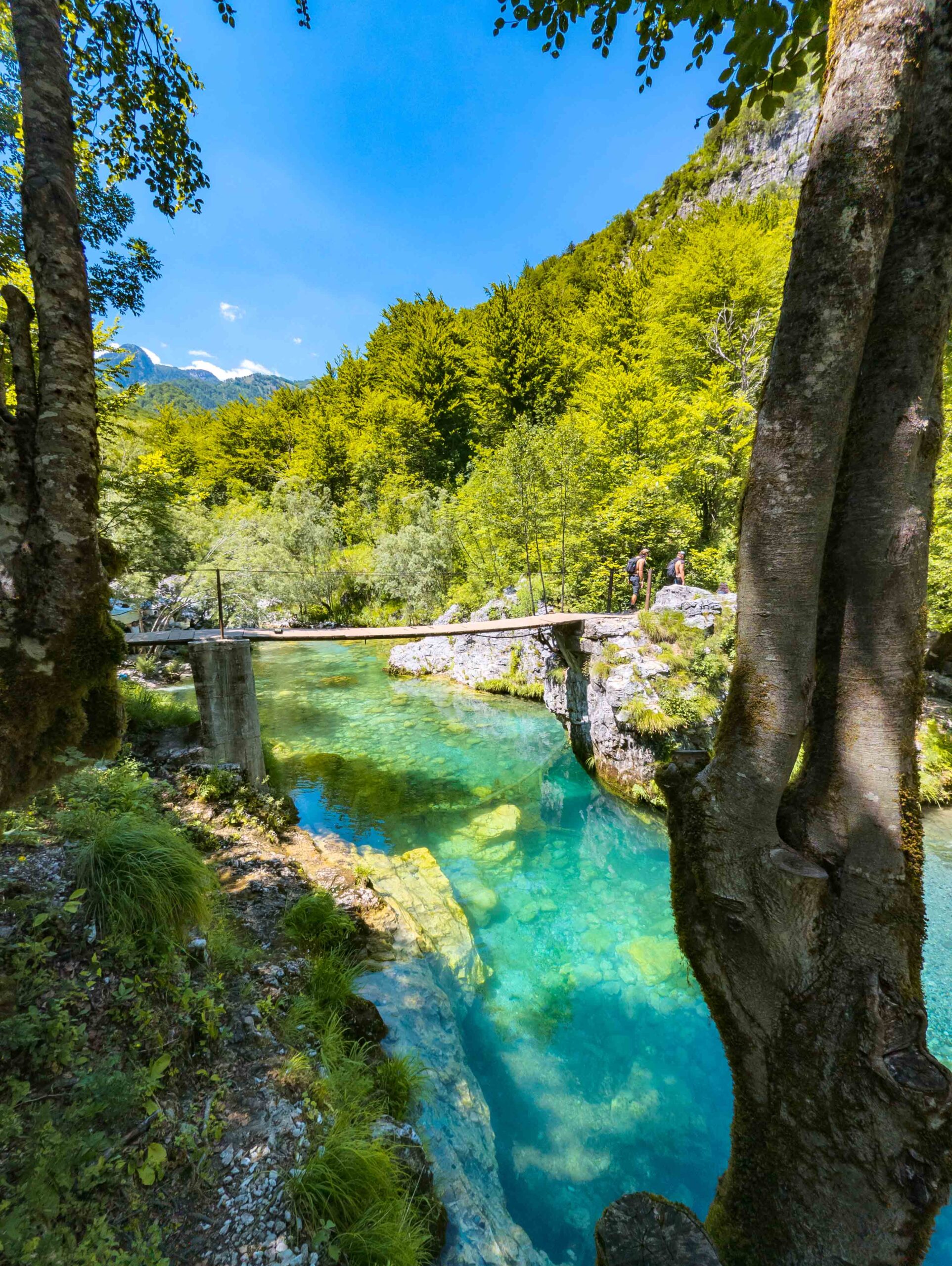
The Blue Eye is a natural wonder a vibrantly colored, impossibly clear spring fed by melting mountain snow. We spent hours lounging along the scenic riverbanks. The water was breathtakingly cold. Left to my own devices, I might have just admired it from the shore, but peer pressure is a powerful thing. I plunged in. Shockingly, I ended up staying in the freezing water longer than almost anyone else, save for the spirited Italians who enthusiastically hurled themselves off the high cliffs.
By late afternoon, we were waiting for our taxi. When it arrived, our driver operated the vehicle with the fearless, kamikaze-like intensity typical of local highlanders. Clinging to my seat, I found great comfort in being surrounded by off-duty physicians.
That evening, I offered the Italians a lift back down the mountain to Shkoder, as they had hiked the breathtaking pass from Valbona to Theth and left their car in the city. They were incredibly gracious passengers, insisting on handing me ten euros for the fuel without a second thought a refreshing display of travel etiquette.
The Illusions of Shkoder and the Echoes of the Kanun
Back in Shkoder, I checked into a newly opened hotel. The friendly receptionist, who boasted of his time working in Switzerland, proudly informed me that the establishment was a “four-star” property. In truth, it possessed the rustic charm of a one-star motel, but it was clean, comfortable, and exactly what I needed. His friend washed the thick layer of mountain dust off my rental car for a mere six euros, saving me a guaranteed cleaning fee from the rental agency.
My itinerary had been tightly packed, meaning I missed a few of Theth’s historical jewels, namely, the local stone church and the chilling “Lock-in Tower” (Kulla e Ngujimit). For centuries, men targeted by the ancient Kanun law of blood feuds would lock themselves inside that stone fortress for years, sometimes decades, to escape death. Even without seeing it, the heavy history of the region lingered in the crisp mountain air.
Fjords and Frustrations: Navigating Lake Koman
The next morning, fortified by fresh bread and butter, I struck up a conversation with a friendly German couple over breakfast. By eight o’clock, I was on the road to Lake Koman, arriving just as the mist was lifting off the water.
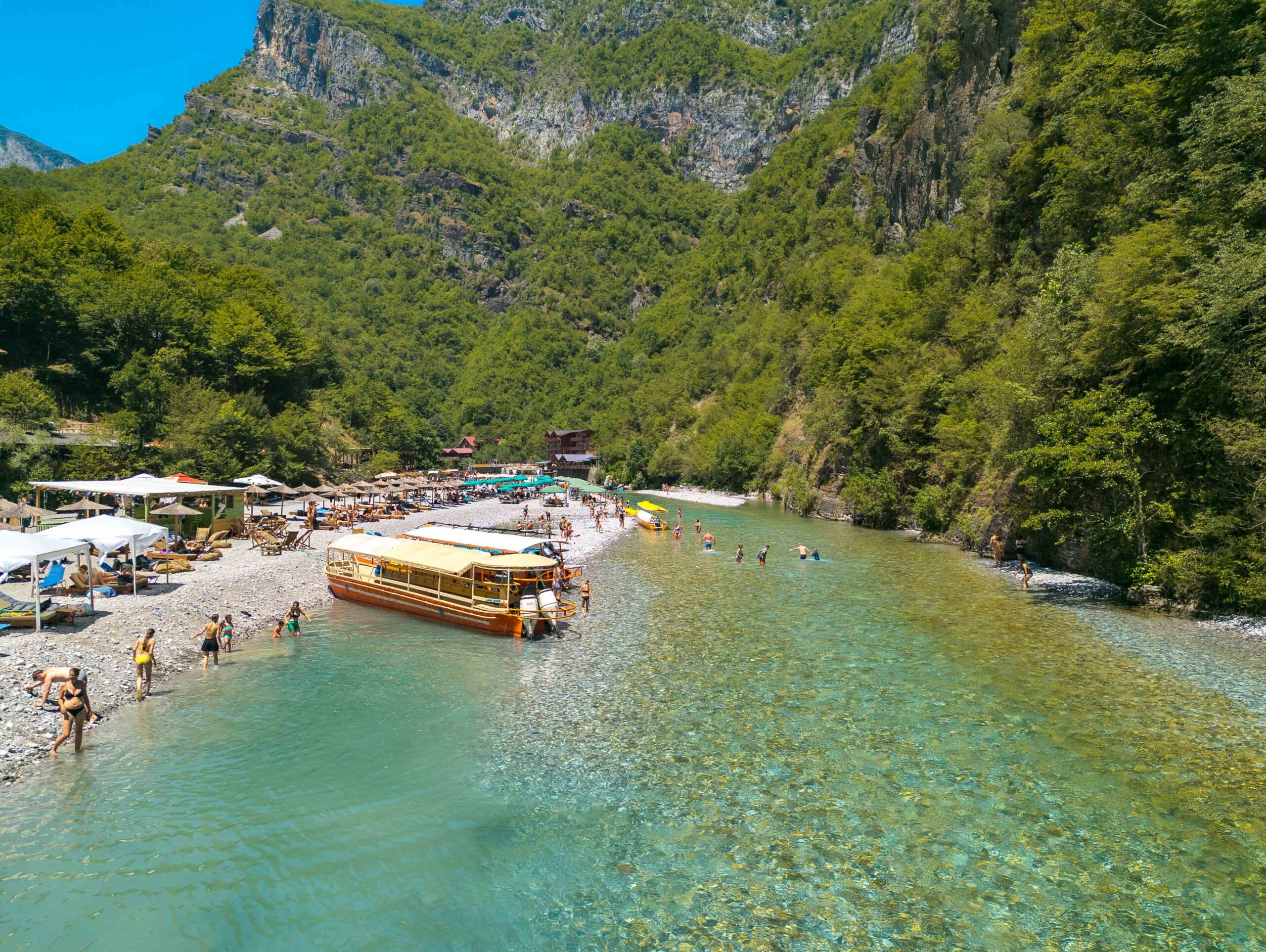
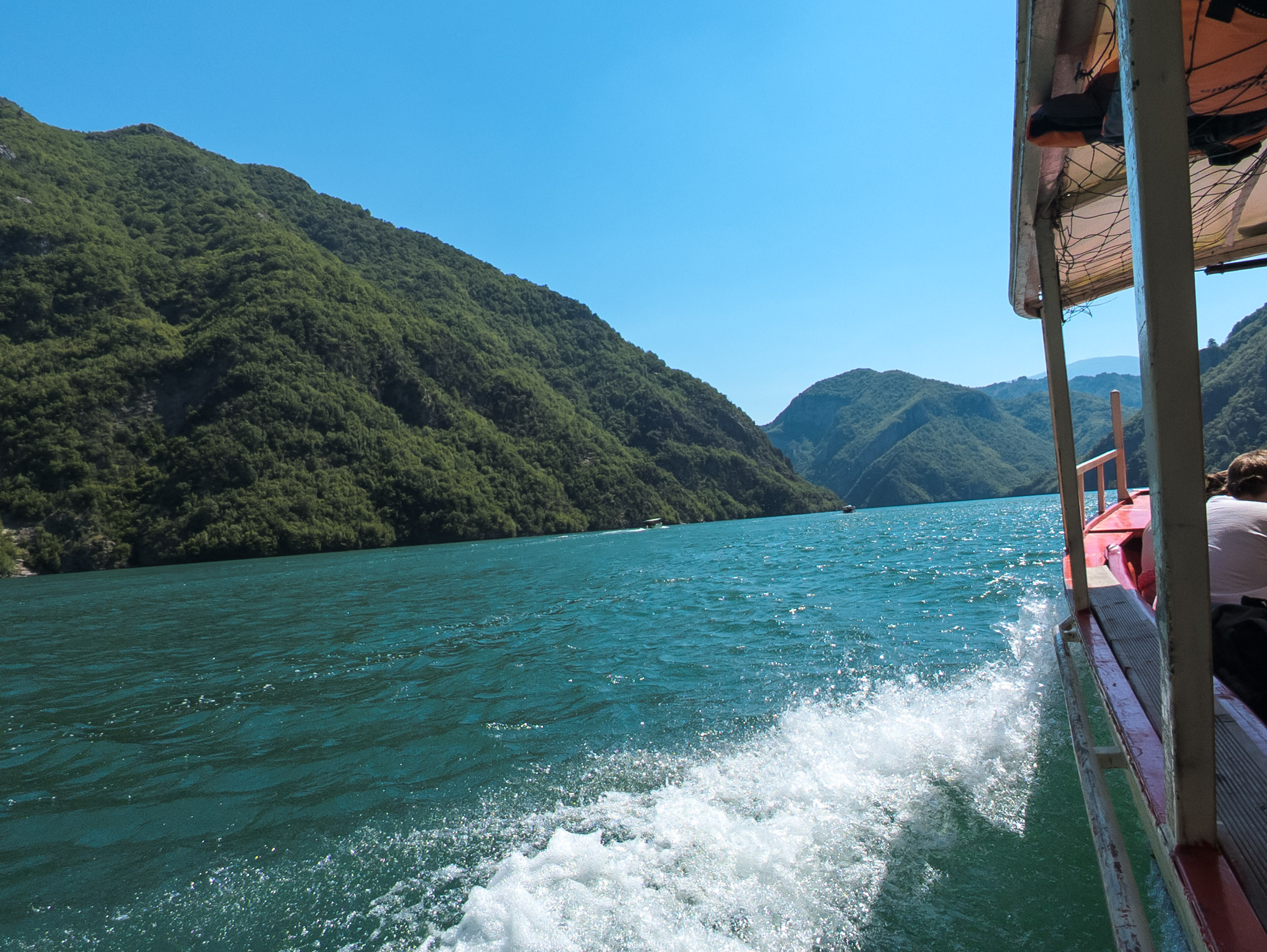
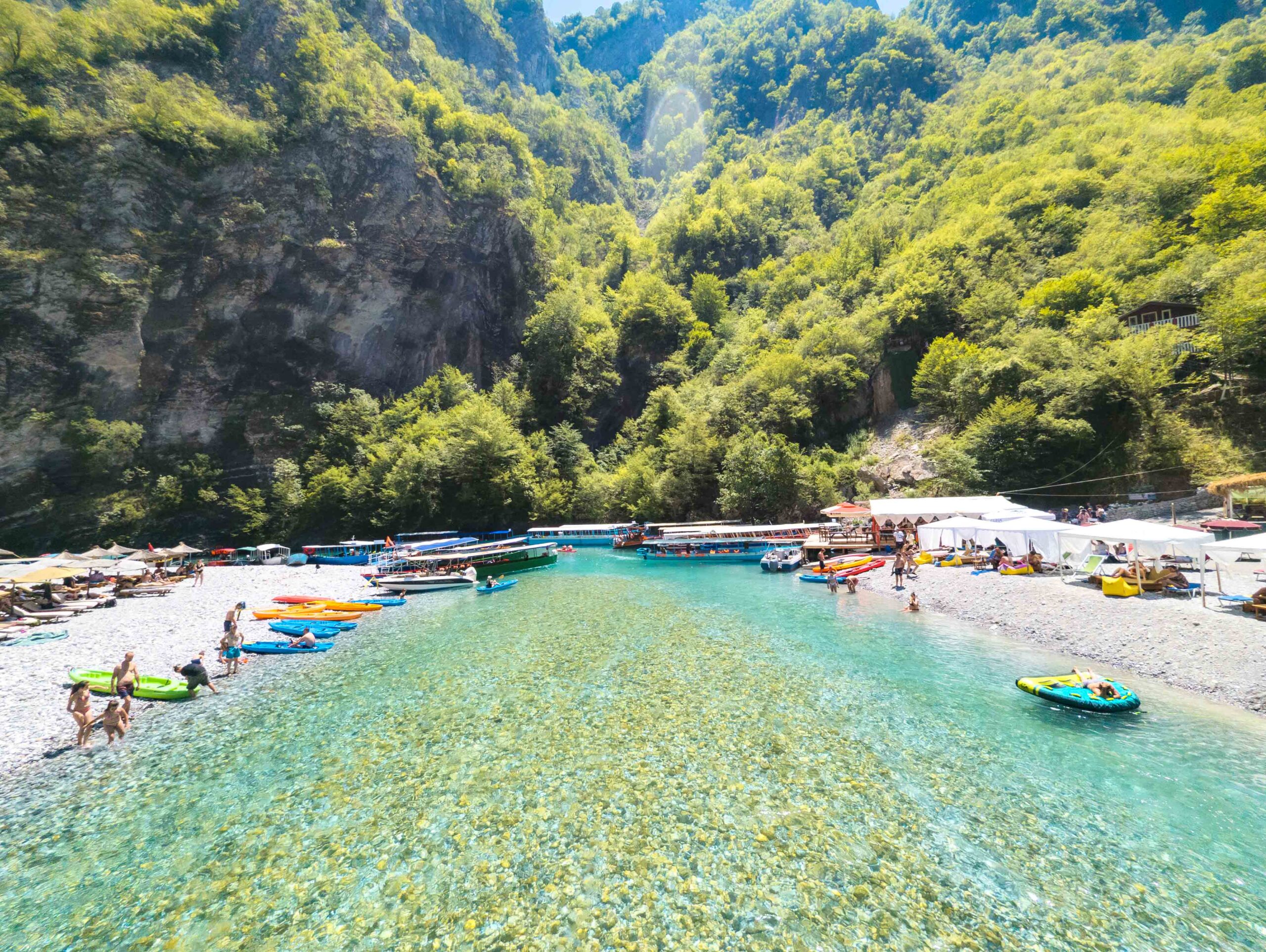
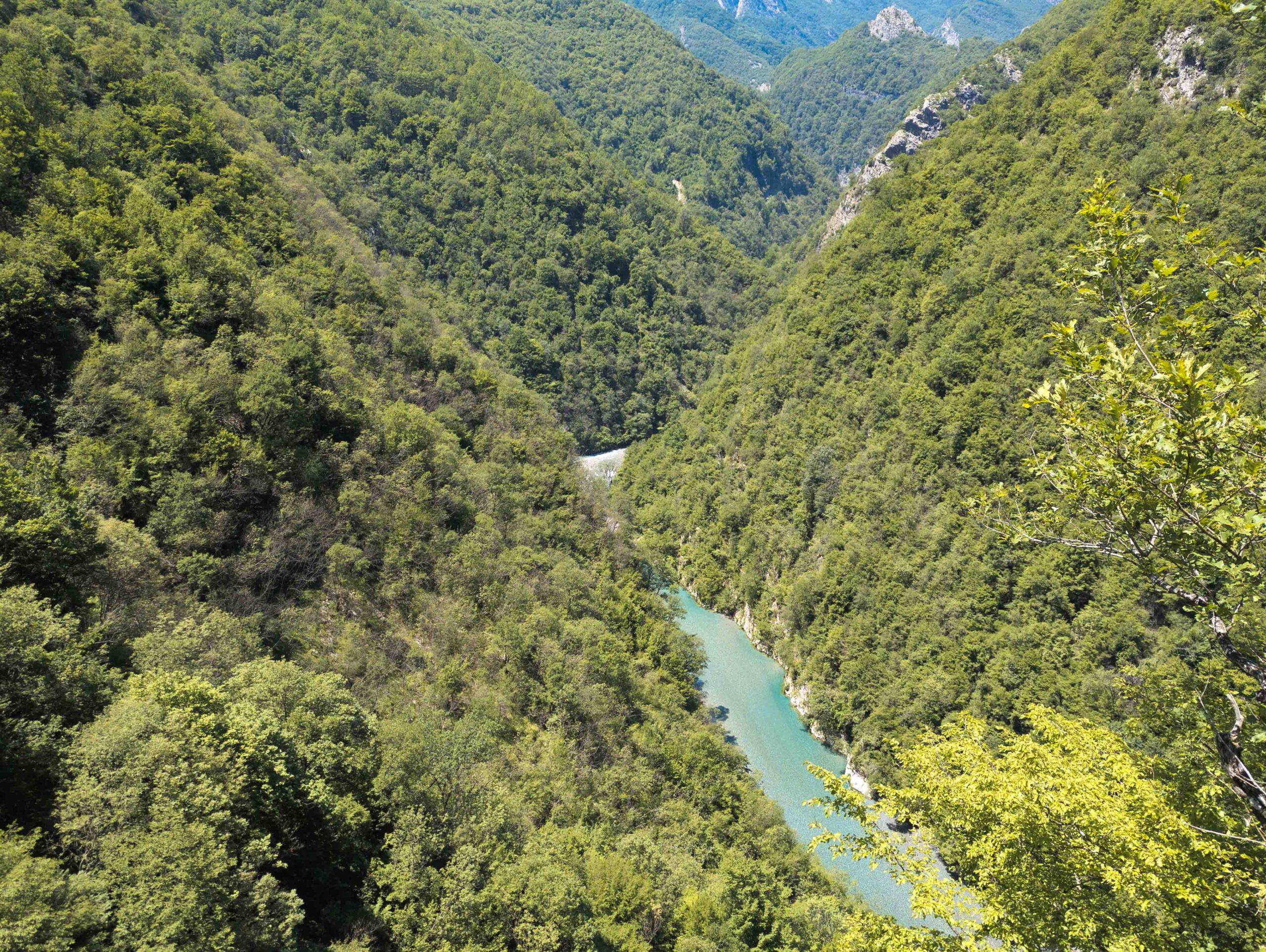
The boat ride through the lake was otherworldly. Winding through deep, vertical limestone gorges, the emerald waters mirror a Scandinavian fjord, yet the wild, untamed energy is distinctly Balkan. I spent the journey chatting with a lovely traveler from Poland, trading stories as the dramatic cliffs drifted by.
Upon reaching our destination, I broke away from the dense crowds and hiked a steep, twenty-minute trail to a lonely viewpoint. Standing in absolute solitude above the snaking river was a moment of pure serenity.
The tranquility, however, was short-lived. Returning to the shore, I rented a kayak for ten euros from a local vendor. Within fifteen minutes, my vessel was taking on massive amounts of water. My personal belongings were soaked, and I was forced to paddle back. When I requested a refund for the dangerously unseaworthy kayak, the vendor became aggressively defensive, shouting that there was no hole. The surrounding travelers exchanged knowing glances, quietly advising me to cut my losses rather than argue with a brick wall.
I salvaged the afternoon by taking a long, restorative swim in the lake, reuniting with the German couple I had met at breakfast. The water was warmer than the Blue Eye, though it still required a deep breath to plunge in. When I returned to the shoreline, my favorite tank top had vanished, only to be found sitting casually next to a stranger’s backpack. When confronted, the man played entirely dumb. Between the sinking kayak and the phantom shirt-thief, I had to laugh. The landscape was far too spectacular to let human absurdity ruin the day.
Golden Hour at Rozafa and the Journey Home
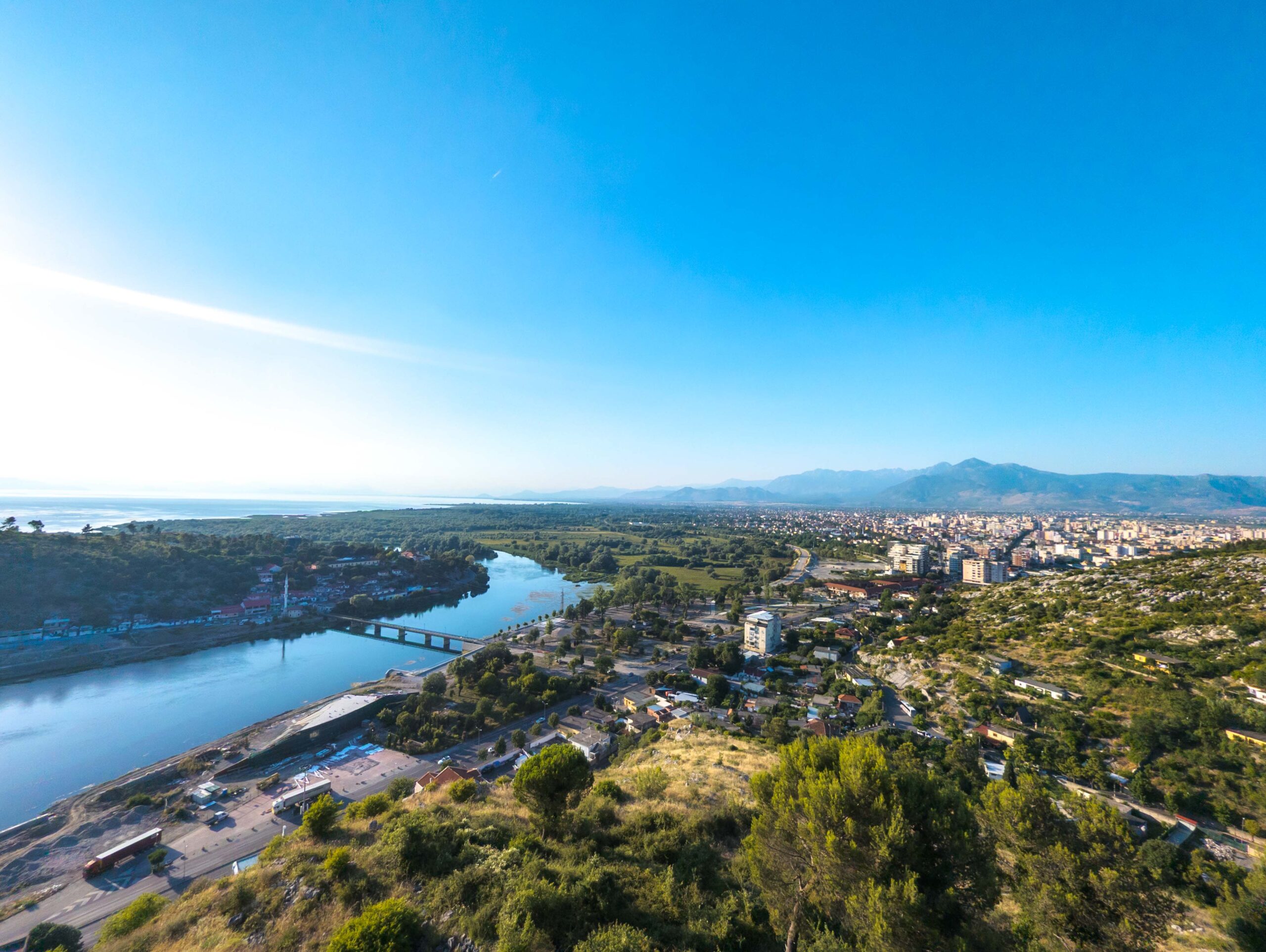
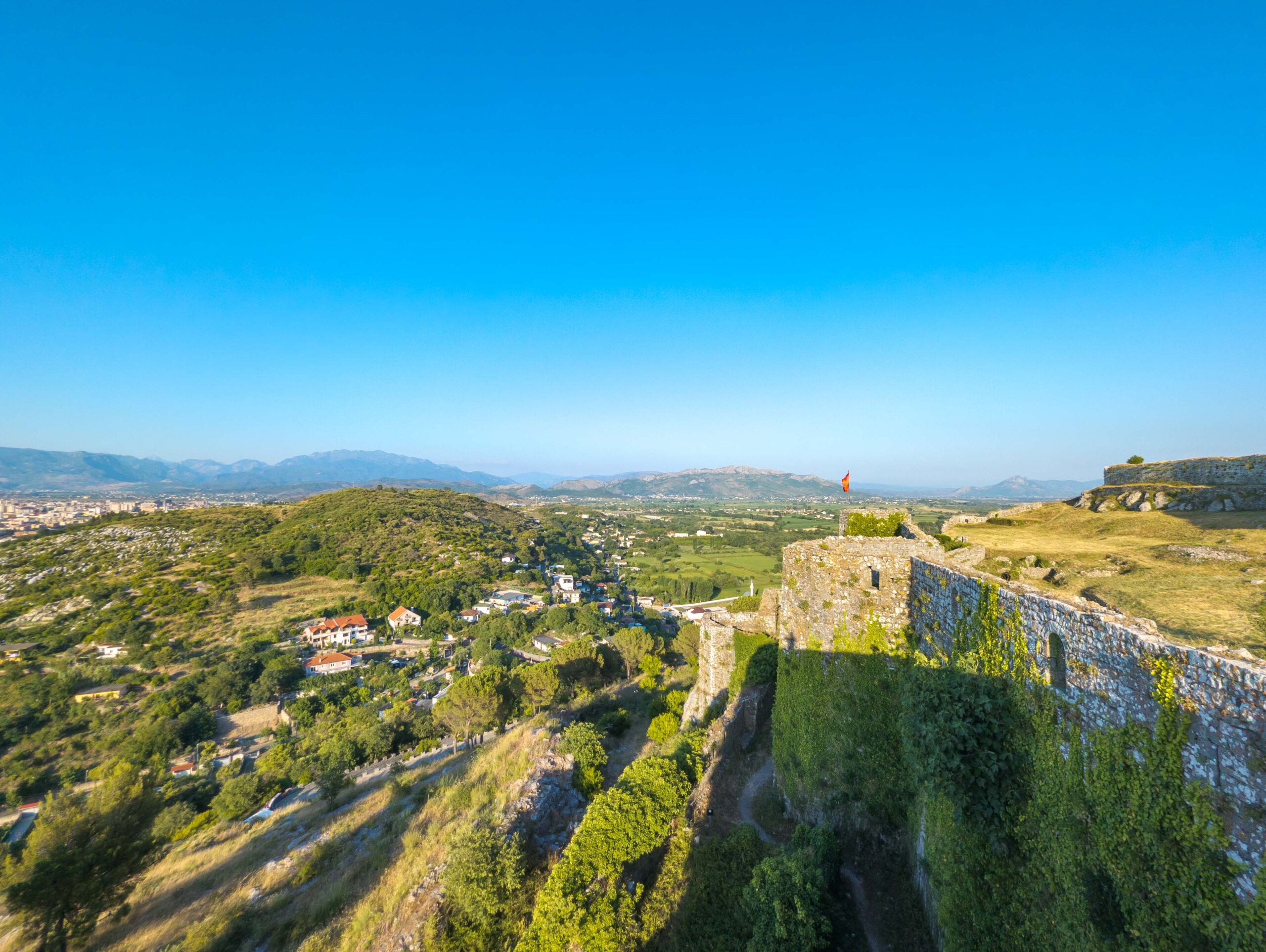
I made it back to Shkoder by evening, just in time to correct my oversight from the day before: Rozafa Castle.
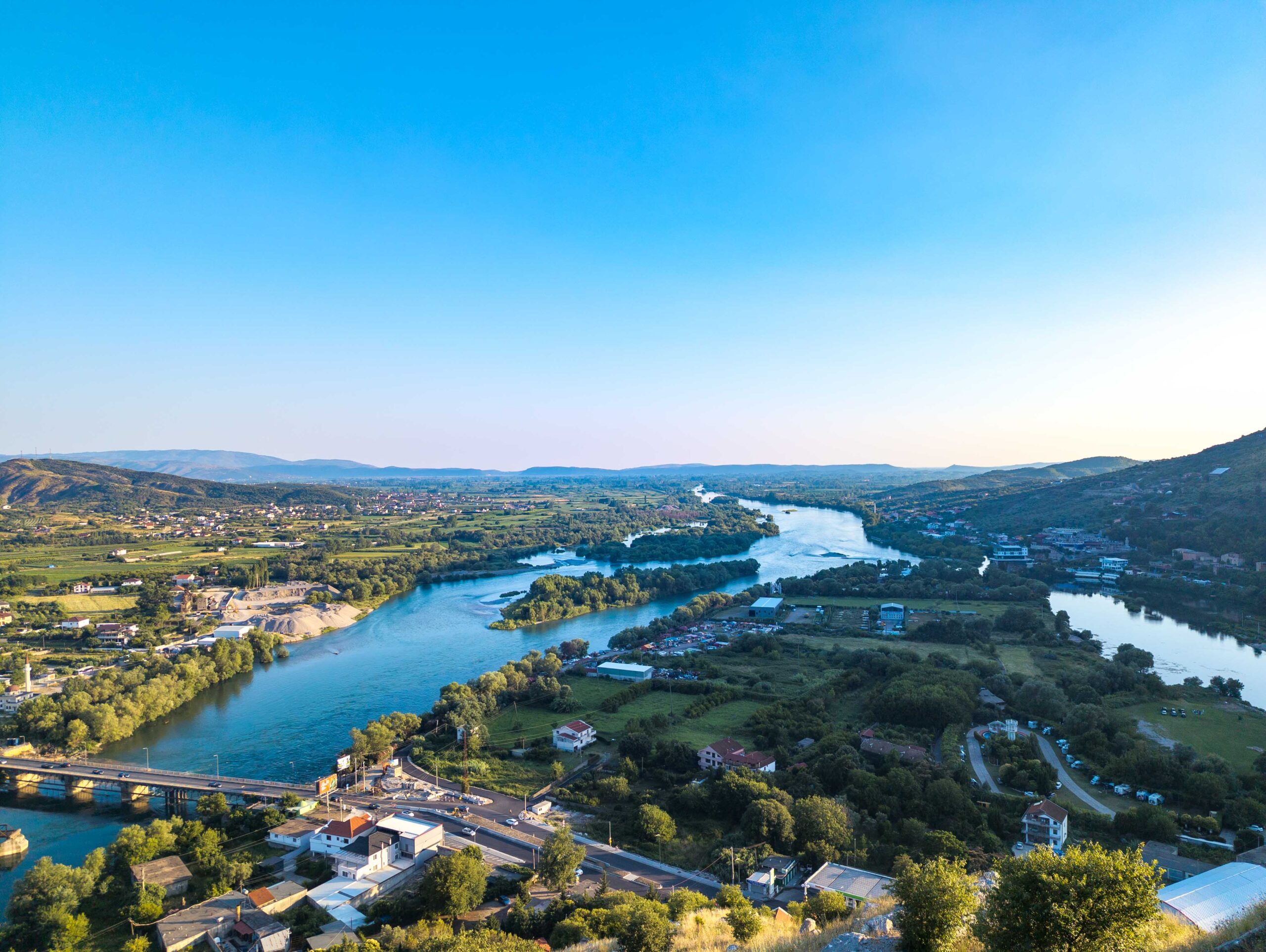
Perched high on a rocky hill, the ancient fortress commands sweeping, panoramic views over Lake Shkoder and the confluence of the Buna, Drin, and Kir rivers. The sunset draped the ancient stone ruins in a bruised, golden light. I spent over an hour wandering the battlements, swapping travel tales with friendly Spaniards and Australians as the sky turned pink. Afterward, a familiar trip to the local Spar for fresh juice and a banana felt like a comforting ritual.
My departure the next morning was a stark return to reality. Leaving at dawn, I fought through gridlocked traffic, but managed to return the car unscathed. The agent marveled at my spotless driving record; the man ahead of me had racked up a small fortune in police tickets.
The airport terminal was a jarring crescendo to a peaceful trip, a chaotic, disorganized mass of humanity that instantly reminded me of the crowded, blocked hallways of high school. It took a full, agonizing hour to clear security. Yet, as I finally settled into my seat for the flight home, watching the Albanian coastline disappear beneath the clouds, I felt nothing but a deep, resonant satisfaction. I had ventured into the Accursed Mountains, and found an unforgettable kind of magic.
ALBANIAN ALPS FINANCIAL SUMMARY AND TRIP EXPENSES
Protected Financial Summary
Enter password to unlock the comprehensive cost breakdown and itemized receipts.