Date: February 6–8, 2026 Location: Sofia, Bulgaria & The Balkan Mountains
This is the story of a 48-hour solo blitz through Bulgaria. It involves a rental car mix-up, a deep dive into history and a Soviet UFO on a mountain peak.
Part I: The Logistics of Chaos
The trip started with a sprint. It was Friday, February 6th, 2026. I walked out of work at 11:30 AM, hit Pratteln by 1:00 PM, and trusted the Swiss public transport gods to get me to the airport. Train, bus, terminal. It went smoothly. Suspiciously smoothly.
I was at the gate by 1:30 PM, which gave me time to do the one thing you should never do right before a trip: check the details of what you actually booked.
I pulled up my car rental confirmation. I stared at the screen. I blinked. The reservation was for the end of February.
Then it hit me. I am planning a trip to Dublin for the end of the month. In a fit of late-night, tired-brained efficiency, I had booked a car for my Irish trip, thinking I was booking it for Bulgaria. So, there I was, about to fly to Sofia with a car waiting for me in Dublin.
Panic is useless. Action is everything. I cancelled the Irish ghost-car and frantically searched for a vehicle in Sofia. The price had jumped—27 Euro a day instead of 19. I shook my head. Eight Euro. That’s the price of stupidity. I booked it, exhaled, and boarded the plane.
Part II: The Window Seat Lottery
I didn’t pay for the window seat; the algorithm just smiled on me. Random assignment. I sat down, happy to have the wall to lean on. Next to me sat a girl reading a book. On the aisle seat, next to her, sat a guy from Bulgaria.
The guy was helpful at first. He gave me the lowdown on Sofia’s nightlife. “Go to the university quarter,” he told me. “That’s where the real bars are. Not the tourist traps.” He gave me some solid tips, and I nodded along, mentally taking notes.
Fifteen minutes before landing, I glanced at the girl next to me. The book she was reading was in the Cyrillic alphabet.
“What are you reading?” I asked.
It turned out to be a great conversation starter. She was Bulgarian, returning home, and she spoke with a lot of enthusiasm about her country. We spent the descent talking about local culture and history. It was one of those nice, unexpected travel moments where you get a local’s perspective before you even hit the ground. We landed at 6:00 PM sharp, and I walked off the plane feeling like the trip was off to a good start.
Part III: Sofia Drift
I took the free shuttle to Terminal 2 to pick up my last-minute rental. The guy at the counter was surprisingly friendly, none of the usual “let me upsell you insurance” nonsense. I grabbed the keys and hit the road.
Driving in a new city at night is the best way to learn it. Sofia’s traffic was manageable, but the parking situation was a different beast. It reminded me of Spain. There are no spots. There is only hope and aggression. I circled the block near my Airbnb for thirty minutes. Thirty minutes of my life, burning fuel, staring at spaces that were almost big enough.
I was impressed, though. Bulgarians park with surgical precision. Bumper to bumper, millimeters to spare. I finally squeezed the car into a gap that defied physics and walked to the apartment.
I texted the host. Nothing. I texted again. Silence.
I stood on the street for five minutes, the cold setting in. Great, I thought. This is the part where I sleep in the car.
Then, the buzzer rang. The door clicked open. I walked up to the second floor, and there he was. The host was a nice guy, but the apartment smelled like an ashtray. He smoked inside, a habit the rest of Europe seems to have bullied out of existence, but here, it was just the air freshener.
I dropped my bag. It was 8:00 PM. I hadn’t eaten a real meal since 6:00 AM. My stomach was eating itself.
Part IV: Candlelight and Smoke
I headed out to a place called Hambara. It’s a hidden gem, difficult to find if you don’t know where to look. No sign, just a heavy door. Inside, there’s no electricity. The whole place is lit by candles. It’s moody, atmospheric, and beautiful.
It is also a chimney. Everyone was smoking. I sat there, breathing in the second-hand smoke, watching the wax drip. I struck up a conversation with two Italians and a couple from Australia.
“I’m doing a road trip tomorrow,” I told them. “Leaving at 6:00 AM. Mountains, caves, monuments. You guys should come.”
They said yes. They seemed excited. But I looked at their beers, then at the time, then at their eyes. They aren’t going to make it, I thought. But the offer stands.
When it came time to pay, I hit a snag. Cash only. I had cash—I’d stopped at an ATM earlier—but the two Polish girls next to me didn’t. They looked panicked. “I have a proposition,” I said. “You Revolut me 20 Euro, and I give you the cash?” They laughed, agreed, and I became a human ATM for the evening.
Part V: The Kebab Incident
It was late, and most restaurants were closing. The nice dinner I imagined turned into a quest for calories. I ended up buying a kebab on the street.
I walked back towards the apartment, holding my prize. I unwrapped it. It was a structural disaster. The bread disintegrated immediately. Sauce went everywhere. Meat fell onto the ground. It wasn’t eating; it was a salvage operation. I stood there in the cold, covered in grease, laughing at my own misfortune. It was undignified, messy, and perfect—the classic solo travel dinner.
I finished what I could salvage and headed back to the apartment, hoping my smoking host was asleep so I wouldn’t have to explain the stains on my shirt.
Part VI: The 5:40 AM Club
The alarm went off at 5:40 AM. It felt like a physical blow.
I dragged myself out of bed. The apartment was dark. The smell of stale smoke hung in the air. I grabbed my gear and went to the car.
6:00 AM. I waited. I checked my phone. A text from the Italians: “Drank too much. Can’t make it.” Nothing from the Australians. They had simply vanished into the hangover void.
I smiled. I wasn’t mad. In fact, I was relieved. Traveling with people is compromise. “I need to pee.” “I’m hungry.” “Can we stop for coffee?” Traveling alone is absolute freedom. The car was mine. The music was mine. The pace was mine.
I put the car in gear and drove out of Sofia into the pitch black.
Part VII: The Cave of Doom
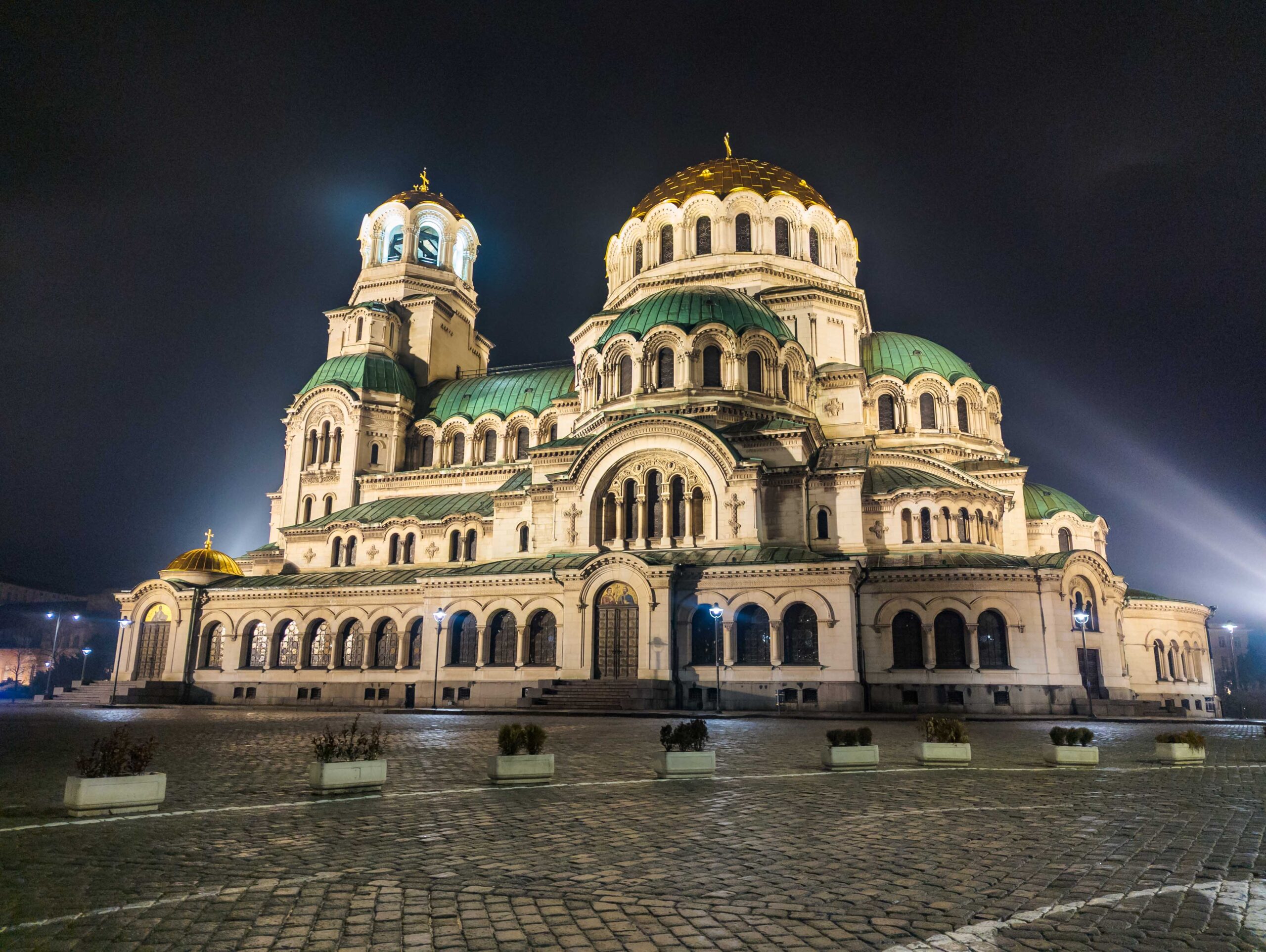
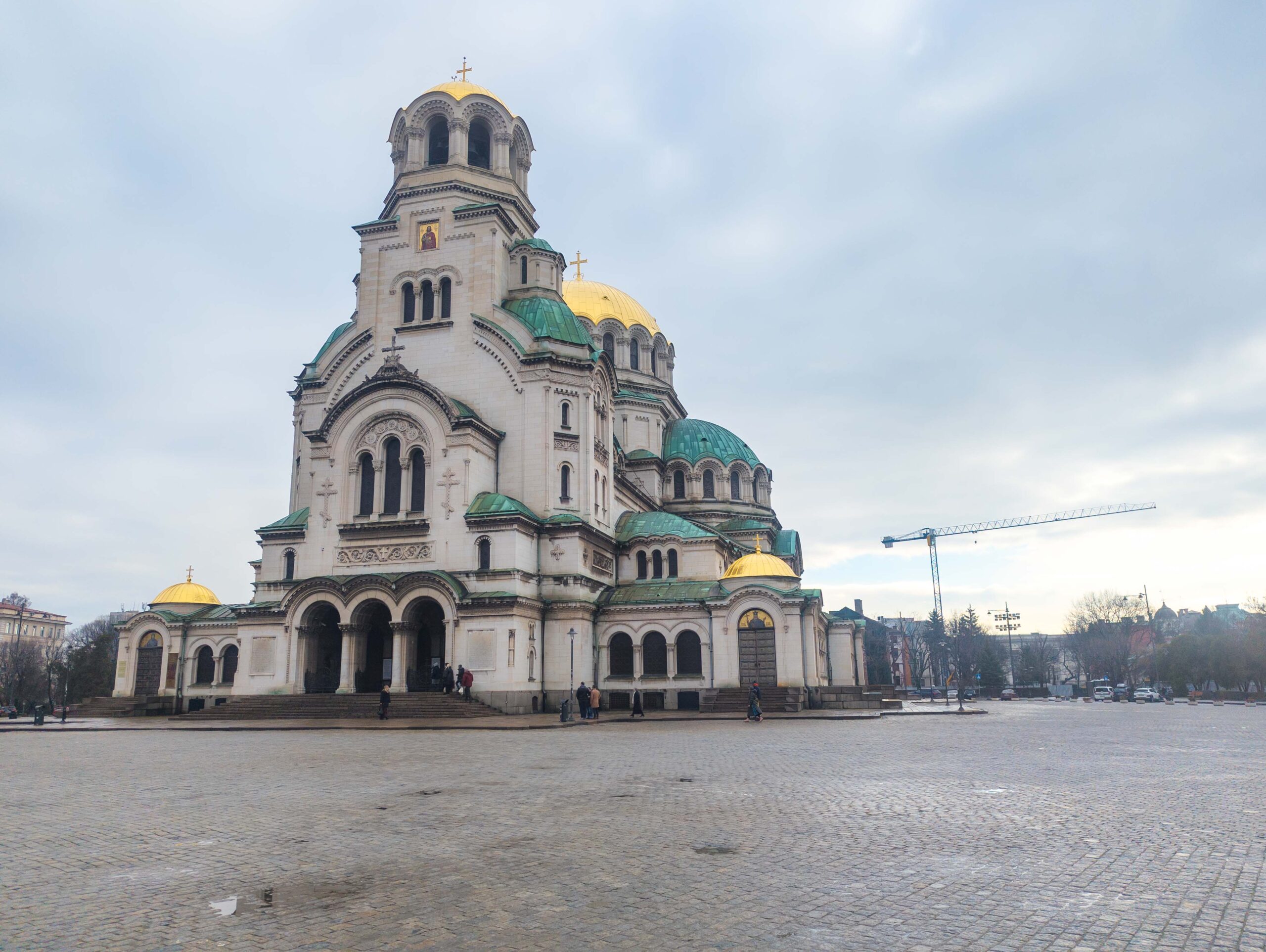
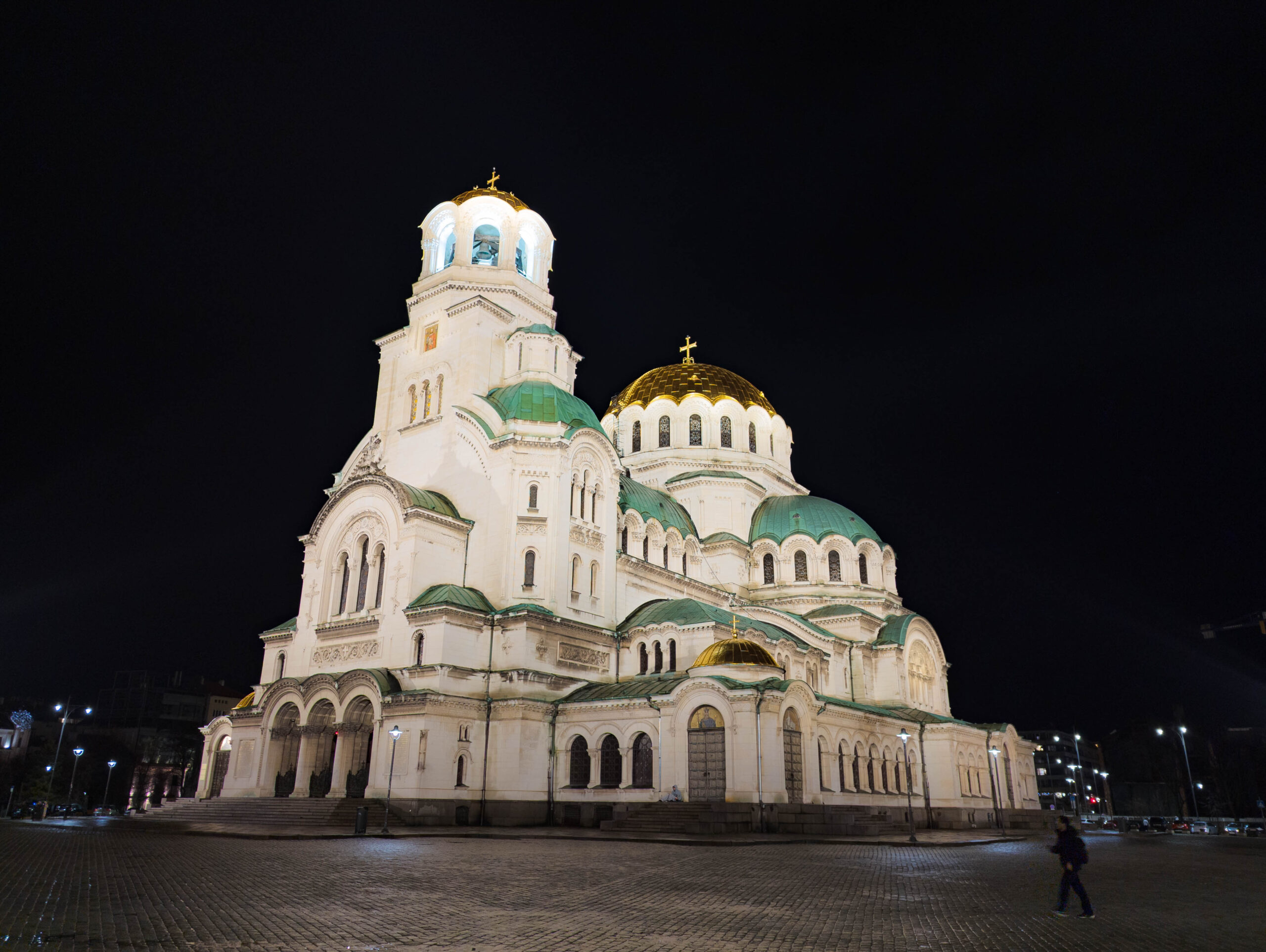
The drive to Devetashka Cave was about 150 kilometers. Five minutes after leaving the apartment, while it was still completely dark, I drove past the massive Alexander Nevsky Cathedral in the city center. I stopped the car in the middle of the empty road, rolled down the window, and snapped a picture. The silence was absolute.
I arrived at the cave just after 8:00 AM. The entrance fee was 1.50 Euros. I was the only person there.
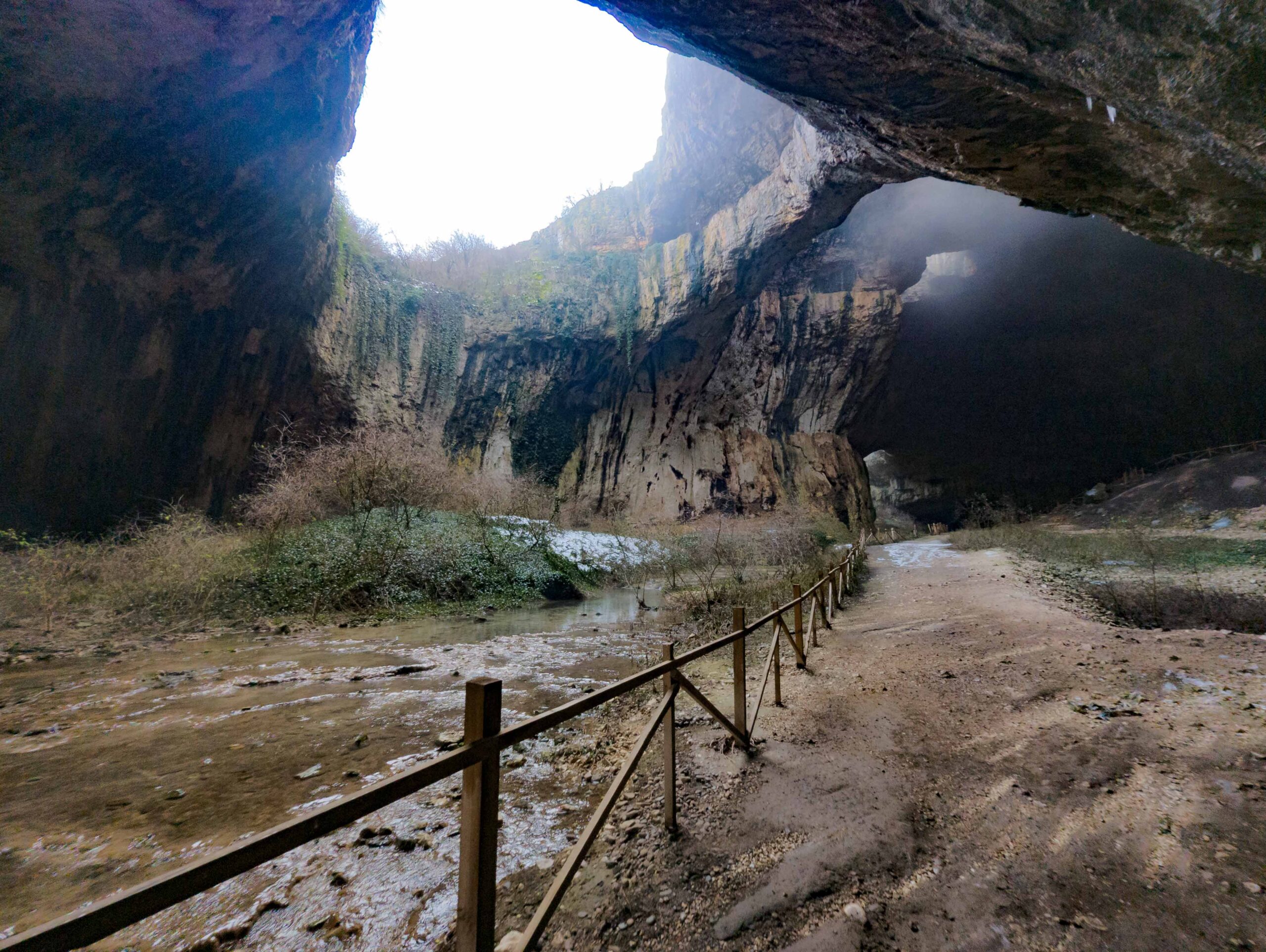
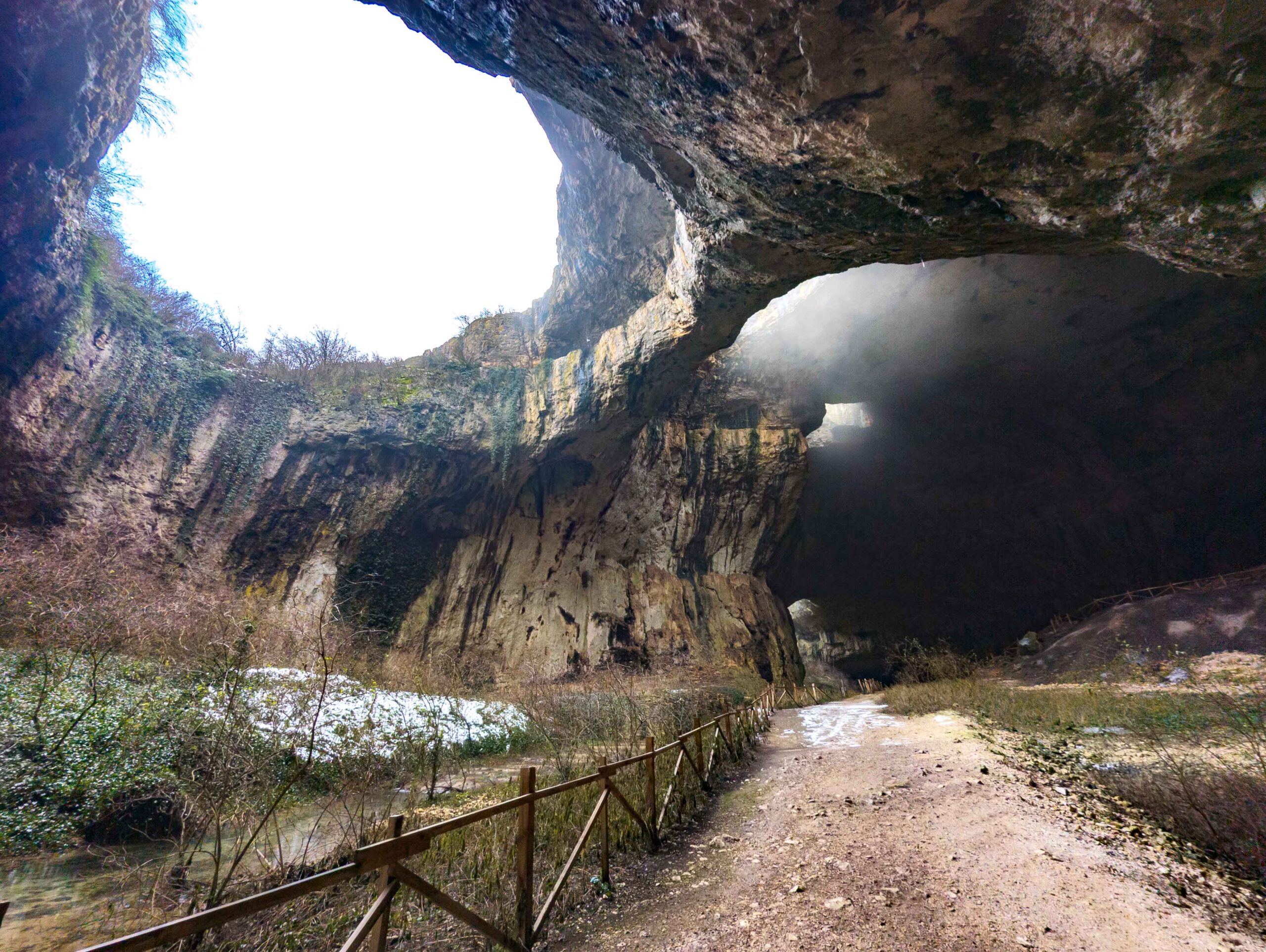
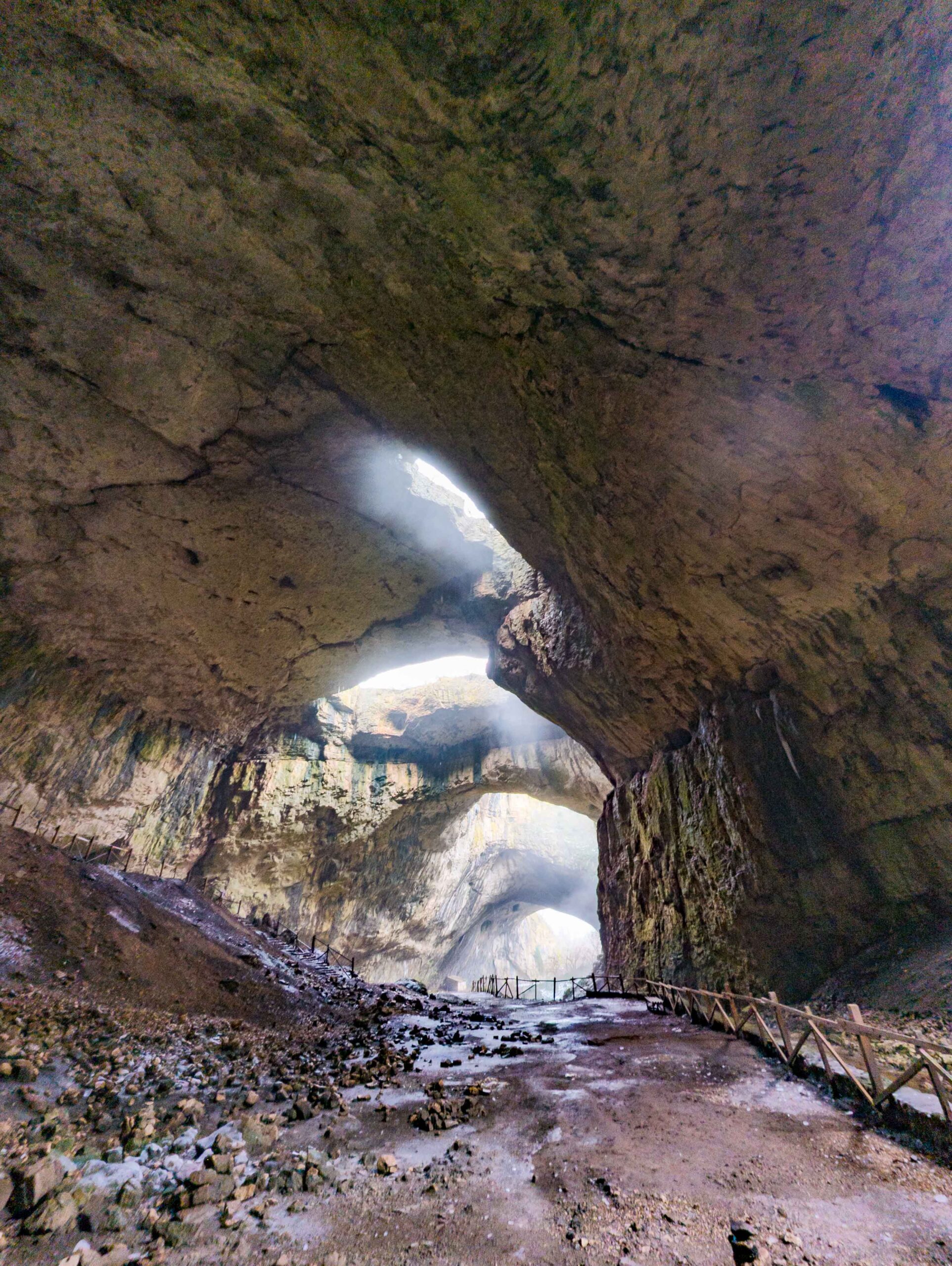
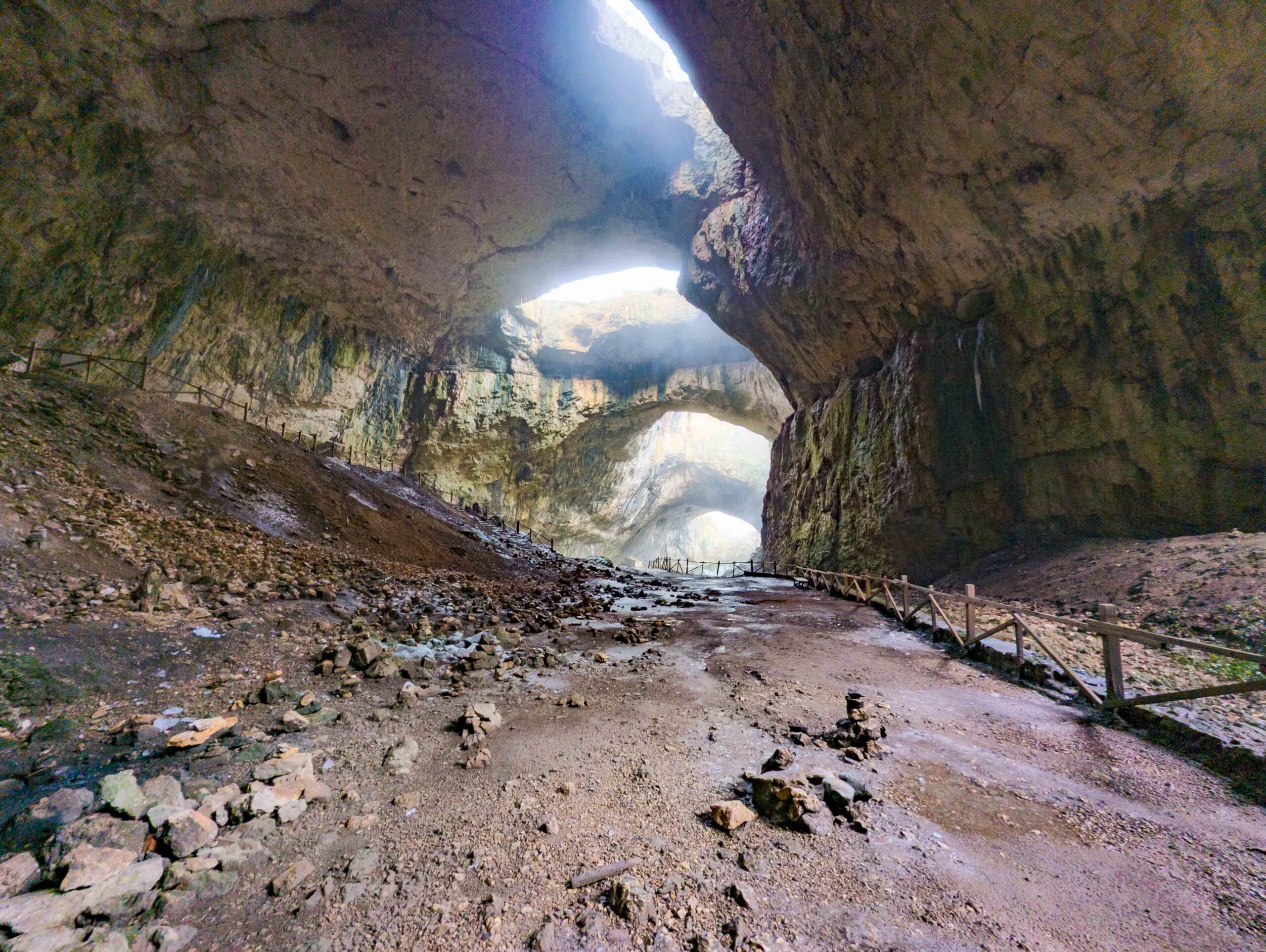
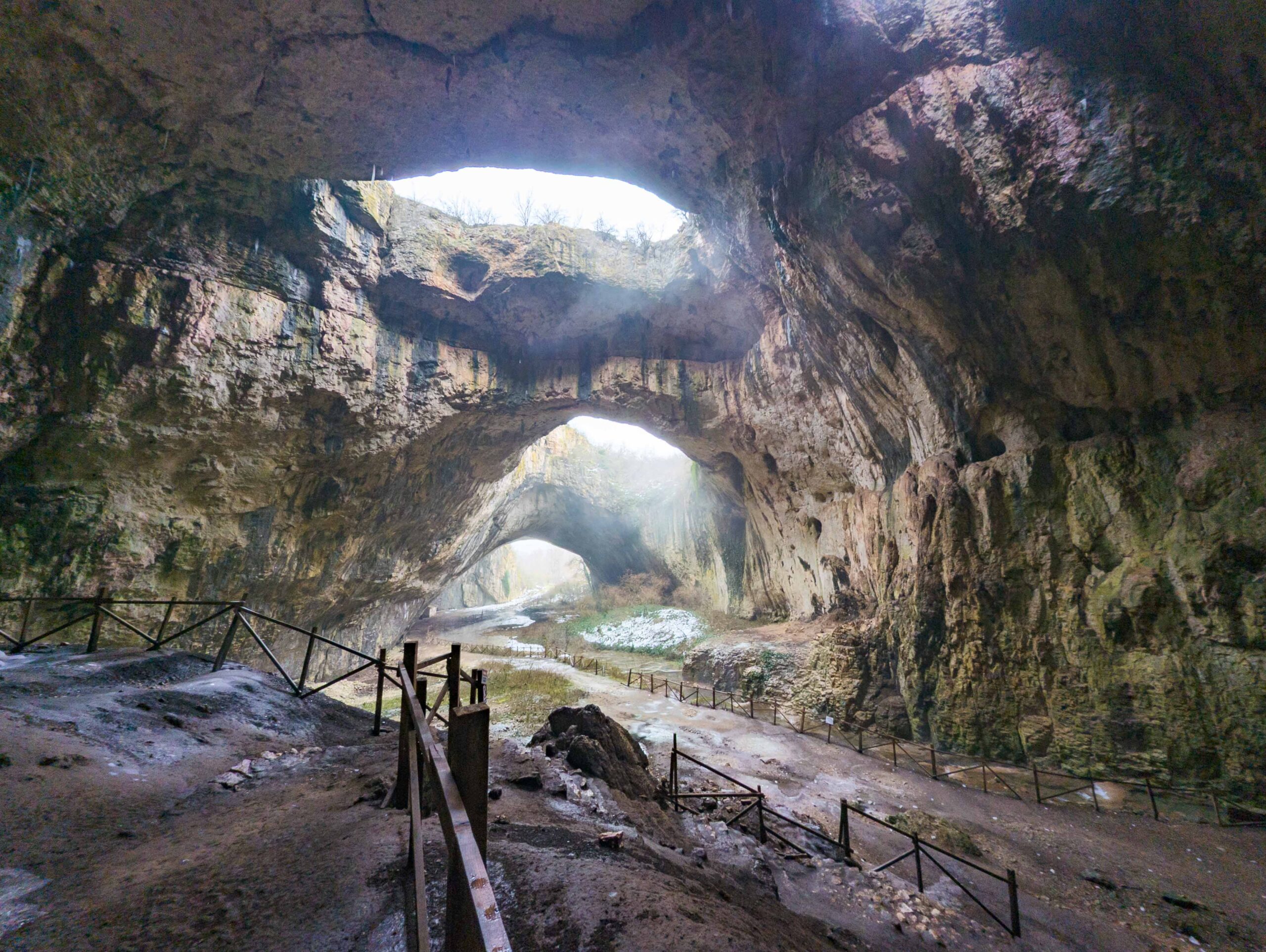
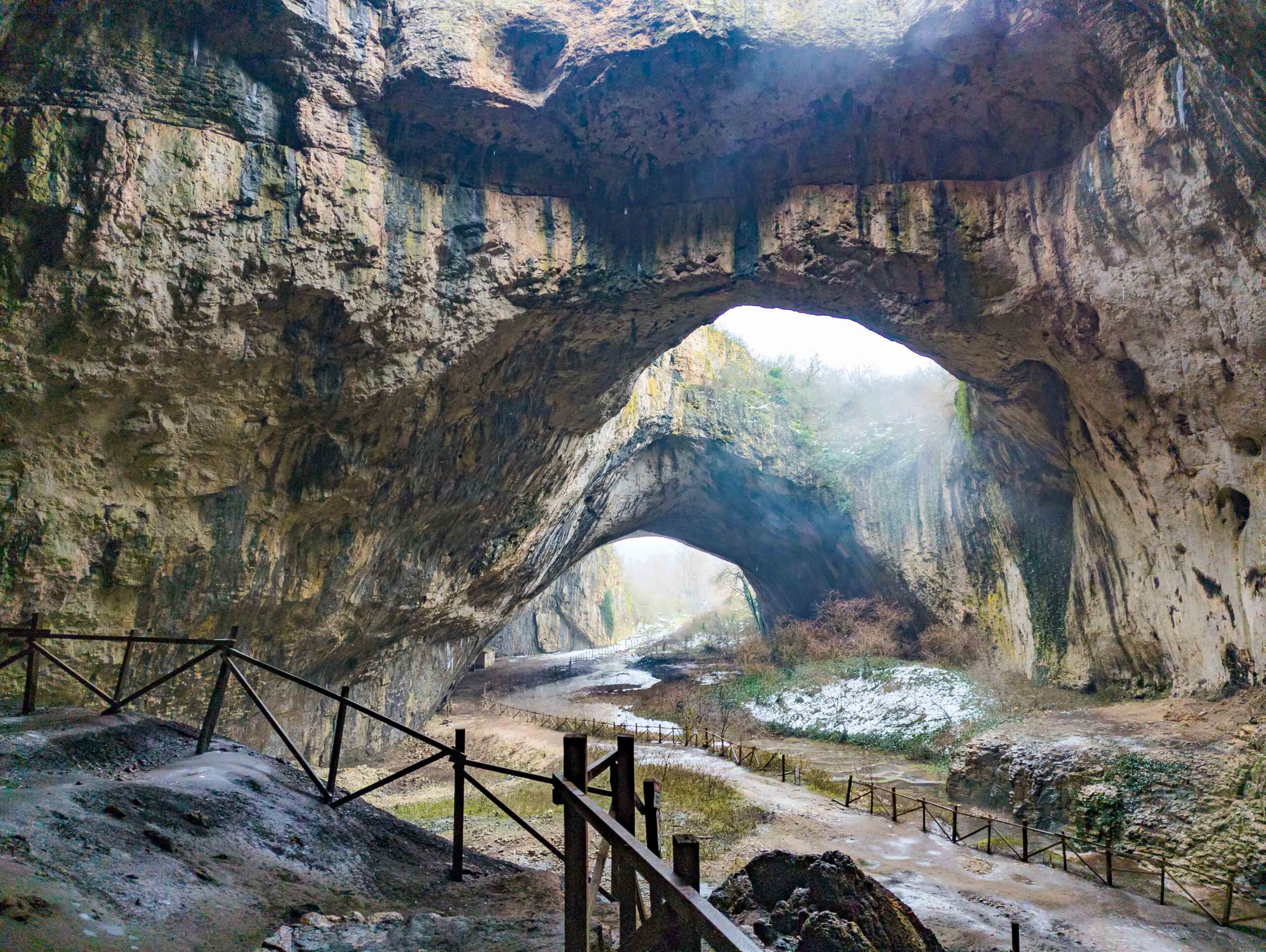
Devetashka isn’t just a hole in the ground. It’s a colossus. The ceiling is open in vast, eye-shaped skylights. It was used as a secret oil storage facility during the Cold War. You can still see the concrete circles where the massive tanks used to sit.
But in February, it’s also a death trap.
The temperature inside was freezing. Massive icicles, sharp as spears, hung from the ceiling edges. I walked in, staring up, mesmerized by the scale of it. I was trying to be careful, avoiding the areas directly under the ice.
Then—BOOOOOOM.
It sounded like a cannon shot. Five meters to my left, a block of ice the size of a microwave smashed into the ground. It shattered, sending shards skittering across the rock floor.
My heart hammered against my ribs. If I had been walking two seconds slower, that would have been it. End of trip. End of blog. There was a sign nearby: Danger: Falling Rocks. They should probably update it to Danger: Falling Ice Artillery.
I took a few more photos, moving with the paranoia of a soldier in a minefield, and got out of there. Nature is beautiful, but she doesn’t care about you.
Part VIII: The Shipka Pass
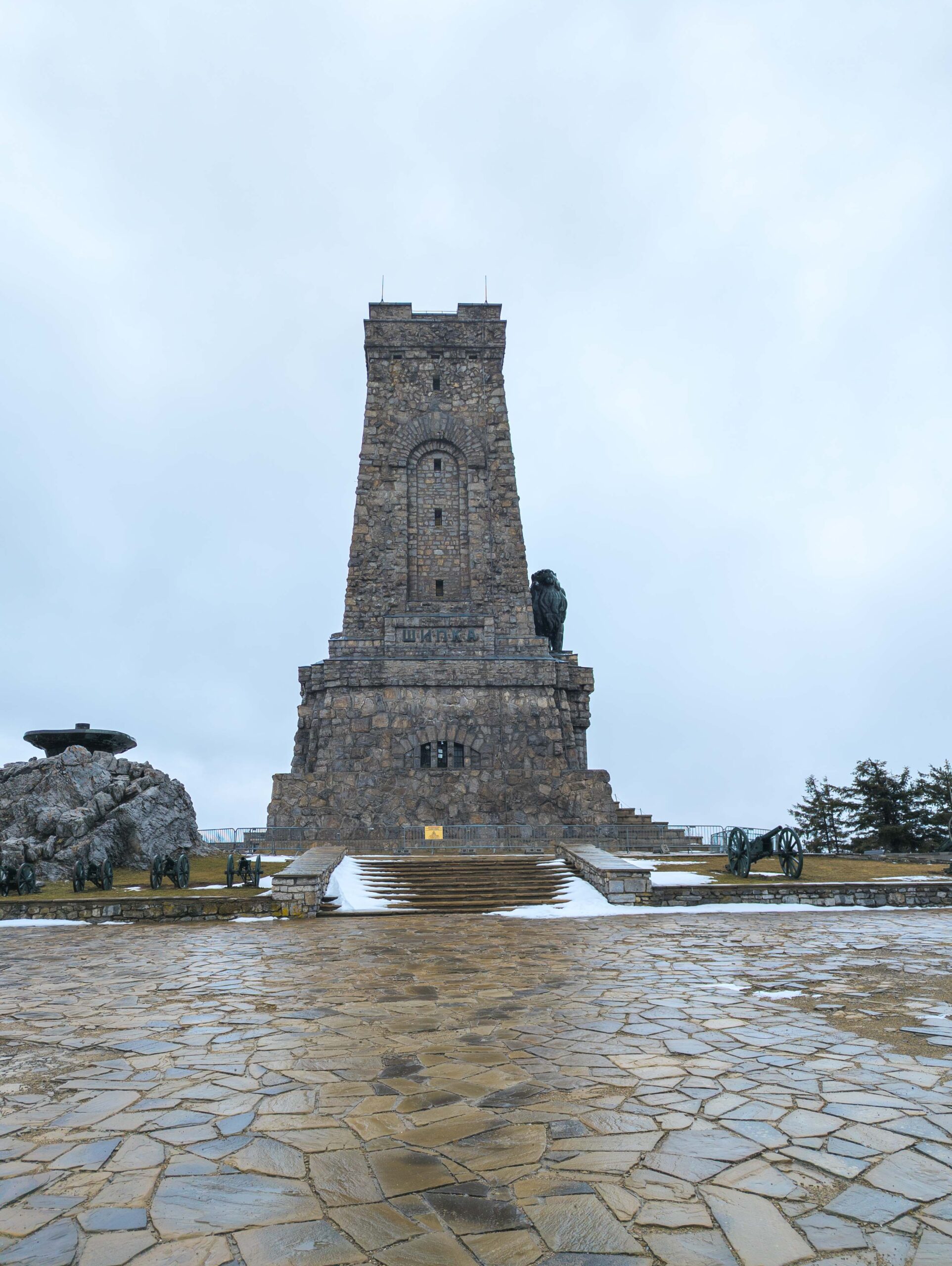
I got back in the car and pointed it toward the mountains. The target: Shipka Monument. This is a massive stone tower built to honor the Russian and Bulgarian troops who held the pass against the Ottoman Empire in 1877. It’s a place of heavy history.
As I climbed the mountain road, the world turned white. The snow was deep. The road up to the monument itself was closed, buried under drifts.
I parked the car and walked the final 500 meters. The wind was biting. At the top, the view was split in two. To the south, the valley opened up, clear and sunny. To the north, a wall of clouds slammed into the mountain, swallowing everything.
I stood there for a moment, catching my breath in the thin air. It’s intense, realizing how much blood was spilled on these quiet, snowy peaks.
Part IX: The UFO
I descended into the valley because the direct road to my next stop was blocked by snow. I had to take the long way around to reach the Buzludzha Monument.
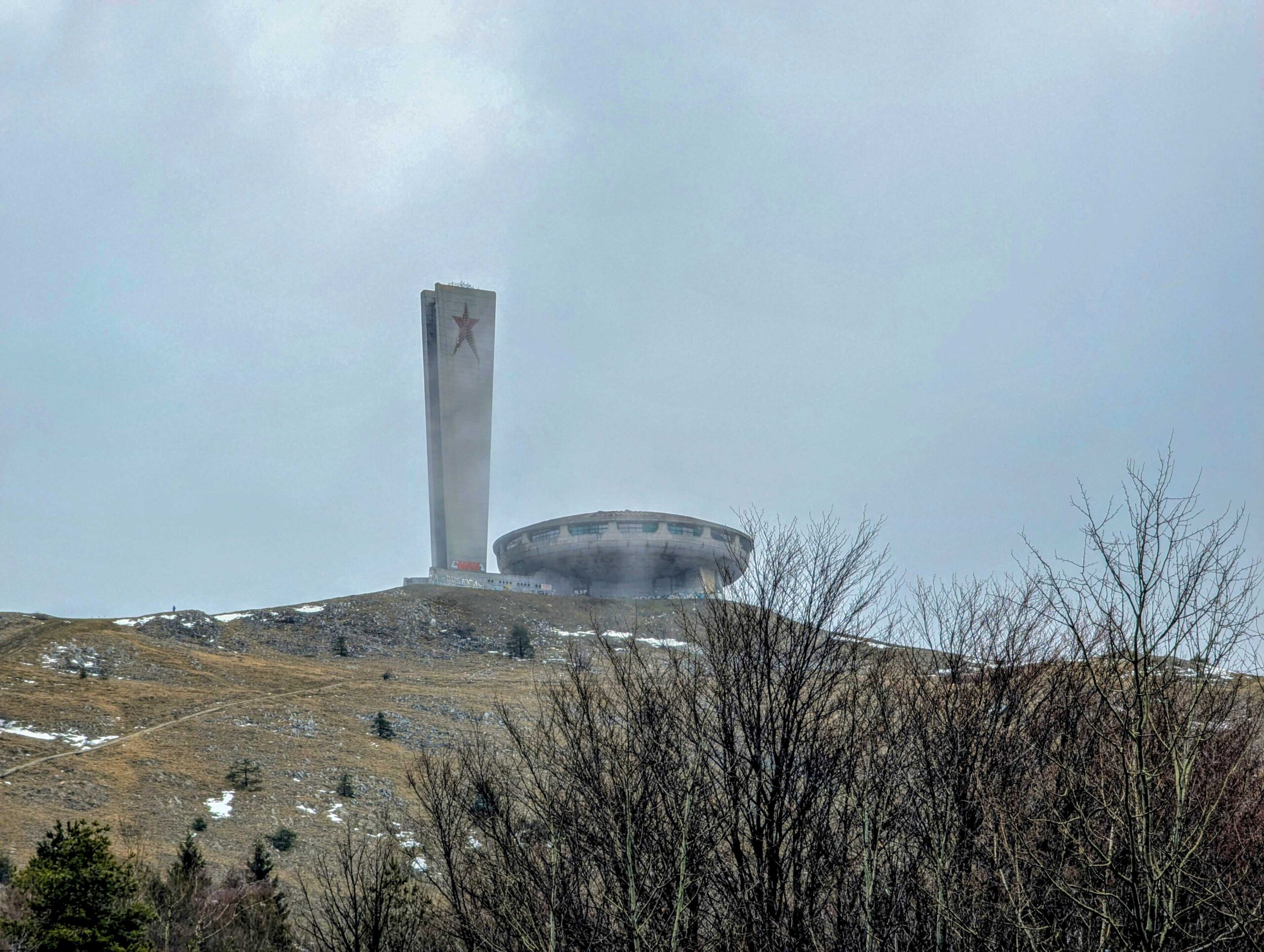
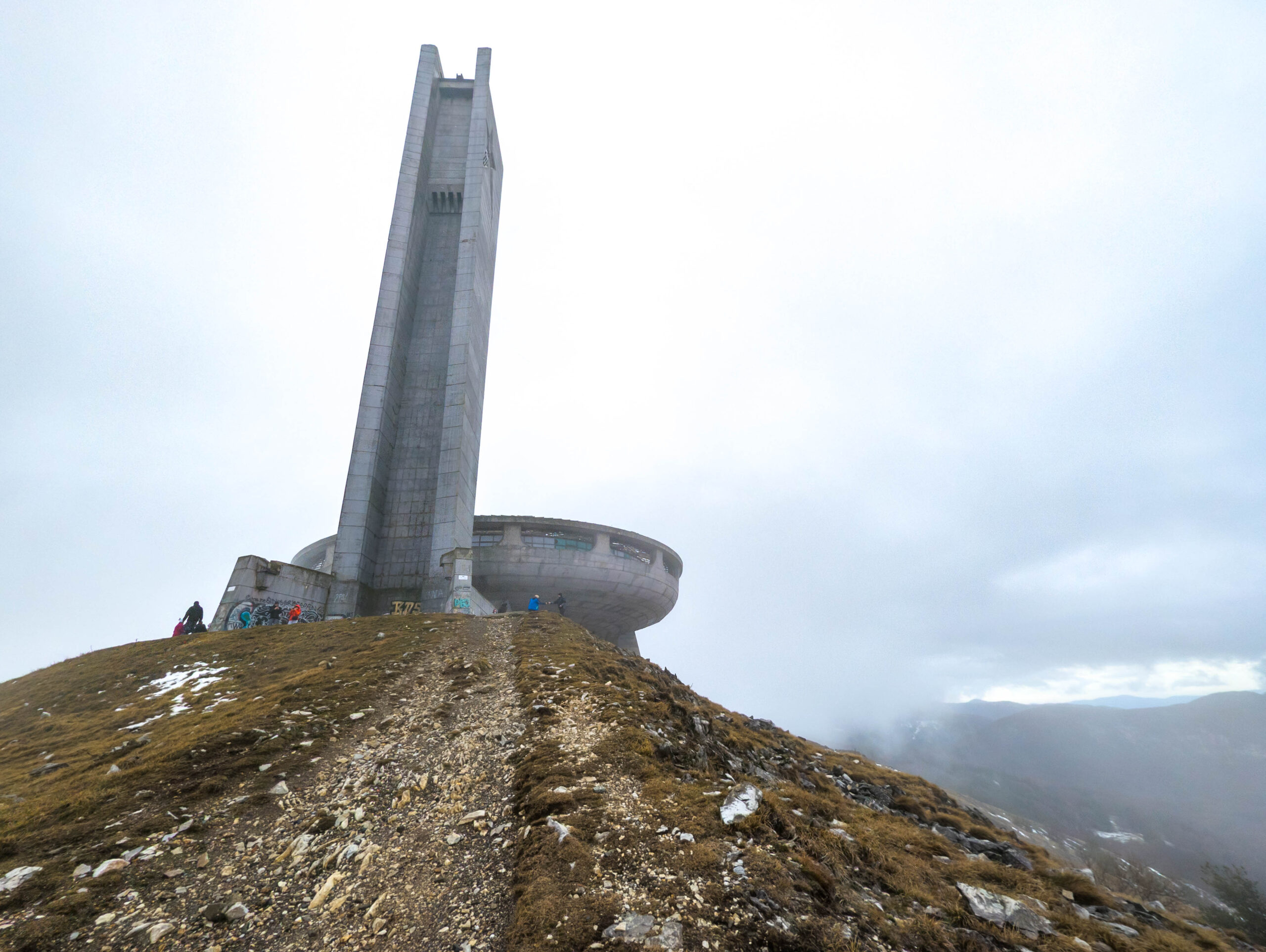
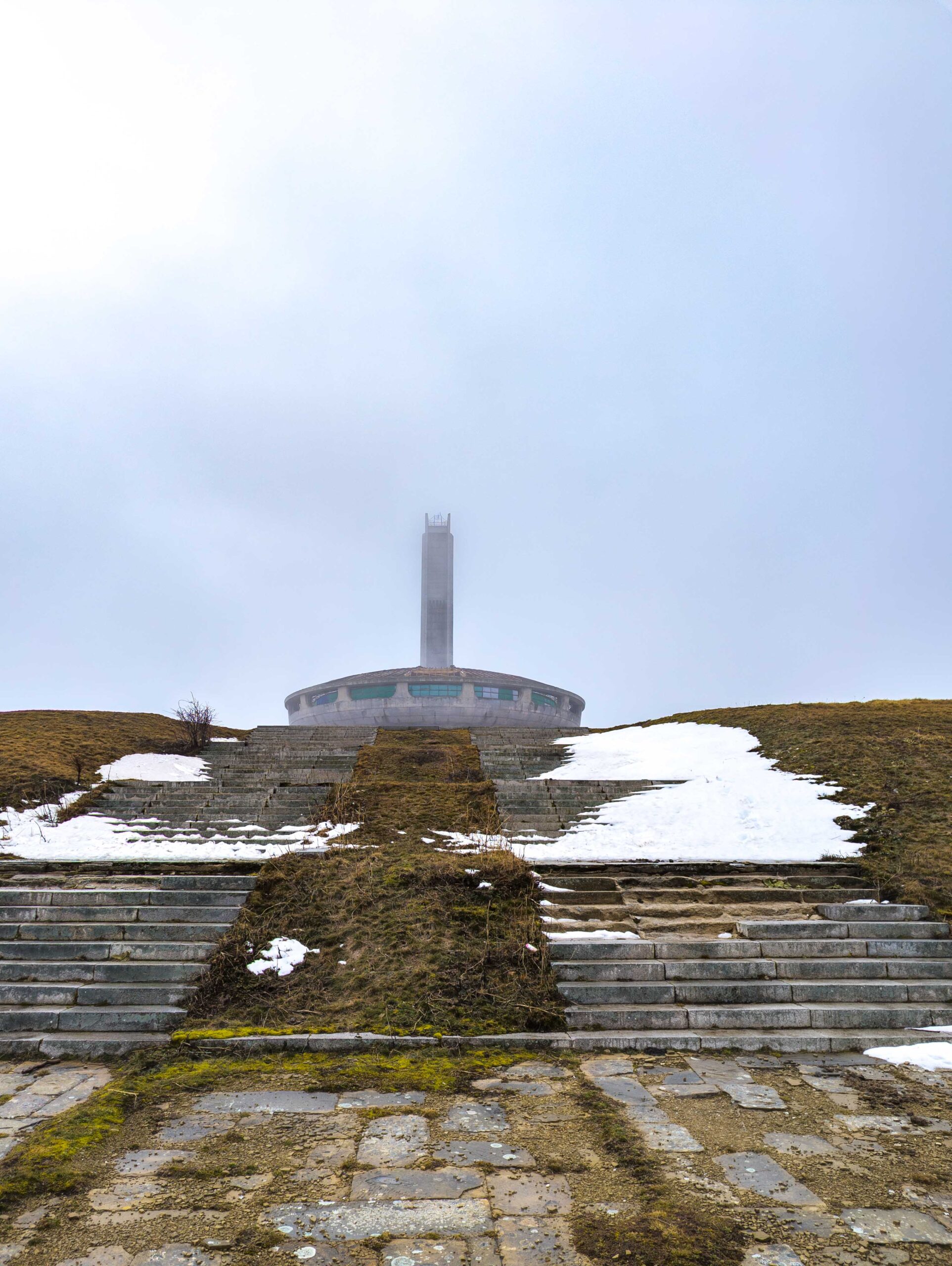
If you haven’t seen Buzludzha, Google it. It looks like a concrete flying saucer left behind by a communist alien civilization. It was built as the headquarters of the Bulgarian Communist Party. Now, it’s a ruin.
The road up was cleared—perfectly. I drove up the winding track, impressed by the snow removal. Seeing it in person is different from the photos. It is enormous. It sits on the peak like a crown of grey concrete. It’s falling apart, closed to the public due to the danger of collapsing roof tiles, but the atmosphere is magnetic. It feels like a tomb for an ideology.
I walked around the perimeter. It was desolate and magnificent. This is what I came for. Not a guided tour, not a souvenir shop. Just a giant, decaying structure on a snowy mountain.
Part X: The Return
I checked my watch. I had a choice. Option A: Drive to Plovdiv, the oldest continuously inhabited city in Europe. Option B: Go back to Sofia and do a deep dive into the city’s history.
I looked at the map. Plovdiv was tempting, but I was tired, and rushing it would be an insult. I chose Sofia.
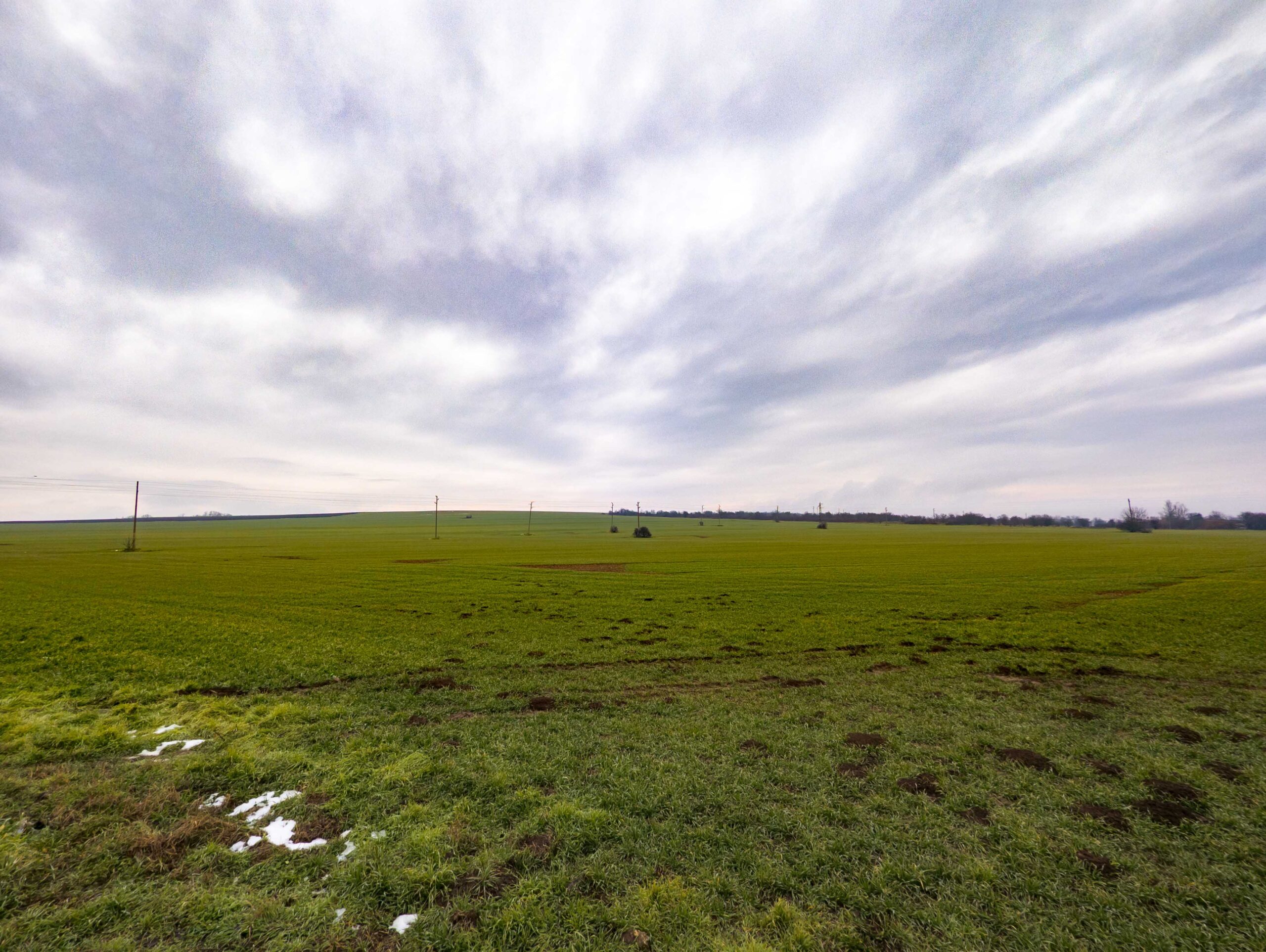
The drive back was a blur of mountain peaks. I hadn’t realized how mountainous Bulgaria is. It’s basically Switzerland with worse roads and better prices. Then, the anxiety hit. The fuel light pinged. I had been pushing the car hard. I watched the needle drop. I rolled into a gas station on fumes. I filled it up, and by my calculation, the little rental car had done nearly 600 kilometers on a single tank. Heroic.
Part XI: The Yellow Brick Road
Back in Sofia, I dropped the car and took the metro to the center to join a walking tour. I actually like walking tours—it’s the fastest way to download the context of a city. The only one available at that time was in Spanish, so I took it. It added a fun layer: learning Bulgarian history through a Spanish filter.
The guide was excellent. She didn’t just give dates; she told stories.
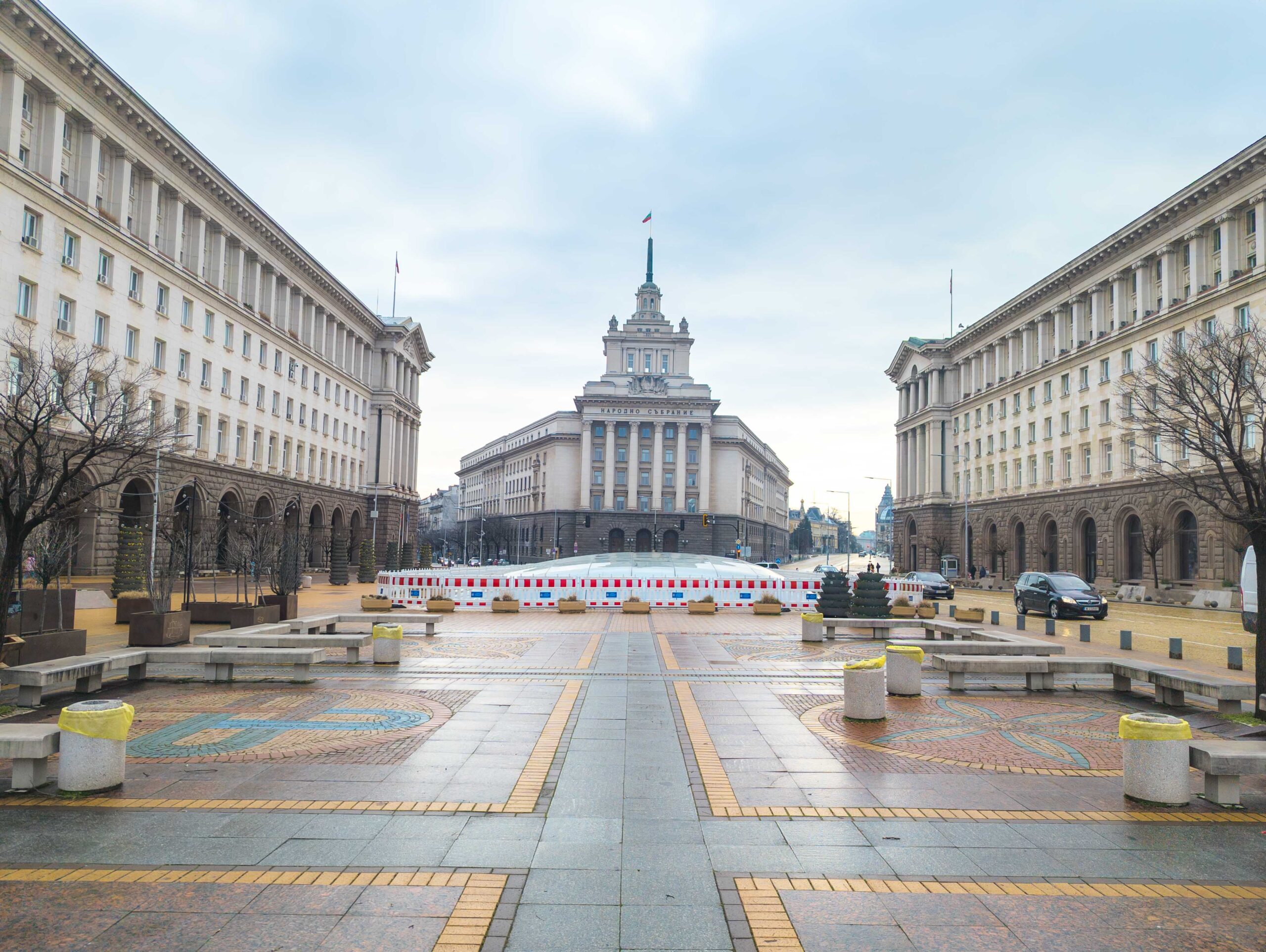
She talked about the Yellow Cobblestones. The center of Sofia is paved with yellow ceramic bricks. The story goes they were a gift from the Austro-Hungarian Emperor for a royal wedding. But there’s a darker side—Bulgaria went into massive debt to pave its streets in gold, a symbol of striving for European status while the economy crumbled.
She talked about World War II. Bulgaria was an ally of Germany, yet they refused to deport their Jewish population to the death camps. The church, the people, and some politicians stood up and said no. It’s a complex history, but standing there, hearing how 48,000 people were saved, you feel the weight of the place.
Then there was the Statue of St. Sofia. In the middle of the city, there used to be a statue of Lenin. When communism fell, they tore him down. In his place, they put up a statue of Sofia—the symbol of wisdom. But the locals joke about it. She looks a bit pagan, a bit erotic, wearing a dress that shows off her curves. It’s a weird, modern contrast to the heavy Orthodox vibe of the city.
Part XII: Sunday Morning Tolerance
I was exhausted. I crashed early.
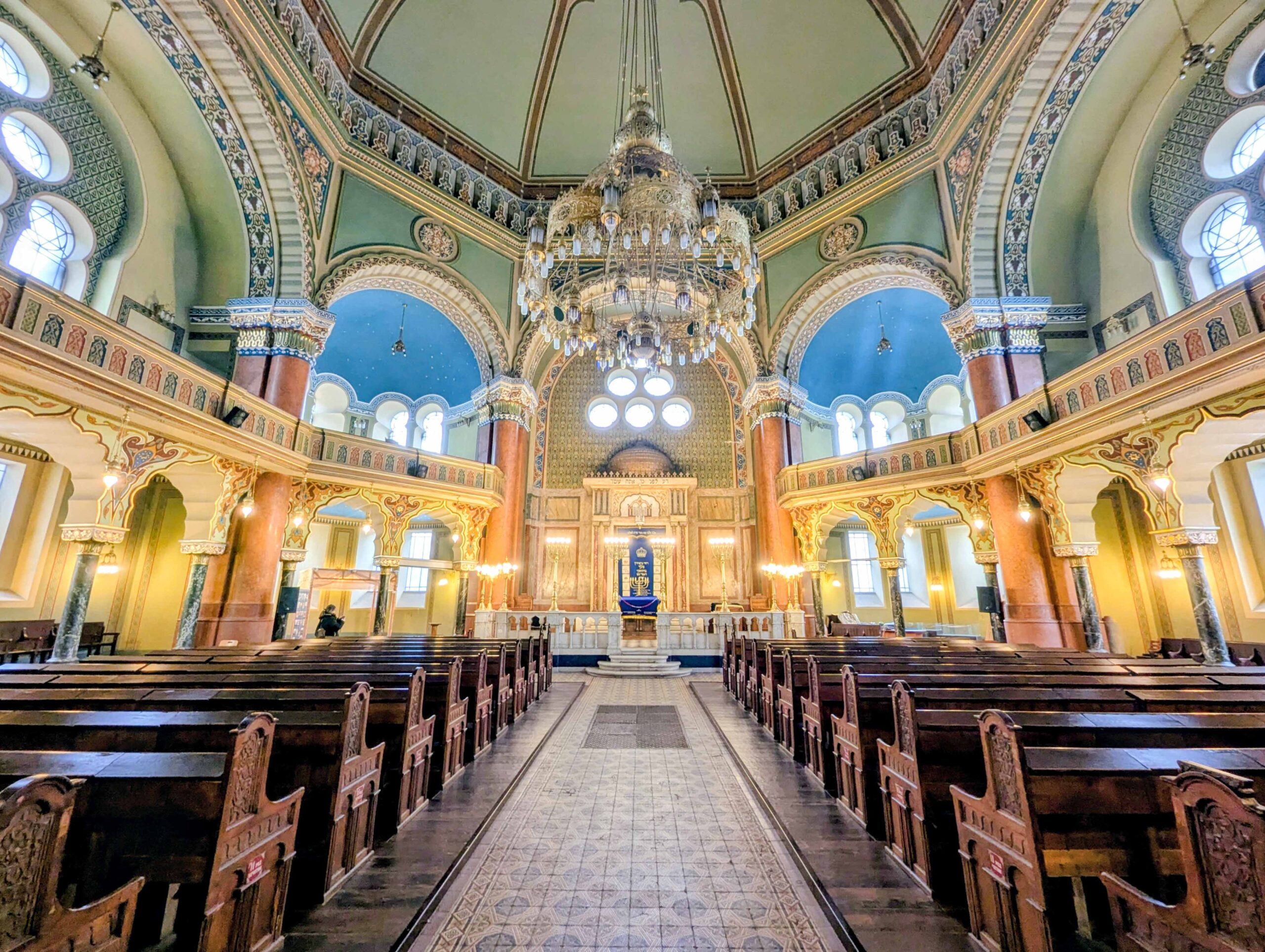
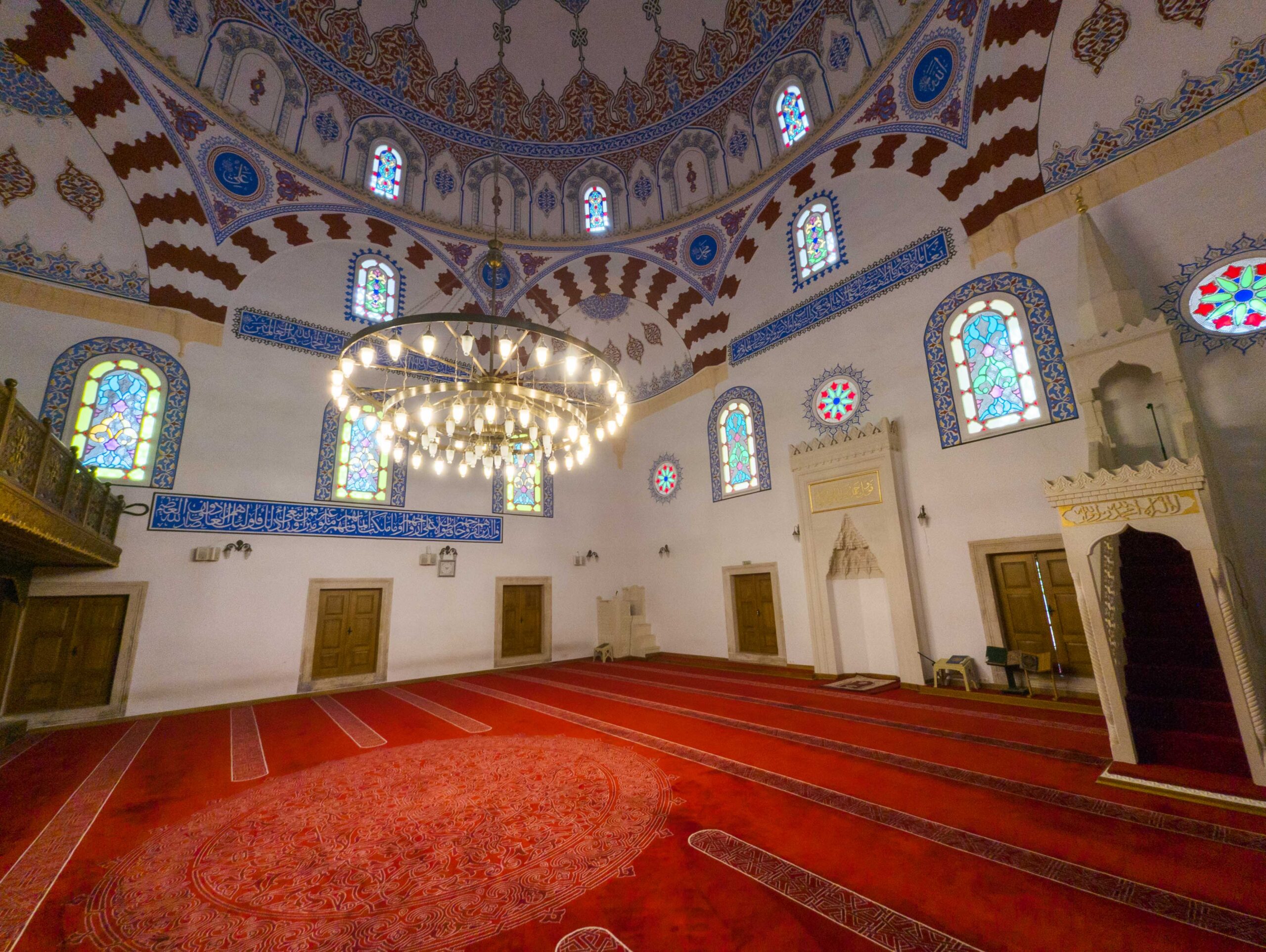
Sunday morning, February 8th. My flight was in the afternoon. I had one mission left: see the “Square of Religious Tolerance.” In the span of a few hundred meters, you have the St. Nedelya Church (Orthodox), the Banya Bashi Mosque, and the Sofia Synagogue.
I walked to the Synagogue. It’s the largest in Southeastern Europe. It was quiet, hidden behind high walls. I walked to the Mosque. It’s one of the only ones left from the Ottoman era, still functioning. I walked to the Church. It smells of incense and beeswax.
It’s rare to see these three sitting so close, not fighting, just existing. It felt like a good note to end on.
The Aftermath
I took the bus to Terminal 1 at 11:00 AM. The flight back to Switzerland was short. I landed at 5:40 PM. Exactly 48 hours after I landed in Sofia.
I was back home, back to the routine. But my head was still spinning. The ice falling in the cave. The smell of the smoke in the Airbnb. The wind on the Shipka pass. The interesting conversations along the way.
That’s the thing about these intense trips. You cram so much life into such a short time that the memories don’t know where to sit. They overlap.
Travel isn’t about the perfect itinerary. It’s about the mistakes. It’s about the car you booked for the wrong country. It’s about the kebab that ruins your shirt. It’s about standing under a million tons of rock and ice and realizing how small you are.
It was a short trip. But it was heavy. And that’s exactly how I like it.
🔒 Protected Content
Enter password to view the Financial Breakdown.