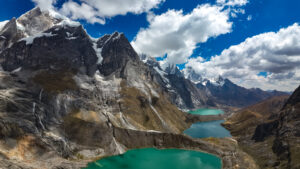
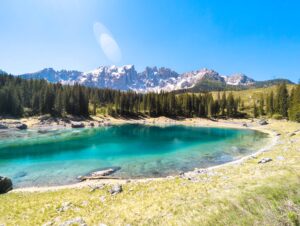
Over a long weekend from November 6 to November 9, 2026, I flew from Zurich to Barcelona and traveled north by coach into the eastern Pyrenees to visit the Principality of Andorra. Combining two nights in central Barcelona with an overnight stay in the mountain village of Arinsal, the trip offered a chance to explore Europe’s highest capital city, hike up to the frozen alpine lake of Estany de les Truites at 2,260 meters inside the Comapedrosa Valleys Natural Park, and learn firsthand how seasonal workers from Latin America navigate European border rules.
TABLE OF CONTENTS
- Quick Facts Specification Sheet
- A Brief History of the Principality of Andorra
- Friday Arrival in Barcelona and Morning Bus to the Pyrenees
- Andorra la Vella, Connectivity Tips, and the Bus to Arinsal
- Hiking the Comapedrosa Valley to Frozen Estany de les Truites
- Seasonal Workers in Arinsal: The Croatia and Andorra Loop
- Escaldes Engordany, Caldea Architecture, and Return via Barcelona
- Financial Summary and Detailed Trip Expenses
QUICK FACTS: ANDORRA AND BARCELONA WEEKEND SPECIFICATION SHEET
| Destination | Andorra and Catalonia, Spain (Barcelona, Andorra la Vella, Escaldes Engordany, Arinsal) |
| Travel Period | November 6 to November 9, 2026 |
| Duration | 4 Days, 3 Nights |
| Basecamps | Barcelona (2 Nights) and Arinsal in La Massana, Andorra (1 Night) |
| Hiking Route | Arinsal to Refugi de Comapedrosa and Estany de les Truites (2,260 m) |
| Key Landmarks | Comapedrosa Valleys Natural Park, Estany de les Truites, General Council Parliament, Pont de Paris, Caldea Thermal Spa |
| Transport Modes | Commercial flights, Aerobus A1 airport shuttle, ALSA cross border coach, Andorra L5 mountain bus, SBB train |
| Visited | November 2026 |
A BRIEF HISTORY OF THE PRINCIPALITY OF ANDORRA
Tucked into the high valleys of the eastern Pyrenees between Spain and France, the Principality of Andorra is one of Europe’s smallest and oldest surviving states, covering just 468 square kilometers. According to medieval tradition, Charlemagne granted a charter to the Andorran people around the end of the eighth century in exchange for guiding his Christian armies through the mountain passes and fighting Moorish forces along the southern frontier of the Frankish Empire.
Over the following centuries, feudal control over the valleys became a source of constant dispute between the Catalan Bishops of Urgell to the south and the French Counts of Foix to the north. To end the conflict, the two rivals signed two landmark peace treaties known as the Pareatges in 1278 and 1288. These agreements established a unique political system called a Co Principality, under which both rulers shared equal sovereignty over Andorra while residents paid a modest alternating tribute of farm produce, cheese, and livestock.
When Count Henry of Foix and Navarre ascended the French throne as King Henry IV in 1589, the French half of the Andorran co principality merged with the French Crown and later passed to the President of the French Republic. Today, Andorra remains the only sovereign nation in the world headed by two foreign co princes: the Catholic Bishop of Urgell in Catalonia and the President of France, making the French President the only monarch in the world elected by the citizens of another country. In 1419, the co princes authorized the creation of the Consell de la Terra, giving Andorra one of the oldest continuous parliaments in Europe, and in 1993 Andorran voters approved a modern democratic constitution before joining the United Nations.
Because of its rugged mountain terrain, Andorra has neither an airport nor a railway station, so every visitor enters by road from Spain or France. Sitting at 1,023 meters above sea level, Andorra la Vella is the highest capital city in Europe. Once an isolated pastoral and tobacco growing society, Andorra transformed during the second half of the twentieth century into a thriving ski resort hub and low tax shopping destination. Although Andorra is not part of the European Union or the Schengen Area, it uses the euro as its official currency by monetary agreement while maintaining its own customs border, tax laws, immigration quotas, and national telecommunications network.
FRIDAY ARRIVAL IN BARCELONA AND MORNING BUS TO THE PYRENEES
The trip began on Friday evening, November 6, 2026, with a Vueling flight from Zurich departing at 21:15 and landing at Barcelona Airport Terminal 1 shortly after 23:10. Outside the terminal, I boarded the Aerobus A1 express bus directly into the city center to Placa Universitat, stopping briefly at a small convenience store called Jr Super on the way before arriving at TOC Hostel Barcelona on Gran Via de les Corts Catalanes just before midnight.
The reception staff were very friendly and initially assigned me a bed in an eight bed dormitory. When I walked into the room and noticed the bed had not been made, I returned to the front desk and they immediately moved me to a six bed room that was ready. After dropping off my backpack and taking a shower, I stepped back outside for a twenty minute walk through the surrounding neighborhood. Even after midnight, the streets of central Barcelona were completely packed with people enjoying the Friday night atmosphere. Back at the hostel, I went straight to sleep, and despite somewhat stuffy air in the dormitory rooms, I slept very well.
On Saturday morning, November 7, my alarm sounded at 06:00 to catch the 07:00 ALSA coach from Barcelona Estacio del Nord. Although I had initially considered riding the metro, the bus station was only a thirty minute walk away, so I walked across the quiet morning city and boarded the coach. The three hour drive north across Catalonia followed the Segre River valley past the calm waters and limestone cliffs of the Oliana Reservoir before climbing into the Pyrenees and arriving in Andorra la Vella just before 10:00.


ANDORRA LA VELLA, CONNECTIVITY TIPS, AND THE BUS TO ARINSAL
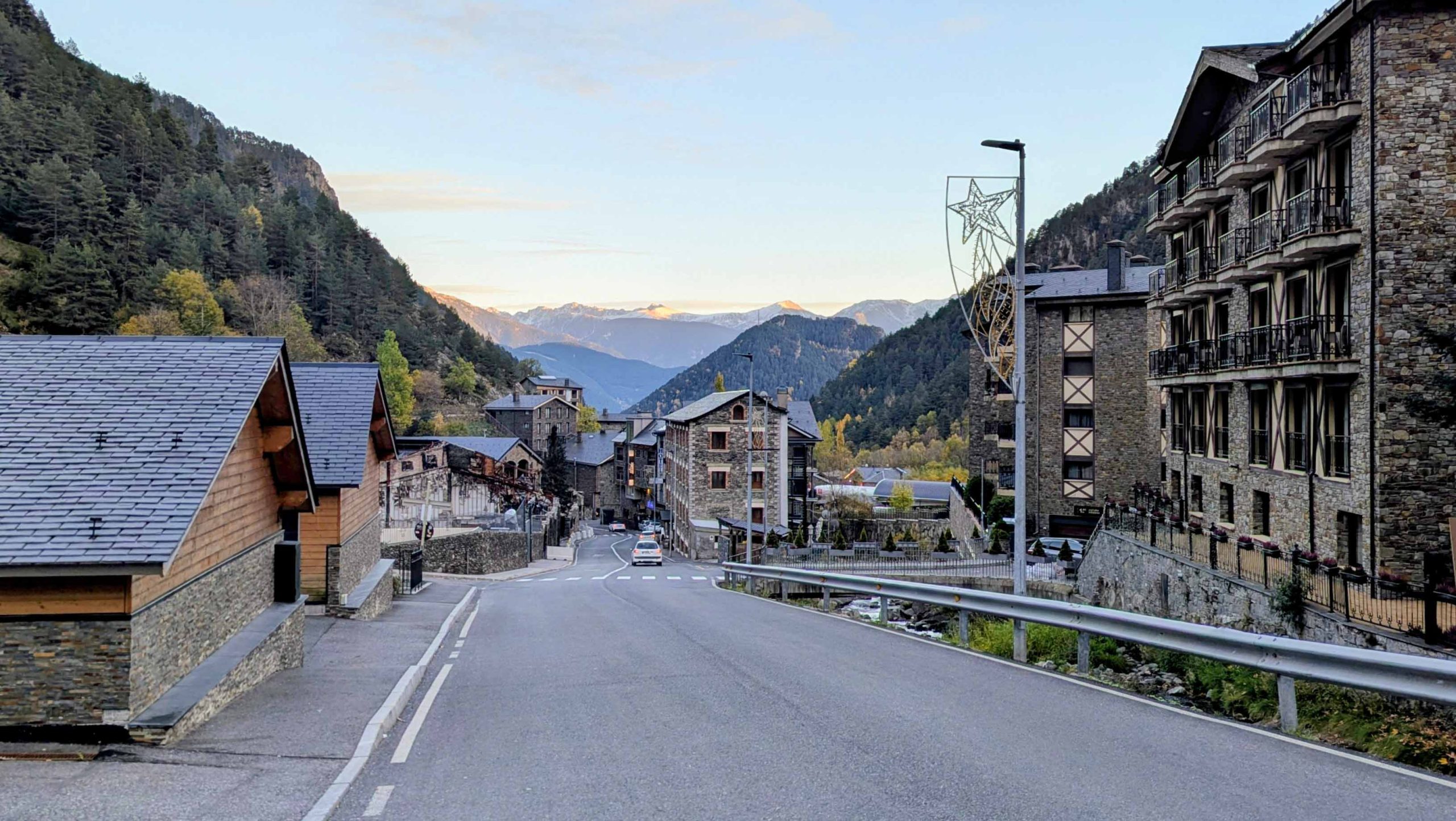
Stepping off the bus in Andorra la Vella, I initially felt a bit lost because I had arrived without a fixed itinerary and suddenly had no mobile internet connection. Because Andorra lies outside the European Union, standard EU eSIM data packages and European roaming plans stop working as soon as you cross the border. Walking through the capital along the Gran Valira river past the cable stayed Pont de Paris bridge and the General Council parliament plaza, where Jaume Plensa’s Seven Poets sculptures sit atop tall steel columns against the mountain backdrop, I headed into Andorra’s best known shopping center, Illa Carlemany. Inside the mall, I connected to the free public WiFi, researched trail conditions, and decided to hike directly from my accommodation, KY Mountain Hostel, in the mountain village of Arinsal in La Massana.


Since Arinsal sits high up in a side valley away from the main commercial district, I stopped at a Carrefour supermarket in Andorra la Vella first to buy food for dinner and Sunday breakfast. Unfortunately, the checkout only offered paper bags, and right as I stepped onto the local L5 mountain bus with a full backpack, the paper bag tore open. Thankfully, both the bus driver and a woman waiting at the stop were extraordinarily kind. The woman handed me a sturdy plastic bag out of nowhere so I could repack my groceries. On top of that, local buses in Andorra only accept cash, and apart from banknotes I was ten cents short in small coins for the fare, yet the driver smiled, said it was fine, and let me ride anyway.
HIKING THE COMAPEDROSA VALLEY TO FROZEN ESTANY DE LES TRUITES
I arrived at KY Mountain Hostel in Arinsal shortly after 12:00 and checked in with the receptionist, who was also named Matias, spelled without an h, and was delighted that we shared the same name. At 14:00, I set off directly from the village into the Comapedrosa Valleys Natural Park, climbing the steep mountain trail toward the Refugi de Comapedrosa mountain hut at 2,260 meters beside the alpine lake Estany de les Truites.
Halfway up the climb, I was briefly frustrated with the hike because I was wearing regular winter boots instead of proper hiking shoes and worried about getting blisters on the steep rocky grade. Once I emerged into the upper alpine basin, however, I felt great and was glad I had made the climb. At 2,260 meters, the Refugi de Comapedrosa hut was already closed for the shoulder season, Estany de les Truites was completely frozen over in a solid sheet of ice, and snow and ice covered the upper footpaths. Although I had originally considered climbing higher toward Estany Negre and Pic de Comapedrosa, the icy terrain made continuing higher too risky without winter traction gear. Turning around at the frozen lake proved to be the right call, bringing me safely back down to the hostel in Arinsal shortly after 17:00 while it was still light outside.


SEASONAL WORKERS IN ARINSAL: THE CROATIA AND ANDORRA LOOP
Back at KY Mountain Hostel around 17:00, I started eating the food I had brought up from Andorra la Vella when I noticed a young couple sitting at a nearby table and asked if I could join them. They warmly invited me to sit down and explained that they had traveled from Mexico to Andorra to look for winter hospitality work because they can enter the country without a prior visa. During a great conversation, they gifted me a 20 Mexican peso polymer banknote, pointing out that the note is being discontinued next year because it costs more to print than its face value. I initially hesitated to accept it, but when they insisted, I gave them a two Swiss franc coin in exchange as a souvenir. After only four and a half hours of sleep the previous night, I went to bed early and slept deeply on the comfortable hostel mattresses, apart from a brief moment at 05:00 when one roommate received a phone call to report for an early work shift.
In fact, I appeared to be the only leisure tourist in the entire dormitory room; everyone else staying at the hostel had arrived from Mexico and Argentina looking for seasonal jobs ahead of the winter ski opening. On Sunday morning, November 8, I woke up naturally just before 10:00, ate breakfast, checked out, and asked Matias at reception if I could hang out in the common area a bit longer. Rather than rushing into another hike or village visit, I took my time writing the blog post for my recent trip to Lisbon and chatting over breakfast with an Argentinian resident who explained how so many Latin American workers end up in Andorra.
Citizens of Argentina and Mexico can enter the European Schengen Area visa free for up to 90 days as tourists. Many spend the European summer working in hotels and restaurants along the Adriatic coast of Croatia. Because Croatia faces a severe summer labor shortage in tourism, the country abolished its annual foreign work permit quotas, allowing Croatian employers to apply directly with the local police for a seasonal residence and work permit as soon as a traveler finds a job on the spot. When the Mediterranean summer ends, those same workers travel to Andorra for the winter ski season. Because Andorra is outside both the European Union and the Schengen Area, the months spent working in Andorra do not count against their 90 day Schengen tourist allowance, and the Andorran government opens thousands of seasonal winter hospitality and ski resort quotas that employers can sponsor directly in person. By pairing Croatia in the summer with Andorra in the winter, they can work legally in Europe almost all year round and save money in euros.
ESCALDES ENGORDANY, CALDEA ARCHITECTURE, AND RETURN VIA BARCELONA
At 14:00 on Sunday afternoon, I caught the L5 bus back down to Andorra la Vella and walked into the adjoining parish of Escaldes Engordany, passing the striking glass pyramid of the Caldea thermal spa complex. Designed by French architect Jean Michel Ruols and opened in 1994, the 80 meter tall mirrored glass spire is the tallest building in Andorra and is fed by natural geothermal springs in Escaldes Engordany that rise from deep tectonic faults at temperatures up to 70 degrees Celsius.


After stopping at Carrefour for an orange juice, I boarded the 17:15 ALSA coach back to Barcelona. Despite heavier Sunday evening traffic approaching the city, the journey went smoothly and reached Barcelona Estacio del Nord at 20:30 with only a fifteen minute delay. From the bus station, I walked back to TOC Hostel Barcelona, bought freshly baked Argentine empanadas for dinner at Empanada Club Gran Via right next door to the hostel, and went straight to bed.
On Monday morning, November 9, 2026, my alarm went off before dawn and I checked out of TOC Hostel around 04:30. Walking out to Placa Universitat, I used the return portion of my Aerobus A1 ticket to ride back to Barcelona Airport Terminal 1, picked up drinking water after security, and boarded the 07:00 Vueling flight back to Zurich. We landed on schedule at 08:50, and a quick SBB train ride home from Zurich Airport wrapped up a memorable autumn weekend in the Pyrenees.
FINANCIAL SUMMARY AND DETAILED TRIP EXPENSES
Protected Financial Summary
Enter password to unlock the comprehensive cost breakdown and itemized receipts.